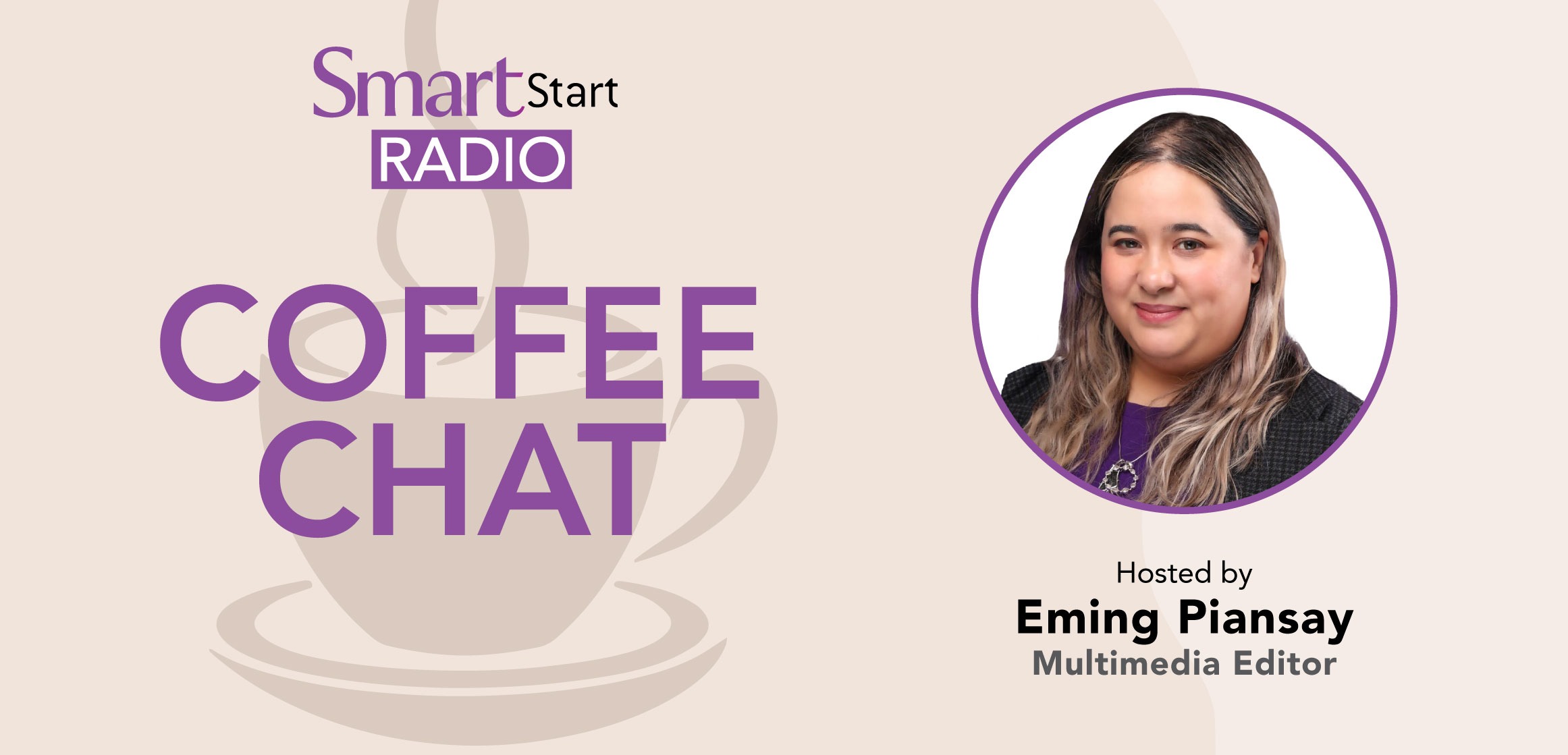
In this Coffee Chat, Smart Meetings multimedia editor Eming Piansay explores how meeting planners can help an event’s impact last long after attendees return to their desks. Inspired by the Smart Meetings article “The Monday Morning Test: How Meeting Planners Can Make Inspiration Last” by Lisa Ryan, this episode looks at the challenge of turning event inspiration into meaningful action.
From future-self letters and accountability partnerships to repeatable rituals, post-event app engagement and 48-hour challenges, Eming breaks down simple ways planners can help attendees reconnect with what they learned and apply those takeaways in real life.
So here’s the scene. Your attendees return back from the event. They have the glow of having such an amazing experience, and then they hit their computer, and all they see is just a slew of emails that they weren’t expecting to see. Missed messages, missed phone calls, inquiries for their time and space and energy.
And just like that, the afterglow of your event fades with the crushing weight of Monday morning.
So, as always, grab your coffee, tea, matcha, water or beverage of choice. Let’s talk about how planners can help an event’s impact survive Monday morning.
Welcome back, Smart Start Radio family. I’m Eming Piansay, multimedia editor at Smart Meetings. For this Coffee Chat, we are breaking down ideas meeting professionals can use to create more thoughtful and impactful experiences, especially the week after your event.
This talk was inspired by a Smart Meetings article called “The Monday Morning Test: How Meeting Planners Can Make Inspiration Last,” written by Lisa Ryan. Please also check out the website. I’ll link it down in the show notes as well.
The article asks planners to consider an important question: What happens after attendees leave?
Great question.
Because creating inspiration during an event is one thing. Helping attendees turn that inspiration into action is something completely different entirely.
A planner can create a really engaging moment in real time. You can connect to people and make them feel seen and heard and supported, but the real test is whether that moment translates the minute they get into their office.
Has your event made such an impact that it carries with them long after the event?
Planners cannot control the workload, office culture or responsibilities attendees return to, but they can intentionally design moments that make it easier for attendees to remember what they learned, reconnect with the experience and take meaningful action afterwards.
So, here are five ways to help make that happen.
Number one: a letter to our future selves.
At the end of the event, give attendees time to write down one idea, one commitment or one change that they want to make. Then mail that letter back to them 60 or 90 days later, just so there’s time.
Because people don’t always remember. You could give someone something immediately after an event and it will just go into a little folder and live there forever, and then they’ll never see it again.
But if you schedule it out so that they get it a month or so after, they’re like, “Oh, wow. I remember that experience and what I learned.” It’s like me talking to myself in the past, like, “Hey girl, you did this. Remember how much fun you had. Remember how much you learned. Remember how impactful it felt in the moment.”
Let’s go back to that feeling. Because if you can chase that, if you can refine that thread and chase it back to the source, maybe something will come out of that, and maybe you’ll be better for that.
It never hurts to try.
So, here are a couple aspects that might benefit that situation.
A note to oneself in the past feels personal without being complicated. It reconnects attendees with how they felt in the room. It can act as a gentle accountability check. Digital could work too, but a physical card may feel more special because, like, “ding, I did that, and that was so thoughtful of me to send to myself.”
As a writer, I have a slew of old works that I have saved throughout my life, and occasionally I’ll happen upon something that I wrote years ago. It’s kind of interesting to think back on who I was in that moment, reflecting on who I am now.
So, as a planner, if you’re reading something that you wrote in real time during an experience that really impacted you, imagine what that could stir up emotionally. And if it’s actionable, you can do something with it, which isn’t that what we all kind of want?
Next, give accountability partnerships a purpose.
We often encourage attendees to exchange contact information or stay connected after an event, but without a clear reason to connect, those relationships can easily disappear.
Like, yes, I go to a lot of events. I get a lot of cards, but I have to be very mindful that I remember to connect because my brain is a goldfish bowl. Or I am a goldfish. I’ll remember in the real time, and then my short-term memory kicks in, and it just goes away.
But having a way to stay accountable for my action and how I move after the event would be so helpful, because it reminds me, again, of what I learned, my experiences and what I want to do from it. And if someone or something is helping me be accountable for that, then I’ll be more successful, right?
Instead of simply assigning an accountability partner, planners can provide a shared goal, a check-in question and a suggested schedule.
For example: What is one thing you applied from the event this week?
Because structure matters. If I don’t have structure, my life will just unravel, as I’m sure a lot of you know. If you don’t have a foundation to work from, then you’re just kind of in your own little fish tank, essentially. So, this would definitely help.
Next, send attendees home with one repeatable ritual.
Attendees do not always need to return home with a dramatic system or strategy. Sometimes one small, repeatable action can create a meaningful shift in how they operate.
This does not need to be a huge thing. Small actions, something that they can do in increments, is useful.
This could be, for example, recognizing one employee during a weekly meeting, just being like, “Hey, so-and-so did amazing.” Writing a monthly thank-you note. Creating a space for colleagues to share recent wins. Starting meetings with one intentional check-in question.
I worked at a summer camp a couple years ago, and every team meeting we would have a box of shoutouts, essentially. If someone did something really amazing for someone, they would write a little note on it, put it in the box, and we would read it out loud. Then they would get the little note afterwards.
It was just a nice little thing because if you’ve ever worked in education, it can take a lot out of you. So, being told that you were helpful or you made someone’s day can go a long way in really improving someone’s outlook on things. It is definitely worth at least trying to see how it works.
So, the goal is to help attendees bring back more than information. They are bringing back a behavior that they can actually practice on a weekly or daily basis.
Next, keep the event app alive.
Event apps are often essential during the program. They hold schedules, maps, speaker information and announcements.
But what happens to the app when the event ends?
Rather than allowing the community to go silent, planners can continue the conversation with weekly prompts related to the event’s themes.
You could talk about: What is something you learned at the event that goes back to what you have been doing this week? Has anything you learned at the event related to what you’re doing right now?
That could be like, “OK, these are the tools that I learned, and this is how I can use them in real time.”
Just injecting little prompts into their days could get them thinking about how they experienced your event. For example: What is one thing you implemented this week? Which session are you still thinking about? Have you followed up with anyone you met? What is one small win connected to the event?
So, for example, this goes back to Smart Start Radio.
I went to a lot of things, but I went to IMEX last year, and I met so many people. Because I went to IMEX, because I was intentional and thoughtful, and I really thought about who I was talking to and who I wanted to speak to, I got a bunch of people from that experience to come on the show and had some really, really great conversations and really great content.
Following up for me and actually following through with that really benefited my goals of what I want to do in terms of creating this show and what I want to present to you guys. Because ultimately, I’m doing this for you, and I want you guys to learn something from the people that I talk to.
So, when I talk to people, I’m like, “What can the Smart Start community learn from this?” And hopefully I’m successful.
Fingers crossed.
The app becomes more than a digital program guide. It becomes a place where attendees can continue learning from one another.
Next, create a 48-hour challenge.
Before attendees leave, give them one small action to complete within two days of returning home.
Some people stress about stuff like this, like, “Oh my god, I have a task to do. This is too much. I can’t deal with this.”
But emphasize that this is not a stress challenge. It’s not an assignment. It’s something that they can just take part in, and if they choose to do it in that timeframe, they can. If not, that’s fine.
But we don’t want to stress them out. Make it fun. Make it engaging. Make them want to do it and not feel like, “Oh, I have to do this,” because they have so many things to do already, you know?
Think about their schedule and their time, and just make it something tiny, manageable and doable on their part.
For example, they could share one takeaway during their next team meeting. They could thank someone they work with. They could schedule a follow-up conversation, try one technique they learned while at the event or reach out to one person they met.
If it were me, I would probably thank production for my side of things. I work really closely with our design team, and they do a lot of that. They make my work look good in the magazine.
I’d probably be like, thanks to our designers for making my words look pretty and professional, because my work just looks like words when you put it on paper. But you put color on it, you give it cool font, and it looks amazing.
So, that’s probably who I would thank if I were doing this.
The action does not need to be huge. In fact, smaller may be better.
When attendees act quickly, they create an early win. That win can make it easier to continue applying what they learned.
Ultimately, the success of an event should not only be measured by whether attendees enjoyed the keynote, posted photos or left feeling energized.
The deeper question is whether the experience stayed with them.
For example, did they approach a conversation differently than they would have prior to the event? Did they introduce a new habit into their overall work process? Did the attendees reconnect with someone they had met, maybe someone they met at a previous event, and say, “Hey, I saw you at blah, blah, blah event, and it was great seeing you again”?
Did something change because they were there?
Did they have an experience where it had a great ripple effect on their next week?
This is the Monday morning test.
Ultimately, planners cannot control everything that happens once an attendee returns home, but they can send people home with tools, relationships and commitments that make the bridge between inspiration and action a little easier to cross.
So, here’s my closing challenge for you guys: Choose one of the ideas that either I talked about or that was in the story and try to build that into your event. Let me know if you try it, if it was a success, if it wasn’t. I would love to know.
I’m really curious to see if you were able to implement something like this or if you already have.
But anyways, thank you all for joining me on another edition of Smart Start Radio Coffee Chat. For more insights, strategies and stories created for meeting planners, please visit SmartMeetings.com.
Until next time, keep planning smart, and I’ll see you next week.
Bye.