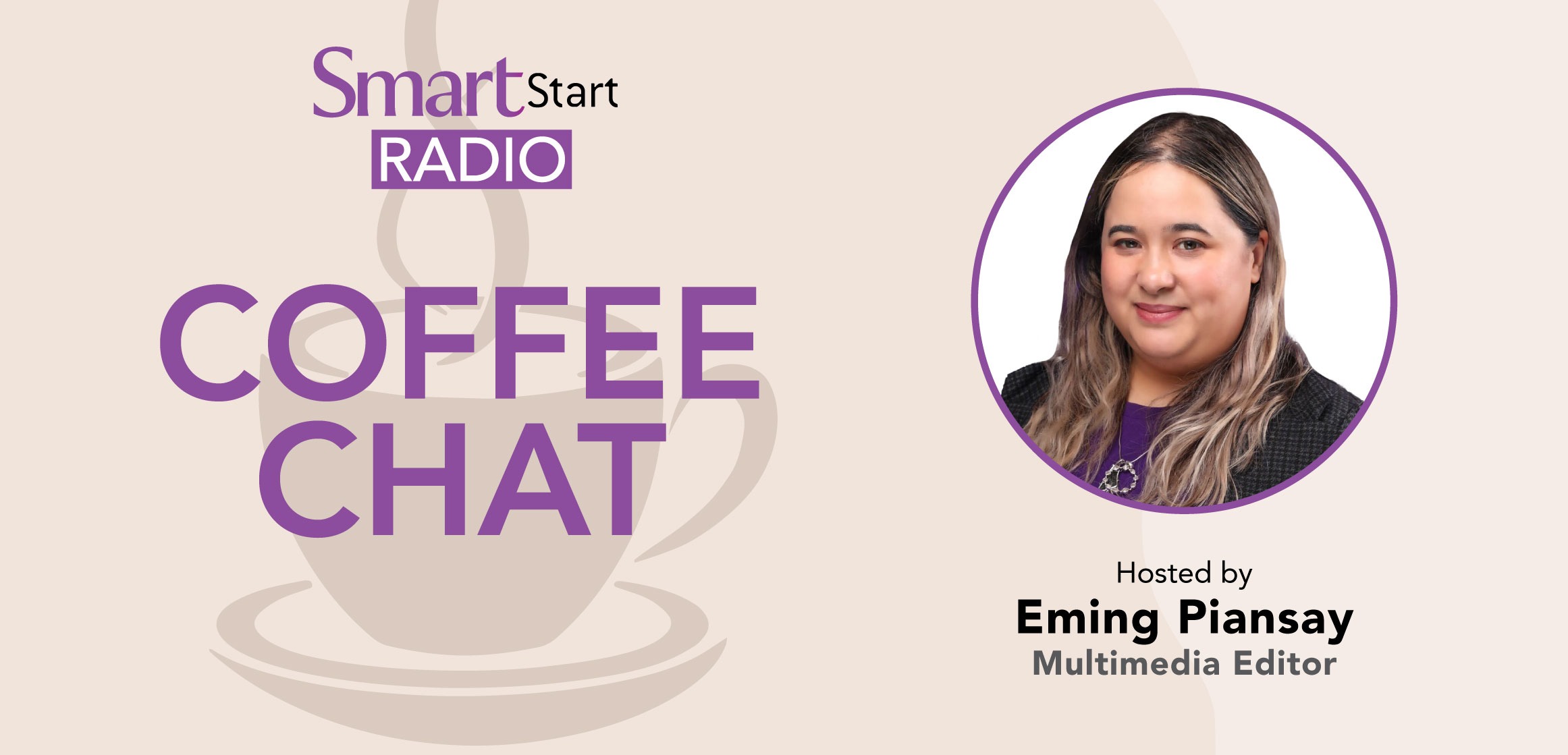
After an Ariana Grande concert merch line became its own side quest, Eming Piansay looks at what planners can learn from a funny-chaotic crowd flow moment. This Smart Start Radio Coffee Chat explores how unclear lines, limited signage and overlapping attendee pathways can create friction, even when the experience itself is worth the wait. The takeaway: organization is not just logistics. It is attendee care.
Eming Piansay
I tried to turn my event brain off.
I really did.
I went to an Ariana Grande concert. I was there to sing, enjoy the show and maybe buy a shirt. But then the merch line became its own side quest, and it reactivated the part of my brain that said, “This is a case study for events.”
Welcome back, Smart Start Radio family. I’m Eming Piansay with Smart Meetings, and this is your Coffee Chat, where we take a quick moment to look at the little details that can make a big difference in the attendee experience.
So, as usual, grab your coffee, your tea, your matcha, your water or whatever’s getting you through this planning season, and let’s get into it.
Here’s the situation.
At this major arena concert, there was one big merch line, and then a couple of feet from that was a second merch line. They were close enough that it was hard to tell where one line began and one line ended.
There were so many people waiting. People were walking through. People were trying to get to their seats. People were trying to get food. People were trying to figure out whether they were in the right line or accidentally cut someone off by accident, which did happen several times.
Someone actually bribed someone to cut the line, too, which I thought was fascinating.
It was funny chaotic, in the best way big live events can be. And honestly, the concert was great. I loved the merch. I did wait for an hour in line, but I still loved it.
But it was also a reminder that attendees should not have to solve the event design in real time, which is what I had to do. Me and my friend were like, “Is this the end of the line?” And then someone was like, “No.” Then we walked further, but we were wrong because there were two lines, and we did not realize it, which, in hindsight, was annoying.
But we made do.
And that is the real lesson here.
The problem was not necessarily that the line was too long. Long lines happen, especially at events like that. You cannot really avoid that, especially when there is high demand and a lot of people packed into a space. At an Ariana Grande concert, you cannot really avoid that. People are going to want the merch.
That part makes sense. Give the people what they want, and they did.
But in this case, the merch was worth it. And even when the product, program or experience is worth the wait, the wait itself still matters.
The issue was the system was not visible.
There was no clear sense of where the line started, where the line was supposed to go and how people were meant to move around it. Because of that, the line started blending into the surrounding traffic, and everyone was kind of confused.
People kept asking, “Is this the end of the line? Is this the end of the line?”
I’m like, “I have no idea,” because there’s no signage. There’s no person telling me where to stand or where not to stand. I don’t know where I’m going. I’m just following the crowd. We’re all just sheep together in this tightly packed space.
And it eventually becomes a bottleneck. It becomes a wayfinding issue.
For meeting professionals, this is not just about merch. Obviously, you are not trying to sell merch at a lot of your events. You might. Some of them might. But not all of them.
This is really about event design in the grander scheme of things.
Think about the registration process, badge pickup, food stations, coffee breaks, expo activations, book signings, product demos and shuttle pickup. Anywhere people are expected to wait, gather or move through a shared space is going to cause some kind of chaotic situation unless there is a plan in place.
If attendees cannot see the system, they will feel the chaos. And planners want to eliminate chaos from this equation at all costs. That is one of the many goals for planners out there.
That does not mean every part of an event has to be overarranged. What it means is people need enough visual information to understand what is happening without having to ask five people in line.
Where does this begin?
Where does it end?
Am I blocking someone?
Is this the right line?
Can I get through there?
Those little questions create friction, and friction adds up. The friction becomes the memory that your attendee walks away with, and no one wants that.
One of the simplest takeaways is this: Spacing matters.
If two high-demand stations are placed too close together, the lines may naturally collapse in on each other like two dying stars. Even if each station works on its own, the combined traffic can create confusion for anyone who is in it.
Another takeaway: Signage needs to show up before the confusion starts.
I did not see a sign. I did not see tape on the floor. I just stood somewhere and hoped I was in the right spot.
Attendees should not have to second-guess themselves. They should know where they are and whether they are in the right location based on what visual cues have been left there.
It could be a sign that says, “Line starts here.” Very simple. Very to the point.
It could be a visible menu, product list or pricing before people have reached the front, just so they have a clear sense of where the start is. It could be a staff member helping direct flow, which would have been helpful in this scenario. It could be tape or floor markers, if there is room for it.
Then there was the attendee movement around the line.
In this case, people had to squeeze through the merch traffic to reach seating areas or food. This is where the line becomes more than a wait. It becomes an obstacle course. And people are already a little frustrated.
So, should they be more frustrated? No. No, they should not.
For planners, the question is worth asking: What does this queue block if it gets twice as long as expected?
Does it block entrances?
Does it block restrooms?
Does it block food and beverage?
Does it interfere with accessibility?
Does it make people feel that they are doing something wrong just by trying to move through the space?
Because even when a crowd is excited and in a good mood, confusion can quickly change the energy. And if we are there to enjoy whatever event we are at, we do not want to feel those things. We should not.
Naturally, we all got to our seats. We were all happy. We all enjoyed the show. But in the moment, it is frustrating when you do not know where you are going, and your guests should not feel that way.
The thing is, the merch line could still have been long. People may still have waited. I still may have stood there for an hour.
But a long line with a clear structure feels different than a long line where you ask people, “Do you know how far it is until the end?”
That is a question no one should have to ask at an event, no matter what kind of event it is.
With that in mind, here are a few helpful tips for planners.
First, walk through the space like an attendee who has never been there before. Not like someone who knows the floor plan. Not like someone who has seen the production schedule. Walk it like someone arriving excited, distracted and maybe a little overwhelmed, like yours truly.
Second, design for the line you might have, not just the line you hope you have. If something is going to be popular, give it room to be popular. The more emotional or time-sensitive the touch point is, the more structure is needed.
Third, separate competing flows. A line should not have to compete with people trying to access seats, food, restrooms or exits. When these flows overlap, attendees start making their own pathways.
I definitely felt that. We were up against a food line, and I could not tell which was what because they all kind of intersected in a way where they were the same shape.
Fourth, make the system visible. Signs, spacing, staff direction and clear entry points are not small details. They are how attendees understand the experience.
And finally, remember that organization is a form of attendee care.
It tells people, “You are in the right place. We expected you. We thought about how you would move through this space.”
That might sound simple, but ultimately it does a lot of the heavy lifting for you when you are introducing a very large group into your venue.
Obviously, not all events will be to this degree, but it is still good to keep these things in mind because you never know where people are going to end up gathering. You want people to be comfortable and not stressed out. You do not want them to feel claustrophobic because they do not know what is what or where they are going at any point in time.
The attendee journey is not just the keynote, the concert, the session or the big moment everyone came for.
It is also the line that you are standing in. The hallway. The sign. The squeeze past the crowd. The moment when someone either feels guided or left to figure it out on their own.
So yes, I went to an Ariana Grande concert. Yay me.
Yes, I waited in line for merch for an hour.
And yes, I loved the merch.
But I also really enjoyed the event itself.
What I really left with was the reminder that even when the product, program or experience is worth the wait, the wait itself still shapes how people remember the event.
I am going to remember the line. I know that. I loved the merch, but the line will definitely be one of those memorable things I will think about at future events I attend for Smart Meetings.
That’s it for today’s Smart Start Radio Coffee Chat. I’m Eming Piansay with Smart Meetings.
Until next time, keep designing with intention and keep paying attention to the moments attendees will remember, even when they happen outside of the main event.
See you guys next time. Bye.