How to manage audiovisual costs, quality and third-party relationships
AV can make or break your event and your budget. Knowing the right questions to ask during contracting and negotiations can make all the difference. Attendees at Smart Meetings’ Culinary Experience, hosted at Paris Las Vegas, were treated to an advanced contracting workshop led by Scott Frankel, president of Animatic Media LLC and Conference-On-Demand + LIVE.
Frankel mined his 26-year event production career for the tips planners need today to manage spiraling audiovisual costs. If you were unable to join in person, fear not—we’ve curated the top takeaways from the presentation for you to consider when signing an AV contract for your next meeting or event.
Don’t Underestimate the Importance of AV
Scott Frankel
Debating whether to use in-house or outside AV? Whichever direction you head in, both require a thorough needs assessment that goes beyond venue specs. Communicate your needs and goals clearly and consider adding an AV representative to your next conference call, as that person can likely bring an important perspective to your planning process.
The sooner AV is involved in your planning process, the more likely it will be that the team can provide the best overall service, as well as troubleshoot any unforeseen obstacles in advance of your next meeting.
Details on set up, rehearsal, show and strike are crucial to top-tier execution by AV teams, and the sooner you can provide them with those details, the better. Also, providing AV with as much lead time as possible is ideal. For example, if you have access to a venue two days before an event, try to let AV in as early as you can, rather than assuming that the day before is adequate.
Factor in the Easily Forgotten Obvious
AV teams need time for meals, breaks and other legal requirements. Be sure to allow space for those in your set up schedule. When it comes to your budget, keep in mind that overtime can quickly become a major expense if set up is not arranged to fit an eight-hour day.
Seemingly small things like mic counts are crucial to the seamless flow of your meeting; in addition to speakers onstage, factor in Q&A sessions and offstage interactions to ensure you are covered in all scenarios.
Light It Up: The #1 Way to Set the Atmosphere
Now that LED rules the school, lighting has become the most essential tool when setting the mood and energy of your event. Elements such as stage wash, camera lighting, scenic lighting, intelligent lighting, mood lighting and DMX/iPad room control come together to shape a top-tier professional setting, and your AV team should be well-prepared for all of these through pre-event meetings and conference calls. The more clearly you communicate your objectives, the better suited your AV vendor will be to providing exactly what you need.
Smart tip: last-minute add-ons like power strips and extension cords can seriously impact your budget, as they can often be double or even triple the cost they would have been, had AV been aware. Money that could be spent on larger centerpieces or customized welcome gifts can be easily lost this way.
Building an A+ AV Team
When building your AV team or outsourcing, Frankel says the must-have members are an A1 (the primary audio engineer), V1 (primary video engineer), camera op (camera operator) and one shadow (a union person from the venue to work with the third-party vendor). Ideally, there would also be an A2 (an audio technician who assists the A1), stage manager and graphics op (graphics operator). A show caller/producer might also be helpful, depending on the scenario. If you communicate your vision in as detailed a way as possible, your AV vendor should be able to provide you with exactly what you need.
Whether it’s a large-scale conference or a small breakout session, AV always leads the way in terms of presentation and outward professionalism.
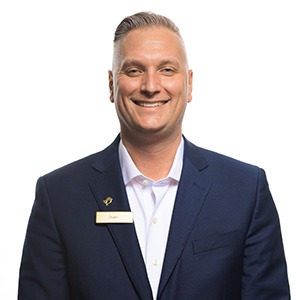
Dustin Dent
Dustin Dent, Nemacolin
Pennsylvania luxury resort Nemacolin appoints Dent as managing director. He will oversee all operations and strategic initiatives while working to continue elevating the guest experience at the resort. Dent joined Nemacolin in August of 2023 and played an instrumental role in establishing the resort as a luxury destination as vice president of development through his visionary leadership as he oversaw the successful completion of multiple openings of key venues across the property.
Pierre Moglen
Pierre Moglen, Barrière Group
Barrière Group appoints Moglen as director of sales North America. With his extensive success in the luxury hospitality industry, moving upwards through roles across brands, he most recently served as cluster sales manager for Rosewood European Collection based in New York. With this experience, Moglen is well-equipped to expand the brand presence in North America and its strategic positioning with North American markets.
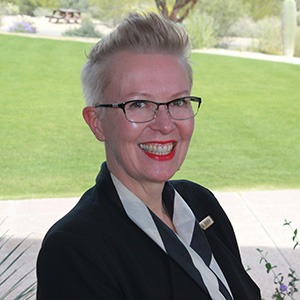
Laura Jarvinen
Laura Jarvinen, The Ritz-Carlton, St. Thomas
Jarvinen joins The Ritz-Carlton, St. Thomas as general manager. She will draw from her over 25 years of experience in the luxury hospitality sector to enhance the guest experience and drive strategic vision at the property. Using her strong skill set and creative abilities, she will focus on maintaining high service standards across all operations through overseeing the introduction of enhanced amenities, elevated programming and new executive positions across departments.
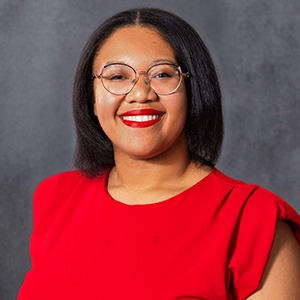
Jada Hudson
Jada Hudson, Myrtle Beach Area Chamber of Commerce
The Myrtle Beach Area Chamber of Commerce appoints Hudson as public policy coordinator. She will serve a pivotal role in the organization’s continued advocacy for its members’ interests and the broader business community. She will collaborate with Vice President of Public Policy Jimmy Gray to support advocacy-related activities, programs, research and communications, including monitoring legislation that impacts those who live in and visit Horry and Georgetown counties.
Matt Tobin
Matt Tobin, The Chatwal, New York
The Chatwal, New York welcomes Tobin as director of sales and marketing. Throughout his 17-year career, he has demonstrated his ability to drive commercial success. He most recently served as general manager of Hotel Nyack, a JdV by Hyatt Hotel, which saw revenue increases by 5% and GOP by 22.7% in 2023 under his leadership.
Wayne Morris
Wayne Morris, The Ritz-Carlton, New Orleans
Morris steps in as general manager of The Ritz-Carlton, New Orleans. He began his luxury hospitality career with the Ritz-Carlton in 2000 at the same property and has spent eight years with the brand throughout his career. He will now lead the hotel, overseeing all operational aspects, as it approaches a milestone 25th anniversary in 2025.
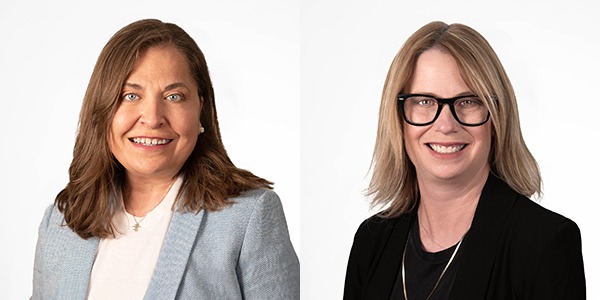
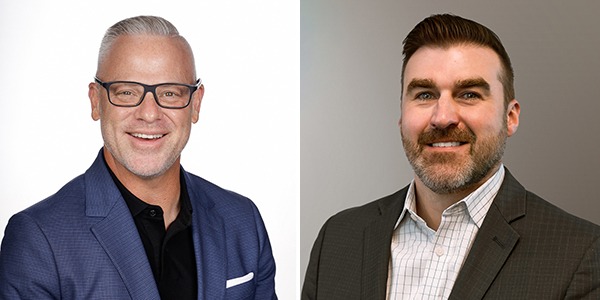
Jill Campbell and Laura Harlan
Jill Campbell (left) and Lauren Harlan (right), Agenda: USA
Agenda: USA welcomes two hospitality professionals to its team.
Campell takes on the role of manager of event services. She brings extensive experience in the hospitality industry, particularly in the realms of hotel operations, catering and convention services. In her work as catering and convention services manager at the Manchester Grand Hyatt in San Diego, and later as assistant director of event management at the Kansas City Marriott Downtown, she received multiple awards for her accomplishments at both properties.
Harlan steps into the role of manager of operations and logistics. She brings over 20 years of meeting planning experience, most recently serving as senior meetings and event planner for the National Association of Insurance Commissioners. She earned her CMP in 2014 and has served in leadership roles with the Heartland Chapter of PCMA.
Mario Bass and Tyler Orwig
Mario Bass (left) and Tyler Orwig (right), Visit San Antonio
Visit San Antonio makes key executive appointments in its leadership and sales teams.
Bass returns to Visit San Antonio the as executive vice president & chief strategy officer. He earlier served as chief sales officer at Visit San Antonio for five years before taking a position as chief operating officer at Visit Orlando. He now rejoins Visit San Antonio to serve as the management leader for five different departments: Destination Sales, Destination Experience, Events, Membership and River Walk Operations.
Orwig is promoted to senior vice president of group sales. He has worked with Visit San Antonio for over 10 years and has played a key role in pivotal moments, such as the creation of the San Antonio Tourism Public Improvement District (SATPID) and has been a leader in the convention sales team. He will continue to oversee a large part of the sales team in addition to helping manage the entire Destination Sales department.
Andrew De Lapp
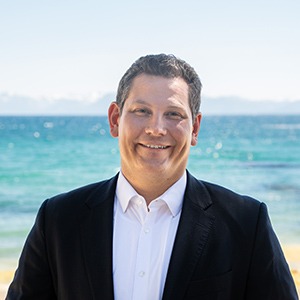
Andrew De Lapp, Hyatt Regency Lake Tahoe Resort, Spa and Casino
De Lapp takes on the role of resort manager at Hyatt Regency Lake Tahoe Resort, Spa and Casino. He will oversee all operations, driven by his commitment to provide guests with incredible travel experiences, help colleagues grow in their careers and be a strong partner to the local community. He has spent much of his career with Hyatt, having served as a member of the pre-opening team of Park Hyatt New York and as assistant director of operations at Hyatt Regency Waikiki Resort & Spa and in the same role at Hyatt Regency Orange County.
Allison O’Conner
Allison O’Conner, The Boca Raton
South Florida resort, The Boca Raton appoints O’Conner as vice president of hospitality experience. In this newly developed role, she will work to ensure an experience for guests and Club members with a “focus on feeling,” drawing from her over three decades of experience. She spent 21 years with Marriott International, including 17 years at The Ritz-Carlton Hotel Company, and is a past board member of the International Luxury Hotel Association.
Sustainability by definition is meeting the needs of the present without compromising those of the future. It provides us with the opportunity to not only protect the environment, but to ensure that we are contributing and promoting the well-being of people long beyond our event. This fits so well with our industry—the impression that we leave on our attendees at events today will keep them coming back in the future.
For a long time, there was a misconception around green events as having higher costs and being laborious for event professionals to execute. While several years ago that may have been true, new technology has made it much easier and less costly to implement sustainable practices at events. And fortunately, in some ways sustainable tech is actually moving toward revenue generation, rather than occurring as an expense. At PRG, our skilled corporate events division has utilized a myriad of innovative technologies to achieve this, which can greatly benefit event planners and producers. Digital Solutions: While not new to the event space, advances in technology have allowed for more diversity when it comes to digital solutions, such as signage, mobile apps, and web platforms. These technologies enable attendees to access event information without the need for printed materials, which can contribute significantly to paper waste. In a content-rich era, we will be able to better utilize these advances to provide for more personalized interaction with attendees and increased analytics for meeting organizers.
PRG Best Boy LED
Lighting technology: LED and low-energy lighting systems use significantly less energy than traditional lighting options. The use of LED technology can reduce power consumption, extend bulb lifespan, and reduce heat release, contributing to reduced energy, waste and cooling needs. One such example is the PRG Best Boy LED which is an upgraded version of the industry-loved Best Boy, but with a new high wattage LED engine. PRG’s recent retrofit of the VL5 is another example of repairing and reimagining a fixture instead of replacing it. By upgrading these fixtures, we are able to divert them from landfills, give them new life, and be cost-efficient by not having to do complete replacements.
Video technology: Our industry has historically relied heavily on high output lamp-based projectors, but recent developments in projection technology over the last few years have allowed production teams to transition to primarily laser-based projection technology. Similar to LED technology, this has reduced waste and heat output. It also has the added benefit of being more dependable, so technicians are able to lamp down projectors when not in use. They also come with more lens options so we can get them closer to screens, to squeeze in those few extra seats.
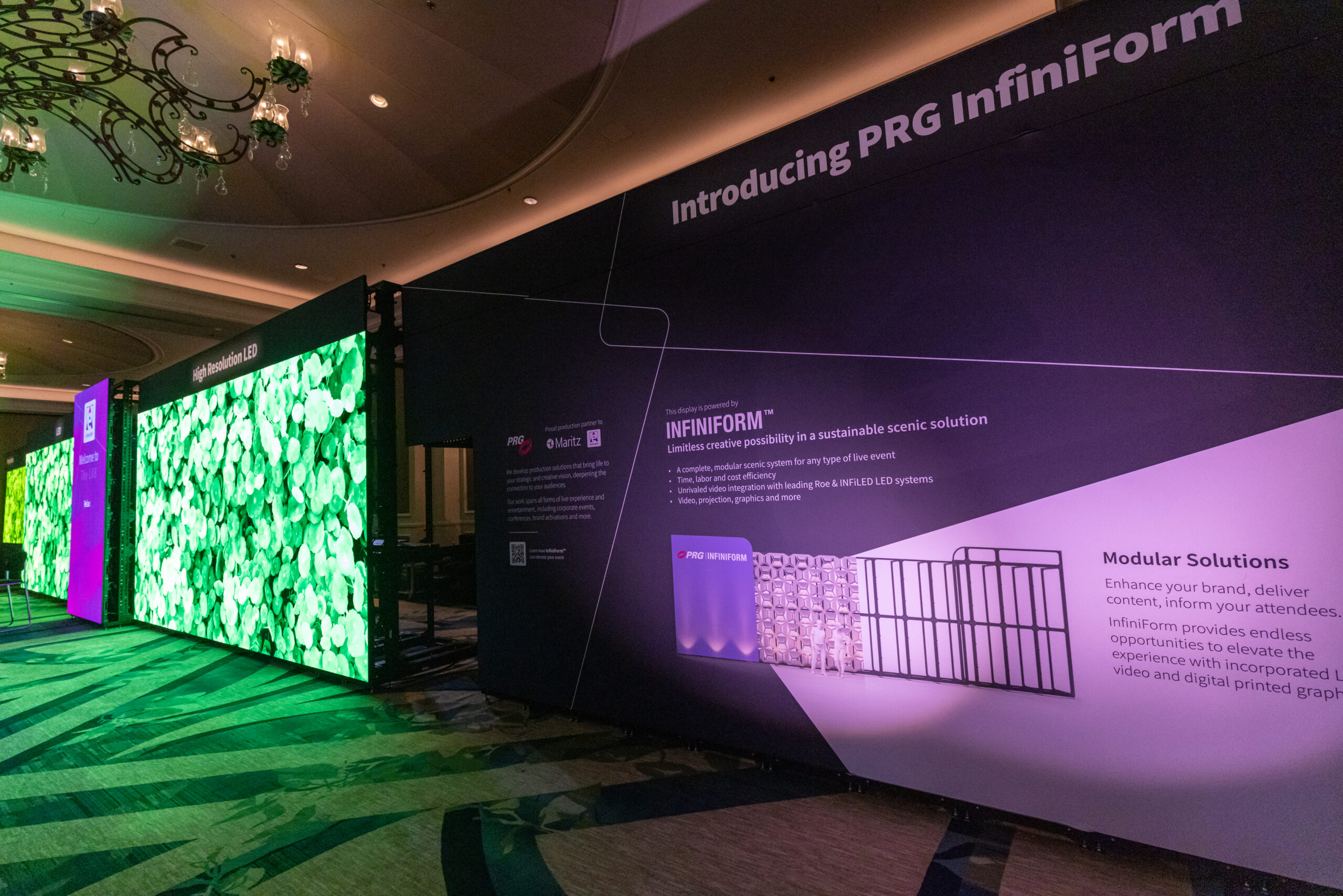
Scenic construction: Using eco-friendly materials such as bamboo and recycled plastics or metals can help reduce the environmental impact associated with scenic setup such as PVC and styrofoam. PRG’s InfiniForm™ is one such proprietary technology that offers a more sustainable event solution. InfiniForm™ is a modular, reconfigurable framing system that provides endless possibilities for event installations with much less material waste. We are also seeing increased usage of innovations in the audio-visual industry such as holographic projections, virtual, and augmented reality that can deliver captivating experiences and minimize physical build-out and transport.
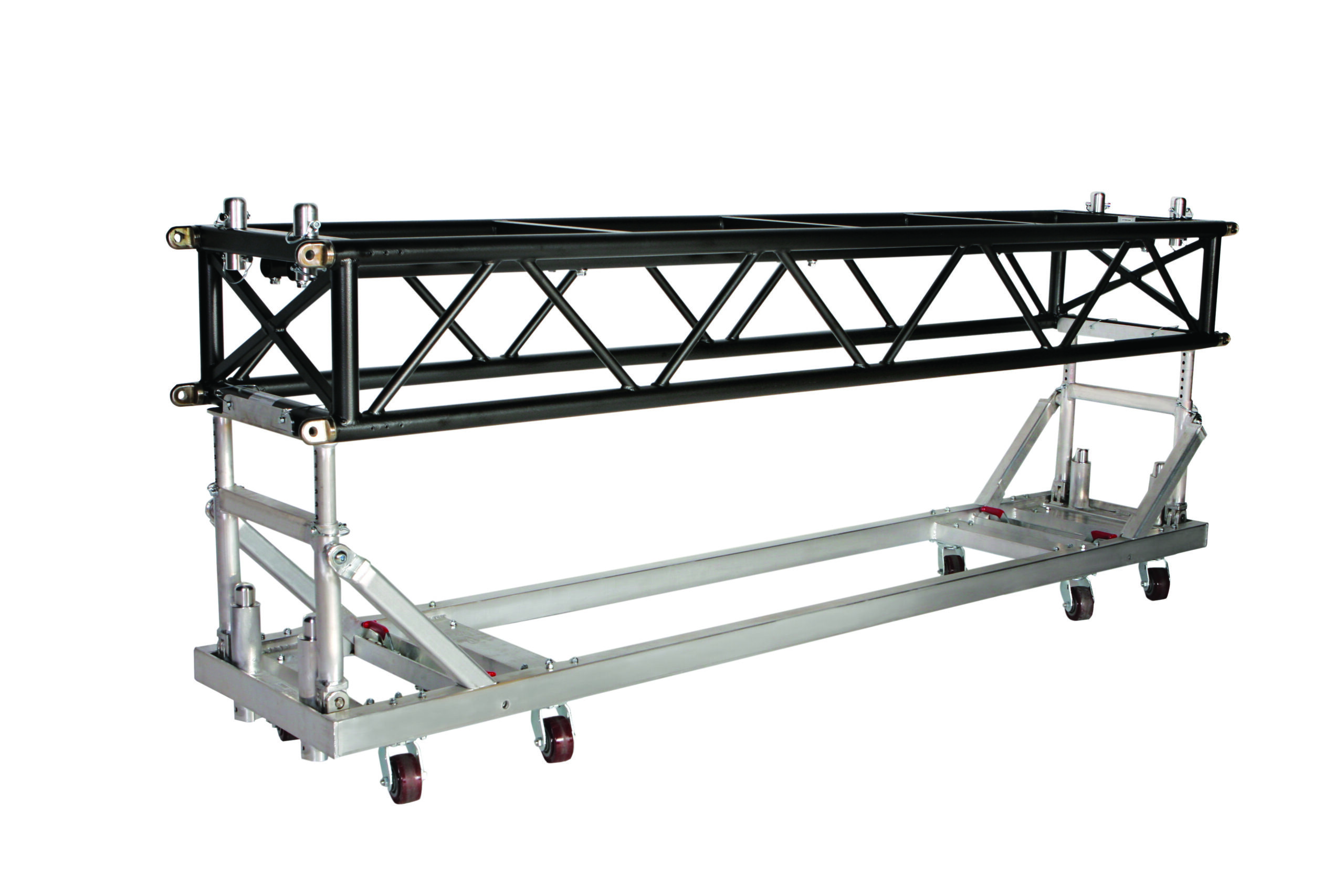
Transportation: One of our biggest challenges as an industry is how we approach transportation for events. This includes everything from attendee and crew travel to the transportation of equipment to the event. On the equipment front, I think we will see more innovative products like PRG InfiniForm™, Spaceframe® or BAT Truss® that help to reduce the overall amount of truck space used. Additionally, we will work to source equipment more local to the events. Production providers will also be looking more closely at the amount of crew being traveled in for an event and taking into consideration local transportation options as well.
BAT Truss
AI content creation: The introduction of AI-generated content is going to allow for still and video imagery to become much more accessible in budget and in terms of sustainability, as AI does not require filming locations, transportation, or scenic fabrication. The technology is also becoming much easier to deploy, which will allow us to integrate it more often as a scenic element or even as decor within an event space. Hopefully this will allow us to reduce single use pieces that are often made of non eco-friendly products. We do, as an industry, need to be careful here to ensure that we don’t create more waste from single use custom screens and fabrics.
Projection over scenic: Similarly, it is more sustainable to utilize projection over scenic prop creation when feasible. Cincinnati’s Blink Festival of Light & Artis a great example of how we can leverage existing structures and enhance them through projection.
The Big Picture: All of this is important because we are seeing a continuing trend among both corporate events and association events, where attendees are being inclined to attend ones that are more sustainable. In 2020, First Insight Inc. found that 73% of Generation Z individuals would be willing to pay more for sustainability, with a majority willing to pay up to 10% more. Additionally, many corporations and universities track carbon usage with required reporting and limitations. This means that we are now having to consider the attendees’ carbon wallet in addition to their financial wallet. Events who lack sustainability may actually be missing out on revenue opportunities either from attendees unable to attend, or who are simply willing to pay more to go to a sustainable event.
By making technology our friend and not our foe, we can start to make little changes that will not only attract audiences, but make a big environmental impact over time.
Carter Dunham is the Vice President of Sales for Association and Exhibit markets in PRG’s corporate events division. With over 15 years in the events industry, Carter has held various roles, including Stage Electrician and Pyrotechnician for the Ringling Brothers and Barnum & Bailey Circus, and a Special Event Producer in Colorado. Since joining PRG in 2010, he has served as Project Manager, Show Operations Manager, Show Services Manager, and Account Executive.
—
Carter is passionate about creating memorable event experiences and integrating sustainable practices. He holds a bachelor’s degree in theatre arts from the University of Northern Colorado. Outside of work, Carter enjoys camping, skiing, and hiking in the Rocky Mountains.
ASAE logo displayed on Terminal Tower during ASAE Annual 2024
The streets of Cleveland were bustling with 5,069 attendees, August 11-13, visiting for the ASAE Annual Meeting & Exposition 2024. The surrounding hotels were at max capacity; pink-shirted local volunteers cheered the attendees on and welcomed them to the city; the iconic Terminal Tower, each night of the event, was illuminated with projector lights that displayed ASAE’s logo against a red and blue diamond.
All of this set the scene for a gathering that would inspire not only for a few days or weeks, but would leave attendees with a reinvigorated understanding of their role as association professionals centered around one major point: In order for them—and the wider world—to thrive as we move into the future, creating and maintaining unity is essential.
In the words of Michelle Mason, president and CEO of ASAE, “[It’s] really about inclusion. It’s about coming together as one for the common good…This year’s theme, ‘In Unity, We Thrive,’ is so important now, more than ever before.”
The opening and closing keynotes with Amanda Gorman and Adam Kinzinger, in the form of interviews led by award-winning speaker and master interviewer Holly Ransom, drove home the point of unity and dug into its nuances, each in a distinct way.
Amanda Gorman
Amanda Gorman speaking at ASAE Annual 2024
As the youngest-ever inaugural poet in U.S. history—she was 22 years old when she recited her poem “The Hill We Climb” at President Biden’s inauguration—Gorman has become somewhat of an icon. But, she told the attendees at ASAE, she is one member of a generation of brilliant young people. When asked about the common preconception that a certain amount of maturity is needed to write insightful poetry—or be successful in any other way—she spoke out for the potential of young people, saying that she would respond to someone making that claim, “Have you ever heard of Anne Frank? Of Sappho? Of Frederick Douglass? For millennia, young people have been telling the truth in compelling ways.”
Unity, to Gorman, does not mean being all the same—it’s quite the opposite. “Embrace and revel in our differences. It means that, in spite of our differences, we find the same ground on which we stand: our care, our principles and our values.”
Adam Kinzinger
Adam Kinzinger, a former member of the U.S. House of Representatives, was called a traitor by the many in the Republican party after he served on the congressional January 6th Committee. Death threats were sent to him, his wife and children. In 2023, he published his memoir “Renegade,” which became a New York Times bestseller.
Kinzinger told the ASAE audience it is essential we acknowledge, rather than be complacent about, the deep level of division that exists in our political atmosphere as Americans.
Kinzinger’s words were heartfelt. As he addressed a question regarding how difficult it must have been to be one of the few Republicans who stood against the rest of his party though the January 6th investigation and Donald Trump’s impeachment trial, he began to tear up, saying “I could never talk to my son about doing the right thing if I was not willing to do the right thing myself.”
Leadership—and unity within leadership—explained Kinzinger, is not about being in charge, but rather about taking care of those in your charge. He asked the crowd to consider, “Are you willing and able to take care of the people that need your help? Do you live for something bigger than yourself? Everybody is desperate for inspiration—that’s what taking care of people in your charge is: inspiring people and giving them purpose.”
Creating an Atmosphere to Inspire
The keynotes were not where the theme of unity began, nor where it ended. The value of unity shown through every aspect of the conference. Education sessions addressed everything from destination boycotts to discovering your leadership voice; ethical considerations in using generative AI to creating conscious inclusion through the lens of DEI.
Gatherings throughout the conference sought to include the varying demographics of the attendees present. One was held in The Loft, a fourth-floor gathering space in the convention center, which filled up with young and emerging professionals for the Young Professionals Reception.
Empowering Young Professionals
Gorman’s presence was no happenstance; a central focus of the meeting and exposition was celebrating the intelligence and expertise of young professionals. For the first time ever, ASAE’s incoming board will include a member of ASAE’s Young Professionals Advisory Committee (YPAC). The Young Professionals Reception has been a staple of ASAE Annual for a number of years, and each year, sees greater attendance.
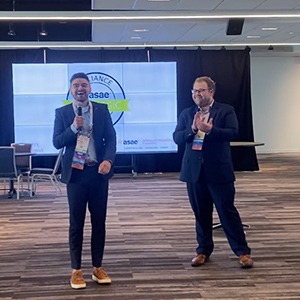
Michael Pereira, YPAC Chair, and John Losh III, YPAC Immediate Past Chair at ASAE Annual 2024 Young Professionals Reception
Michael Pereira, CAE, the current YPAC chair, shared, “ASAE has a lot of committees focused on membership or professional development; YPAC is focused on our own demographic…we’re all about advocating for [young professionals] to have the space and resources that will elevate our leadership skills.
“It’s not exactly about being young, or being an emerging professional,” Pereira says. “It’s about being identified instead by the expertise that we bring; we are professionals in our field, and we want to make our space at the table. That’s what YPAC is about; we are making our way in and creating resources—and people are listening.”
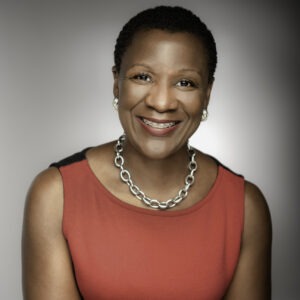
Michelle Mason
Michelle Mason, too, made the point of empowering young professionals and recognizing the expertise they bring to the industry. During a press conference, she pointed out that, just last year, ASAE launched the Future Leaders Professional Development Scholarship, which assists young professionals with access to any conference, providing funding for registration, travel and accommodations.
Since its establishment, the scholarship has raised over $53,000, and Destination Cleveland was the first DMO donor. At the 2024 meeting and exposition, three scholarship recipients were onsite.
The association and meetings industries and the destinations they meet in are so intertwined that, sometimes, it seems like it’s all one big industry. The degree to which they work together means that unity in their partnerships is essential. ASAE and Destination Cleveland demonstrated a powerful example of this type of unified partnership for all attendees—association professionals and destination professionals alike.
David Gilbert
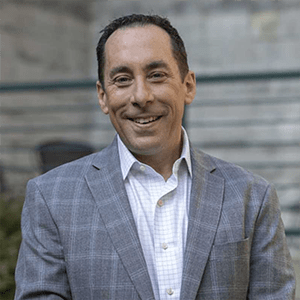
At the press conference, David Gilbert, president and CEO of Destination Cleveland, shared how the city viewed being the host city for the 2024 meeting an immense honor—and how enormous an undertaking it was. As the city prepared, locals rallied around the DMO in support, ready to help. “Over the past four or five years, we’ve hosted some of the biggest events in the country: the NFL draft, the NBA All Star game, the MLB All Star game and the Women’s Final Four; [ASAE Annual 2024] has garnered just as much attention from the community.”
Gilbert explained further, “Hundreds of organizations, hundreds of volunteers have wanted to be part of this because they passionately want to show off their city.”
The day before and after the conference, Destination Cleveland hosted “Cleveland Experiences,” a selection of tours and curated experiences attendees could take part in that brought them out into Cleveland neighborhoods away from downtown, where the meeting was held. All funds raised through those programs went into businesses in those neighborhoods.
Huntington Convention Center of Cleveland against Cleveland skyline
At the opening keynote session, attendees saw Destination Cleveland volunteers march, skip, and run down the hallway, cheering and tossing merch to the crowd, before gathering onstage with Cleveland Browns mascot Chomps. The energy was one of a vibrant, enthusiastic and fun city—with skilled showmanship.
“It wasn’t hard to find hundreds of volunteers to be at the hotels, at the airport, on the street, to wear Cleveland t-shirts and, when they see people wearing these badges, all around…come up just to say, ‘Hey! Glad you’re here.’ It’s as simple as that,” Gilbert said.
I have been riding motorcycles for more than 50 years; it is what I do for pure enjoyment. In 2013, I had the opportunity to check off the item in the top spot on my Biker Bucket List; a 32-day, 34-state, 13,000-mile solo motorcycle ride along the perimeter of the United States.
But before ever rolling on the throttle, I was introduced to The Boot Campaign, an organization founded by five Texas women with a mission to provide support and services to active duty military, veterans and their families. Inspired by their commitment to give back and fueled with a renewed sense of purpose, my ride transformed into more than a road trip. It became a personal calling to help individuals and organizations find meaningful ways to give back in the communities where they, live, work, and meet.
We know that giving back makes us feel better, but when we try to connect what we do from the heart and make the business case for its value to an organization’s bottom line; it’s fair to ask if giving back is actually good business?
Rowan Pickering (left) and Steven G. Foster (right)
That’s a conversation I began in earnest a few years ago with an industry colleague, Rowan Pickering of The Event Team, to find better opportunities to make a sustainable and transferrable impact on team culture and performance. At the time, both of our companies offered traditional team-building activities, but we concluded that “team building” had become just another buzzword for an “attempt” to boost a sense of unity, belonging and purpose, but actually provided no real structure or transformation other than creating “winners and losers.”
Traditional team-building exercises focus primarily on competition and fun, but are too generic to address specific organizational needs or support team growth. Usually, whatever results are accomplished in the moment fades and is forgotten once everyone returns to their routine work environment.
An organization is only as strong as its culture, and developing the skills, knowledge, work ethic, health and team mindset of its people is serious business. The experts agree:
A Harvard Business Review study revealed fostering effective teamwork and instilling a strong sense of purpose boosts greater levels of employee belonging, commitment and engagement.
Deloitte’s Global Human Capital Trends Report reported companies that actively cultivate a sense of community and purpose are more likely to retain top talent.
In his book “Team of Teams,” General Stanley McChrystal, former Commander of U.S. Joint Special Operations Command (JSOC), stresses the importance of intentional culture and mission in building effective teams
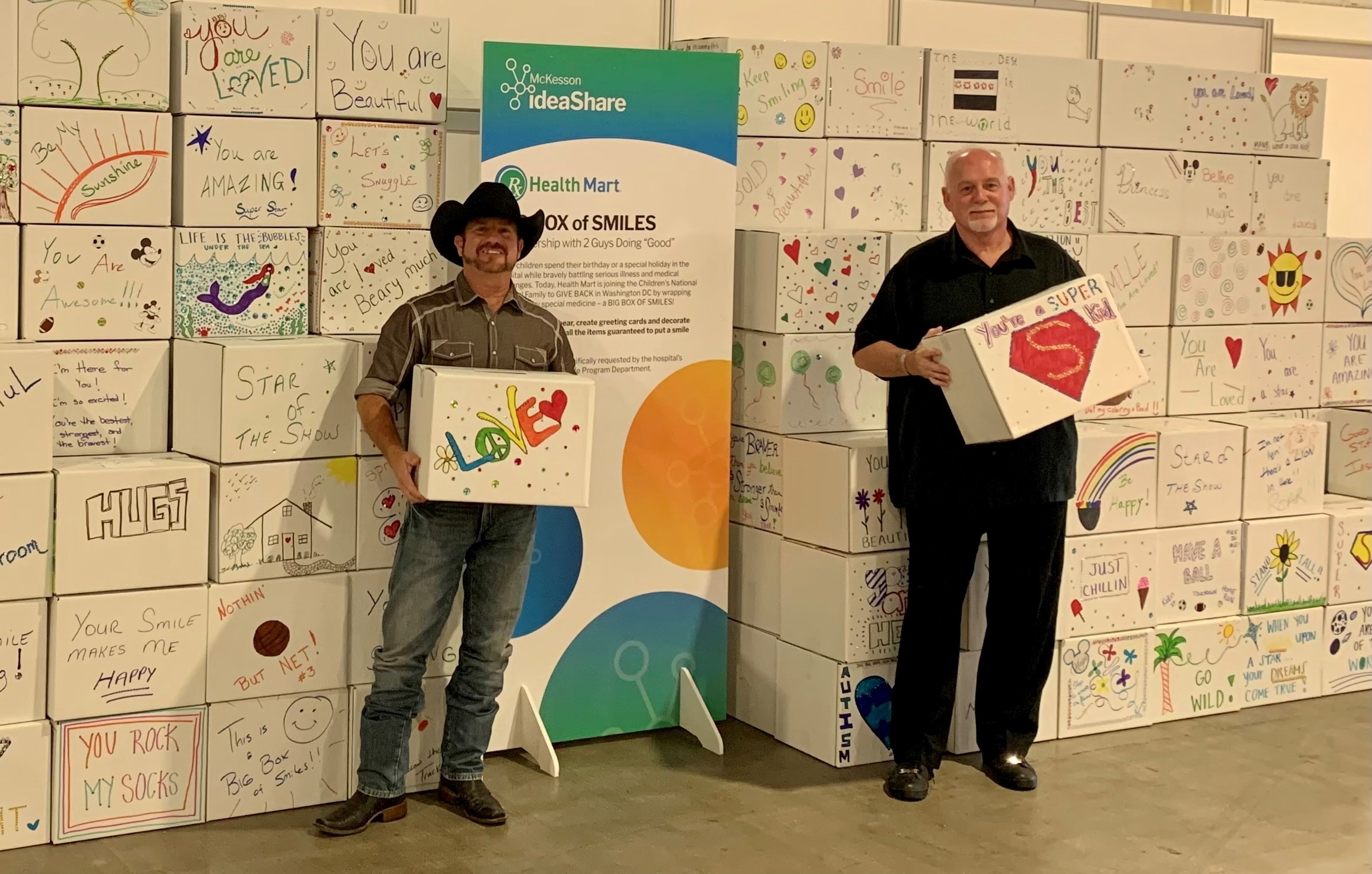
Crafting adaptable experiences that generate a feeling that people are doing something meaningful and making a difference in the lives of others (and themselves) became what Rowan and began calling “Team-Giving.” It was a concept we decided to adopt and promote through a “Cause Business” alliance we named “2 Guys Doing Good.”
Today, we’re aligned with almost 100 charitable organizations providing resources for food insecurity, homelessness, literacy, disaster relief, health, wellness, and the environment through partnerships with service clubs, hospitals, senior living centers, veteran service organizations and animal shelters, just to name a few. The need is great, the opportunities are infinite, and the return on investment is powerfully gratifying.
If you’re bringing people together through meetings and events to connect, learn and improve; it’s important to provide them with the opportunity to work together on a project that when completed will fundamentally change someone else’s life in an immensely positive way. And we always want whatever participants build, assemble and customize to stay local, because we want the “goodness” to benefit the destination.
Some of our favorite activations are In the Doghouse (pet shelters), Bee Good (community garden hives), Wheelchairs for Warriors (veteran mobility), Uke Can Do It (music therapy instruments), Community Connections (Lego art for autism), Saddle-Up (rocking horses), Seasons of Service (holiday stockings), and BIG Box of Smiles (children’s hospitals).
We always finish the “heart thing,” a wow moment on-site that underscores the impact of doing good. Often, recipients will participate, thanking everyone involved and explaining how their contribution will enhance and enable others’ life journey. It really is the most meaningful moment of the entire experience.
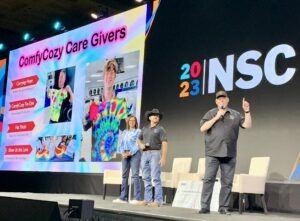
Rowan Pickering (left) and Steven G. Foster (right) on stage
The engagement produces some very tangible value propositions, as both customers and employees alike view the experience as one changes lives and builds community. A Team-Giving culture is also a major point of company differentiation; studies confirm nearly 90% of consumers would switch to a brand aligned with a cause.
The “bottom-line”: The outcome (the juice) of those efforts assessed against the effort (the squeeze) to produce them absolutely makes good business sense.
2 Guys Doing Good connects good people with great causes to make a real difference in the world through meetings and events. There’s no better feeling than being a bucket filler and force multiplier for goodness.
—
Steven G. Foster, CMP, is One Man, on One Motorcycle with One Mission: to help others fuel their personal and professional lives with Passion, Power and Purpose; creating what he calls “Full-Throttle Leadership.” An award-winning speaker, author and business consultant, Steven is managing partner of Foster+Fathom, a Leadership and Goodness Development Group in Dallas, Texas.
Steven’s leadership principle is simple; “Your outlook always determines your outcome, so go “Full-Throttle.” That’s no surprise, considering he also is a Harley-Davidson LIFE member who in 2013 completed a 32, day, 34-state, 13,000-mile solo motorcycle ride along the perimeter of the U.S. to raise awareness and support for America’s military; a journey he chronicles in his book, “Full-Throttle Leadership: Passion, Power & Purpose on the Edge of America.” Contact Steven at [email protected] or at foster-fathom.com
It’s time to treat your attendees to something special
Planning an incentive or executive retreat? Start here.
These three new and renovated properties each offer their own distinct style—so whatever experience your attendees are looking for, you’ll be sure to walk away with top-notch approval ratings. From a historic inn (we’re talking 2 ½ centuries ago) to the luxury lakeside resort of your dreams, discover your next incentive destination here.
Lakeside Luxury
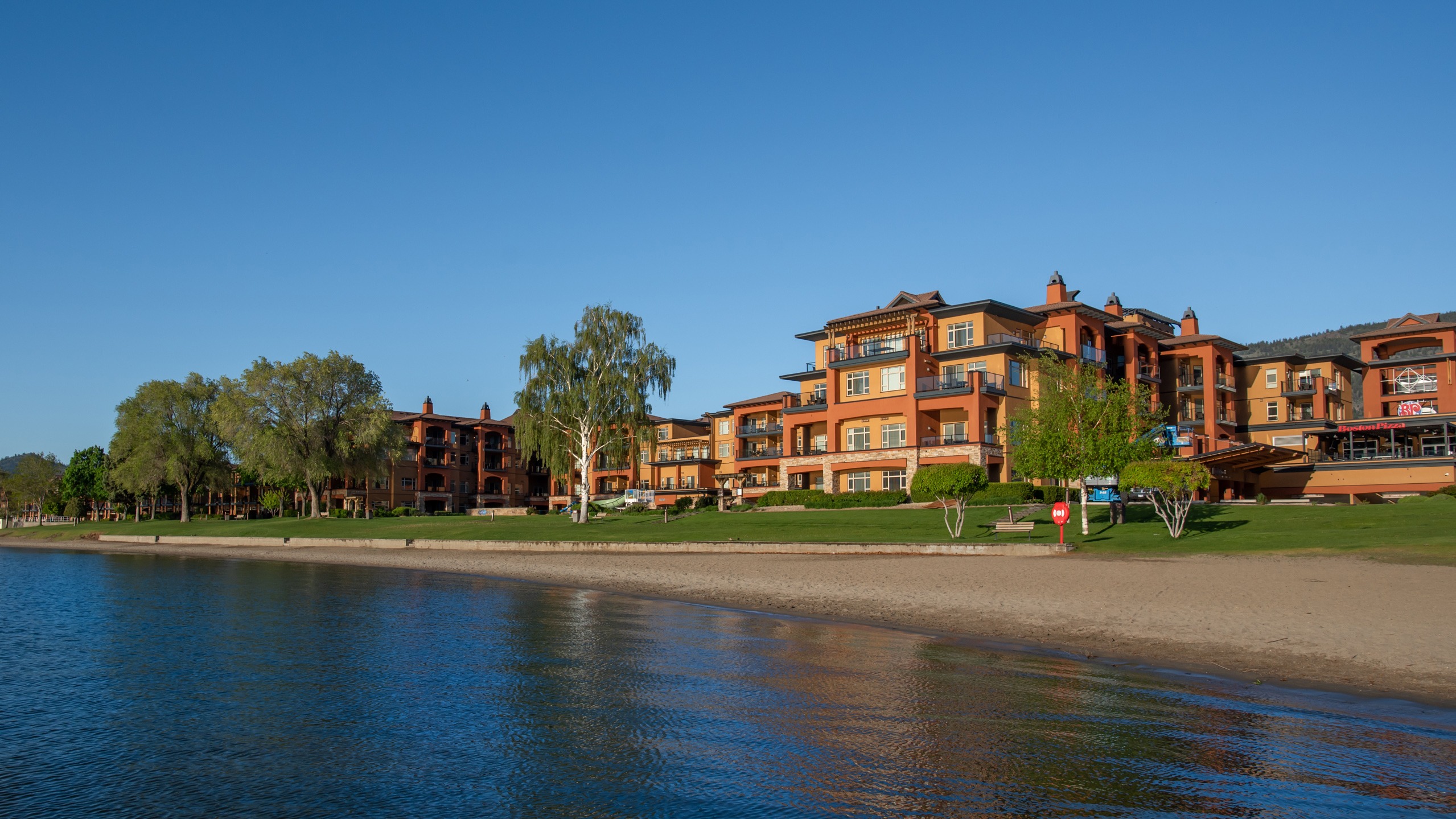
Watermark Beach Resort
In Osoyoos, British Columbia, Watermark Beach Resort brings guests to the region’s desert paradise. With its recent renovations, it now offers over 10,500 sq. ft. of meeting and event space, from intimate boardrooms to grand ballrooms and private dining spaces. Its adaptable floorplans, plus integrated wireless connectivity and a brand new AV system, make running meetings a breeze.
The 123 condo suites or 30 beachfront townhomes all feature private balconies and views of Osoyoos Lake or mountain landscape, plus private kitchens. Hotel amenities include a seasonal saltwater pool, hot tubs and a steam room.
Guests can take part in some much needed R&R at Levia Wellness Spa, try out the local brews at Backroads Brewing Company or indulge in dessert at Roberto’s Gelato. Dining experiences include 15 Park Bistro, and meetings and events can round out their attendee experience with fresh and local onsite catering.
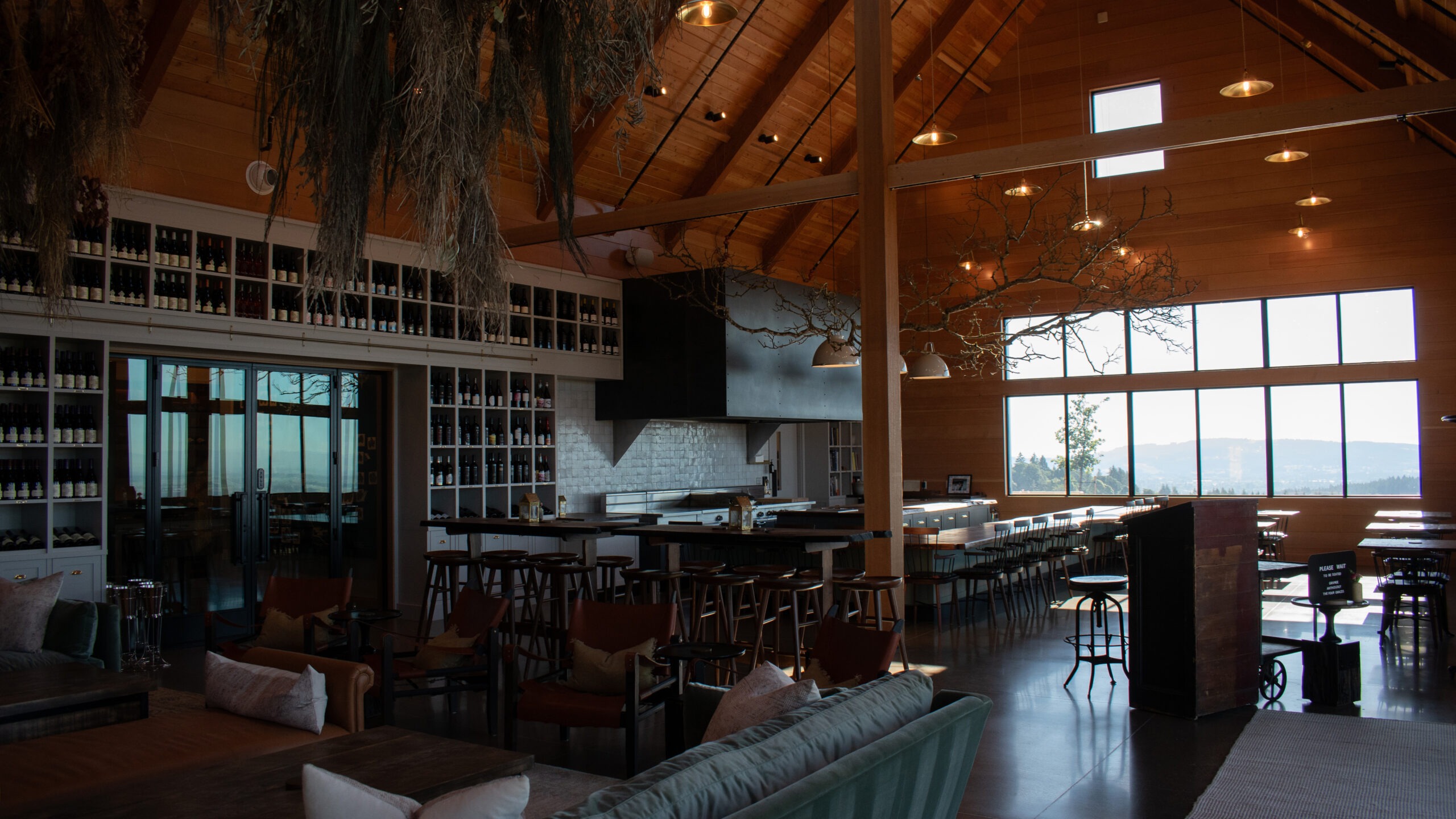
The Grange Estate, in Dundee Hills, is a luxurious retreat in Oregon’s wine country. Newly opened this past June, the property stands on a picturesque hillside and neighbors Black Walnut Inn & Vineyard, owned by the same team. Here, visitors will find the perfect blend of rustic charm and elegant comfort.
Sweeping vineyard views are just the start. The charming nine-room retreat immerses each guest in a unique environment; every room features its own design, curated artwork and furnishings sourced from local artisans, makers and antique stores. The onsite dining scene offers quality culinary experiences under the leadership of James Beard Award-nominated executive chef Chase Williams, who oversees the creation of outstanding dishes made from local, seasonal ingredients, with masterful wine pairings.
Its bespoke meeting and event spaces include patios overlooking the vineyards to cozy living and dining rooms, making for a top-tier incentive retreat or a corporate gathering certain to treat your attendees to something truly special.
Historic and Heavenly
Cuthbert House Inn
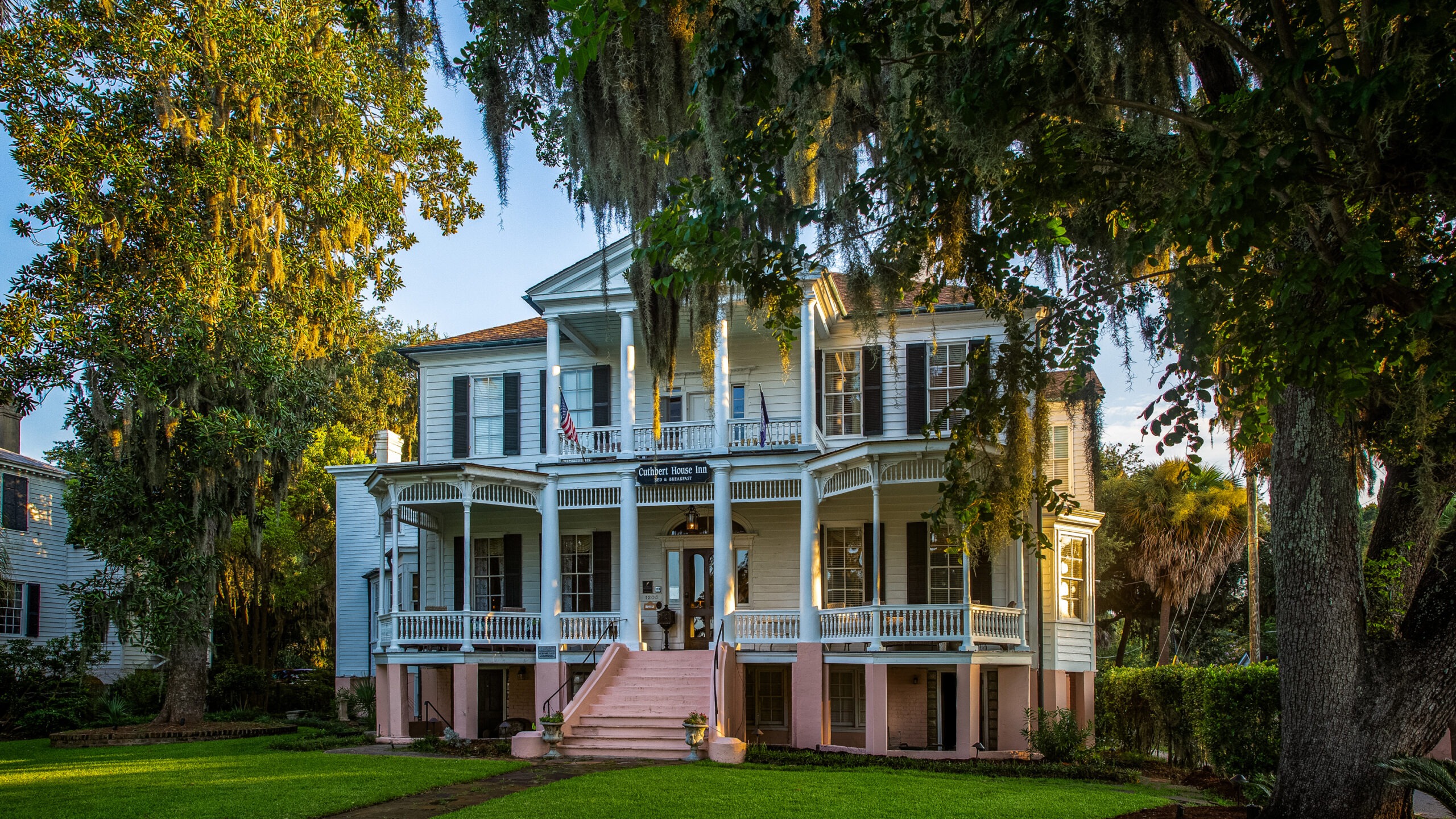
Historic inn, Cuthbert House, in Beaufort, South Carolina, debuts a grand renovation that blends its historic beauty with convenient modernized amenities. The property was originally built in 1790 for the Cuthbert family; it went on to become a social gathering space for influential politicians and community leaders, and was later occupied by the Union Army during the American Civil War. The late 19th century saw it transformed into a Victorian-style home, and in 1972, it was placed on the National Register of Historic Places. Today, it is a cherished landmark and an alluring space for a retreat.
The renovation saw a wealth of upgrades and preservation efforts, including the restoration of original hardwood floors and exposed brick fireplaces, a custom mural in the foyer, the addition of a cozy library lounge and cypress bar and in-room entertainment upgrades, such as flat screen TVs and streaming.
Ten guest rooms are grouped in three categories: Federal, Victorian and Lowcountry. Each offers guests a stylish and exclusive experience for an exciting and serene retreat.
Augmented reality, 3D Visualization and AI add branding, logistics and meaning to programs
Could event tech end up being a meeting professional’s best friend after all? For those looking to further develop their marketing, sourcing and engagement strategies, three new products may be convincing arguments on the pro side of relying on digital assistants.
Beyond QR Codes
Event production company Animatic Media announced a new product this week called Intelligent Content, designed to bring conference content to life. The new technology makes it easy to share information, videos and messages with attendees’ phones through event signage and products—without needing a QR code.
“With Intelligent Content, we aim to redefine how conferences and events engage their audience,” said Scott Frankel, CEO of Animatic Media. “Our platform allows event organizers to seamlessly integrate interactive elements into every aspect of their event, from signage and presentations to trade show booths and even everyday objects like cups and napkins.”
A logo or picture could be the gateway to slide presentations, PDF resources or product demos.
Smart Meetings Says: Approach this technology creatively to reimagine what an attendee might want to know while sitting in the audience, walking by a booth or even sitting at the dinner table. A little empathy can go a long way toward setting up potential interactions that can lead to deeper connections.
Deep Space
Need to know how many more seats you can fit in the ballroom at the convention center across the country before you close registration for good?
Following its recent Merri acquisition, Tripleseat integrated the company’s 3D and 2D visualization technology into its design toolset. The result is seamless event planning and management with floorplan design, all in a single platform. Tripleseat Floorplans allows you to create to-scale diagrams in minutes with its user-friendly interface, collaborate in real-time using sharable floorplans with the florist, speaker and DJ. Immersive 3D virtual walkthroughs of unique venues reduce surprises and saves time on travel for site visits.
Smart Meetings Says: While site visits won’t go away, a more accurate virtual tour could increase the number of venues considered and decrease the number of people required to go on each site visit, saving time and money.
Recap Button
Conferences can be loud, distraction-filled spaces? How do you ensure attendees understand the ideas being presented?
Cvent’s new personalized AI Event Summaries offer near-instant access to recaps of the sessions they attended, eliminating the need for in-session notetaking. The tool can also compile key moments across an entire event, including exhibitor booths and breakout sessions. Each summary provides actionable event takeaways that can be reviewed and shared later.
Smart Meetings Says: While this technology takes the control out of the meeting professional’s hands by sharing directly with the attendee, it also promises to expand the impact of the experience beyond the day and place, allowing them to engage with comprehensive notes from the event.
Proposed law may impact pricing, but it’s more complicated than that
The city that doesn’t sleep should not mind having the number of its hotel rooms go down, but meeting profs will—and proposed licensing of hotels in New York City will hasten the drop, according to trade groups for the hotel industry. But that’s just one factor in a complex hotel environment in the city.
Here is the situation to date, in brief.
In late July, Julie Menin, a member of the city council and a former commissioner of the city’s Department of Consumer and Worker Protection, introduced a bill titled the Hotel Safety Act that would require New York’s 769 hotels to be licensed, as they are in most major U.S. cities. The bill has been endorsed by 35 of 51 council members and is backed by the city’s five district attorneys and the police union.
As a columnist in The New York Times noted, “Unlike restaurants, bars, nail salons, newsstands, locksmiths, used-car dealerships, carwashes and even scrap-metal processors, among others, no license is required to run a hotel in a place that attracts tens of millions of visitors a year. Developers must get building permits, follow zoning rules and demonstrate an adherence to fire codes, but beyond that, oversight is essentially laissez-faire.”
Yet the hotel industry reacted with a Code Red. One hotel trade group called the proposed law a “nuclear bomb.” The American Hotel & Lodging Association (AHLA) called it “potentially devastating,” even after Menin postponed a public hearing to reintroduce a revised version. Vijay Dandapani, president and CEO of the Hotel Association of New York City, called the bill a “travesty” that would eliminate jobs and lead to skyrocketing room rates.
Menin and other proponents say it will give the city the long overdue authority to bring actions against, and even close, hotels that are bad actors—flagrant sites of violence against guests, drug activity and human trafficking.
Opponents point to a number of the bill’s provisions as onerous bureaucratic over-reach. Such as a requirement for hotels with 100 rooms or more to employ hotel staff for front desk and housekeeping—not contracted workers—and have panic buttons for workers who clean and maintain guest rooms. It would also require continuous front desk coverage, daily housekeeping and on-site security.
The Bottom Line for Meeting Profs
But what might the proposed law mean for the meetings industry? A leading lodging expert says it should be viewed in the larger context of the New York City hotel landscape.
The city has recently sharply curtailed short-term rentals on platforms like Airbnb by requiring hosts to be present during a guest stay and limiting the number of guests to two, among other mandates, notes Jan Freitag, senior vice president of lodging insights for STR and national director for hospitality analytics for CoStar Group. That means leisure travelers are competing more heavily for available rooms. At the same time, room inventory has been reduced by 16,000 so the city could house a recent influx of immigrants and migrants.
But the thing Freitag thinks is the most significant factor for meetings professionals is that the city has also made it much more difficult to get approval to build new hotels, portending even more demand pressure for hotel space.
Freitag says New York City’s hotel development pipeline currently stands at about 8,000 rooms in construction. But by 2027 or sooner, there will be “almost nothing” in the pipeline. “The pipeline in New York used to be 10,000 rooms,” he says. It gets worse. A significant portion of the hotels that will get built over the next few years will be limited-service properties with no ballrooms and sparse meeting space.
Hotel room rates in New York for the first six months of this year are already up by 5.6%, Freitag says, as compared to under 2% in the top 25 markets and about 1.2% for the entire nation.
Add to this complex hotel environment the ongoing recovery of international travel. “If you’ve never been to America, and you’re coming from Europe, from Latin America, from Asia, New York City is absolutely the first or second stop,” Freitag says. “And that continues to drive room demand, too.”
So, regardless of the effect of the proposed Hotel Safety Act, if it is enacted, “you have that headwind for room rates, which will continue to accelerate.” Will planners be able to find enough sleeping rooms for their meeting attendees?
Freitag’s response: “The answer is always yes. The question is, at what rate?”
Welcome to Smart Travel, where we’ll be spotlighting the latest can’t-miss travel news, from groundbreaking studies and data to tips on decompressing from your next destination meeting. Want to hear from market experts advising on successful business group planning strategies? We have you covered. Travel tech tools you need in your carry-on? We have just the thing. So, pack your bags and mark your calendars to check out this new, every-Friday feature!
The CDC Has Updated Travel Regulations for Dogs, Effective Now
On Aug. 1, the CDC is implementing new regulations for flying with pets, affecting the estimated 4 million animals that travel by air annually. This marks the first change in import requirements for the CDC since 1950. The new guidelines require all dogs to:
Appear healthy upon arrival
Be at least six months of age
Be microchipped
Be accompanied by a CDC Dog Import Form online submission receipt
Additional considerations are the dog’s location over the previous six months and the country where vaccinations were administered. If the dog is coming from a place with a high risk of rabies, proof of a rabies vaccination is required.
The CDC has released a question-and-answer “DogBot” on their website, where travelers can determine what rules apply to their dog and how to prepare in advance.
New Study Reveals Benefits of Sports and Music Tourism
Collinson International has just released a report revealing the details of spending by those traveling for sports and music events, and the results are eye-opening. With over 83% of respondents having flown to sports events in the past three years (or are planning to do so in 2025) and 71% doing so for concerts, this subsect of the travel industry is one we should all be paying close attention to. When it comes to sports, soccer dominates the market at a 69% share, and most attendees extend their stays by one to three days both before and after the big game. Sports travel is projected to reach $1.33 trillion by 2032, making fans a key demographic to consider when planning incentives, breakouts and more.
This comprehensive app is designed to fully encompass a traveler’s health needs. Health monitoring has become a key method for travelers hoping to either manage or prevent any illness or discomfort while on the road. Once a user lands, the app provides personalized recommendations for an optimized recovery from jet lag, stress and other undesirable elements of travel. If an excursion involves more activities than desk work, WHOOP measures the strain outdoor adventures can take on the body, and then recommends an ideal balance of activity and rest that is customized to each user’s needs.
One of the key indicators of overall health is data sleep tracking, so WHOOP analyzes sleep stages and recommends actions for travelers looking to improve the quality of their rest. This and additional data tracking combine to form an individualized health overview for WHOOP users. What’s more, WHOOP has recently partnered with CLEAR for a study on stress and sleep as they pertain to travel. Results show reduced stress levels and improved sleep quality.
KAYAK has partnered with Blockskye, a payment and blockchain solutions provider, to offer customers an elevated experience when booking corporate travel. Perhaps most conveniently, the partnership eliminates the need for expense reports, a common if unwanted process.
KAYAK for Business Enterprise customers will now be able to manage all elements of their corporate travel bookings easily from anywhere, such as an airline’s website, via the KAYAK for Business platform or through a KAYAK agent. The user experience is seamless and flexible, benefiting business travelers.
From a company’s perspective, full access to global content and fares alongside controls that filter down to an individual set of needs is a welcome development. The funds saved on expense report generation and processing is also an added benefit. Plus, companies can track employee travel and spend in real time, providing an accurate reflection of costs at all times.
“By leveraging new technology and innovative solutions, we are reshaping an antiquated industry. This prospect of simplifying business travel is not only thrilling for us internally but also for every client and partner we collaborate with on this journey,” said Eva Fouquet, SVP of KAYAK for Business.
By working directly with airlines such as airlines like American Airlines, Southwest Airlines and United Airlines, KAYAK for Business Enterprise can integrate elements such as loyalty programs, keeping both companies and travelers happy.
Deloitte Names Uphill Struggles in Corporate Travel Report
According to Deloitte’s 2024 corporate travel report, “Upward Climb with Uphill Struggles: 2024 Deloitte Corporate Travel Report,” business travel spend by U.S. companies is expected to meet or exceed pre-pandemic levels by the end of 2024—but the full picture isn’t so simple.
Companies are looking for a better balance between the value of in-person meetings and concerns over budgetary and sustainability elements, such as increased average spend and travel frequency. Around 83% of surveyed business travelers consider the process to be “enjoyable,” with added bonuses such as networking opportunities, exploring new locales and options to extend the trip for leisure, but higher prices can interfere with plans. Travel managers say pricing’s impact on travel volume is 1.5 times more significant than budget cuts. To mitigate this, 55% of travel managers cite booking compliance as a top cost control measure, ahead of all other options, but only 56% of travelers say they always use them.
Corporate responsibility programs have increasingly considered sustainability when travel planning, and more than half reported they need to cut trips by 10 to 20% in order to meet their goals.
CTM Rebrands its Specialist Meetings and Events Division
Corporate Travel Management (CTM) announces the rebrand of its specialist meetings and events division ETM to ‘CTM Meetings & Events,’ effective now. The company promises better management programs and budgetary benefits for business meetings and events, as part of its corporate travel program. Data obtained by CTM’s 2024 Global Customer Survey revealed that between 84% and 90% of respondents expected to travel as much or more next year, whether it be for client meetings, internal events, conferences or tradeshows.
CTM points to the increased value of in-person meetings and events as a result of 2020’s global pandemic, which has led to a surge in at-home work. “The value of face-to-face engagement continues to grow. It’s clear that in-person interactions are crucial for fostering strong business relationships and that is the platform that meetings and corporate events provide,” said Tami Reier, CMP, CMM, general manager, CTM Meetings & Events, North America.
Oliver Hospitality Hotel Group Announces Boutique Loyalty Program, “Invited by Oliver”
“Invited by Oliver” is the brand’s newly launched loyalty program with perks, VIP events and special offers. With nearly 10,000 signups within its first two weeks, it’s a program that should be on your radar. Members earn one point per dollar spent at Oliver Hospitality Group hotels, including room reservation fees. Those points are redeemable toward your next stay at any hotels by Oliver.
Membership also includes VIP treatment with access to special offers, dining discounts, early alerts when new experiences at Oliver hotels, exclusive access to member-only events, potential eligibility for room upgrades and unique discounts unavailable to the general public. Oliver Hospitality Group is offering 500 points to new members as part of a limited time sign-up offer, so act fast!
Renowned happiness expert breaks down the science of joy and its real-life applications.
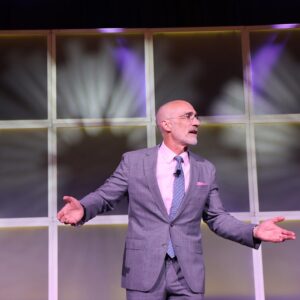
At the recent Destinations International 2024 Annual Convention (DIAC24) in Tampa, Florida, opening keynote speaker Arthur Brooks set the tone for an enthusiastic introspection among the attendees that would carry through the rest of the conference and beyond.
Don Welsh, CEO of DI, shared with Smart Meetings that bringing in Arthur Brooks was an immense privilege. “I was watching CBS one morning, having my coffee, and [Brooks] came on and he was being interviewed,” says Welsh. “What he talked about—within 30 seconds—resonated with me. It was maybe a five-to-10-minute interview… And then they interviewed Oprah Winfrey, and she talked about how she had seen him speak, and she said, ‘Well, it changed my life.’”
Arthur Brooks is known as a “happiness expert”—a professor at the Harvard School of Business, he teaches a course on the science of happiness, how our brains process it and how people can get more of it in their lives and share it with others as a leader. It’s currently the most oversubscribed elective at the school; he currently has 180 students, and 400 more on the waiting list.
Now, that’s a high demand! Luckily for the attendees at DIAC24, Brooks came in to share some of his greatest insights with them.
Brooks is also an expert in economics and nonprofit management, the author of several books and peer-reviewed papers and has been awarded seven honorary doctorates.
Welsh says, “I hope that those of us who heard Arthur speak, and overall have been in this positive environment, take these lessons back to [our] fellow team members. It all goes back to [the idea that] people’s mental and emotional health are so desperately needed. And we take that very seriously.”
Smart Meetings had the privilege of being in that audience, and now we’re here to share those lessons with you—so you can take them in for yourself, your team and your attendees.
Defining Happiness
Brooks starts out by stating that happiness is not a feeling. “And that is really good news, because if you’re looking for a feeling, it’s a vapor…Happiness is not something you’ll be able to do anything about. It will just visit you from time to time.”
“Happiness and feelings, of course, are related, in the same way that the smell of your turkey is evidence of dinner,” he says, eliciting a laugh from the crowd. He continues, “Happy feelings are evidence of happiness. The happiness itself is more tangible.”
He extends the metaphor, explaining that we can view happiness like a meal, made up of macronutrients. In a meal, we need protein, carbohydrates and fat. Happiness, too, has its own set of “macronutrients.” To be happy, we need a balance and abundance of the different factors that contribute to the full thing.
“Happiness,” Brooks says, “is a combination of enjoyment, satisfaction and meaning.”
He goes on to break down each of these three points. But first—a quick lesson on the brain.
There are three major functions of the human brain when it comes to emotion, Brooks explains.
The brainstem and cerebellum are in charge of detecting things below our level of consciousness: the air temperature, the level of light in a room and adjusting the body accordingly to keep it functioning; that is, if it’s too hot, you’ll start to sweat.
The limbic system translates that information and turns it into emotions. “Below your level of consciousness,” Brooks explains, “you’re sensing opportunities and threats.” Here, he takes a moment to explain that this brain function is why negative feelings are not a bad thing, and shouldn’t be believed to be. “If you never had negative emotions, you wouldn’t run away from a tiger! And your line would have died out 250,000 years ago.”
Next comes what he terms the “C-suite” of your brain: the prefrontal cortex. This is our consciousness. The prefrontal cortex receives the emotions coming from the limbic system, and is where we interpret them, then determine our response.
Enjoyment
Beneath enjoyment is pleasure, Brooks explains. “When you take pleasure, and you add two things, it becomes enjoyment: people and memory.” When it comes to the audience of destination marketing professionals at DI, Brooks says they can use this understanding to market: “The goal is not just to show the pleasurable experiences that people get with travel and tourism; it is to show the pleasure they get by making memories with people that they love.”
Satisfaction
“Satisfaction is a funny human thing,” says Brooks, “Because it’s the joy that you get after struggle.”
Brooks explains that we can’t stay in that satisfied state forever—eventually, we will return to our baseline, our emotional state of the day-to-day, and be ready for the next set of circumstances. This is why people are always on the hunt for good things—more, more, more. But, Brooks says, “If you want lasting satisfaction, you need to use a different model: your satisfaction is equal to all the things you have, divided by all the things you want. If you want your satisfaction to persist, you also need to want less.”
There is nothing wrong with having cravings and desires, Brooks says, but they are not an end in themselves; we just have to find the balance.
Meaning
Think of meaning as your personal mission statement.
“Many people struggle with this,” Brooks says. Through his research, he has found that “the number one reason for the explosion of anxiety and depression among adults today is a lack of sense of their life’s meaning and an inability to articulate it.” One of the key factors behind this trend is the immense amount of distraction present in our modern world, whether through social media, a lack of work/life balance, a mountain of responsibilities or something else.
Brooks offers a set of three questions through which people can pin down what brings them meaning.
Why do things happen the way they do? Do you have a theory that you’re willing to embrace?
What are your goals and direction? Where are you going with your life?
Why does it matter? Why does it matter that you are alive, and why does it matter to the world that you are waking up each morning?
Where Does Happiness Come From?
It’s fairly well known these days that there is a genetic basis for happiness—but the genetic basis is not everything. Brooks breaks down the external factors that determine our day-to-day level of happiness, beyond how it functions in the brain.
Genetics has about a 50% influence. Another 25% of a person’s happiness is determined by their circumstances—having enough financial security to support their needs, like food and a home. Habits make up another 25%—and this is where we have direct control, Brooks says.
“There are four things each of us needs to do to get the maximum amount of happiness, that are under our control,” Brooks says.
Brooks explains, this doesn’t necessarily mean religious faith, although it can be for some people. When it comes to faith, he says, it’s something that gives you a sense of how vast life is and makes all the tedious tasks of life—commuting, having lunch, breaking down our finances—all seem a little less overwhelming. “You need to get small,” he says. Consider the bigger picture.
The benefit of close family connections has a neurophysiological basis: oxytocin, or the bonding hormone. “When you see family members or people you have adopted into your family, like a spouse, there’s nothing quite like it.”
You can be surrounded by people all day long, but still be lonely, Brooks says. Why? “Real friends are useless,” Brooks says. Friendship is not about how we can benefit one another, but the bonding, joy and experiences that people share when in one another’s presence.
When it comes to our work bringing us happiness, we tend to focus on factors like title, money or prestige—but this does not create real happiness. To create happiness in your work, focus on the value that you create, particularly in the lives of others. Serve others, and in doing so, find value within yourself.
Going back to the meal analogy, Brooks says, there must be balance between all four. “Don’t put all your eggs into one basket.”
Many people find that, by incorporating Brooks’s practice of happiness, their lives change—drastically. One key aspect is the idea that happiness is personal to us, yes, but it doesn’t end there. It’s about the people around us too.
“I want you to reflect on your life and the lives of the people that you love,” Brooks says. “Think about what you can do to bring these ideas to others, how you want to talk about these ideas when you’re at home and how you can incorporate some of these ideas into your daily work.”
Your Happiness Action Plan
Brooks closes out his keynote by offering one final set of principles to summarize the wealth of information he had offered the audience.
Understand and change your habits, and share with others.
Ask yourself, do you have a pleasure-seeking strategy or an enjoyment-seeking strategy?
You don’t need to maximize. Let go of the desire to.
Find your answer to the question, “Why am I alive?”
Share love. “Live in love,” says Brooks, “Happiness is love. Spread more of it.”
Get happier in your work.
“We can all get happier—if we actually understand how it works, change our habits and share it with others,” Brooks says. “Think of it in context of the work that you do…As you incorporate some of these ideas, you can be more effective and more fun; and you can be more productive and more prosperous. And that’s what I want—because the world needs more of you.”






 Carter is passionate about creating memorable event experiences and integrating sustainable practices. He holds a bachelor’s degree in theatre arts from the University of Northern Colorado. Outside of work, Carter enjoys camping, skiing, and hiking in the Rocky Mountains.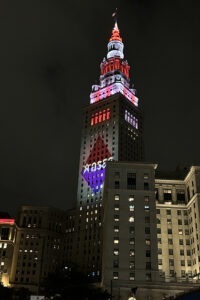



 “Happiness,” Brooks says, “is a combination of enjoyment, satisfaction and meaning.”
 “Satisfaction is a funny human thing,” says Brooks, “Because it’s the joy that you get after struggle.”
 Brooks explains, this doesn’t necessarily mean religious faith, although it can be for some people. When it comes to faith, he says, it’s something that gives you a sense of how vast life is and makes all the tedious tasks of life—commuting, having lunch, breaking down our finances—all seem a little less overwhelming. “You need to get small,” he says. Consider the bigger picture.