
penalties for airlines

On Tuesday, May 27, the U.S. Department of Transportation stated that it will increase penalties for airlines that mishandle passengers’ baggage and overbook flights. Tim Devaney of The Hill reports that airlines that lose or damage baggage could owe the passenger up to $3,500. The new fine, scheduled to take effect in 90 days, is a $100 increase over the previous limit of $3,400.

According to the DOT, 1.8 million passengers filed mishandled baggage claims in 2013. However, less than 0.6 percent of those claims were for more than $3,400. The DOT still expects the fine increase to cost airlines, collectively, an additional $1 million each year.

The department will also hike penalties for airlines that deny passengers boarding due to overbooked flights. Travelers that are involuntarily denied boarding would be eligible to receive $675-$1,350 in reimbursement.


Discover the Secret of an “All-Inclusive” Meeting in our FREE Webinar – Earn CEU Credits

For ways to prevent mishandled baggage, U.S. News & World Report Travel suggests four tips passengers can take before arriving at the airport.

-Arrive at the airport early. If you’re checking in luggage, this gives your bag plenty of time to get through security screening and onto the tarmac. This also gives you a chance to check if the routing label correctly lists the final destination. Short layovers can increase the odds of losing a bag. If an inbound flight is late, baggage handlers have less time to transfer luggage from one airplane to the next.

-Embellish your bag. Bright belts, ribbons or other unique markers are one of the best ways to make sure your suitcase isn’t accidentally taken by someone else. Unusual decorations can also catch the eye of baggage handlers who otherwise may have left it on a baggage cart. Don’t forget to leave identification inside the bag as well. Include a copy of your itinerary and contact information in case the outside tag gets damaged. This way, the airline can still contact you.

-Purchase a tracking device. Companies such as Trakdot, LugLoc and PocketFinder all employ GPS technology and companion smartphone apps to help passengers keep track of their bags. Although they won’t prevent your bag from getting lost, the devices can help airlines find your belongings faster. The tracking devices cost $49.99-$129.95.

-Know your passenger rights. If your luggage is lost, file a report with the airline before you leave the airport. Make sure you receive a copy of the report, and note the name and phone number of the airline representative helping you. Also check if the bag will be delivered to you at no additional cost. Although airlines will reimburse passengers for lost bags, sometimes you may also receive money to buy necessary toiletries. Ask which items can be reimbursed and save your receipts.

courtyard-marriottFor the fifth consecutive year, Courtyard Marriott will serve as the official hotel of the NFL. Last season they had a full lineup of football-related activities, guest packages and contests that proved to be a win-win for customers and the company alike. Promotions included tailgating parties, appearances by football legends, interactive fan photo experiences and exciting giveaways.

A series of sometimes humorous, sometimes touching videos made by Courtyard Camera debuted on YouTube. In a particularly engaging vignette, one lucky football fan checking into a Courtyard in Scottsdale, Arizona, got the surprise of his life when NFL personality Rich Eisen appeared, microphone in hand, and gave him two free tickets to Super Bowl XLIX in Glendale, Arizona. In another video, NFL superstars Eric Decker and Demaryius Thomas went undercover as Courtyard employees and presented fans with hard-to-score tickets.

Customers Also Scored With This Promotion

Recognizing the important of teamwork, Courtyard touched down with some other well-received promotions. The global brand celebrated the milestone of opening its 1,000th hotel, Courtyard Walla Walla in the state of Washington, by giving all Marriott Rewards guests who checked into any Courtyard worldwide that day 1,000 free points. The company gave away an estimated 50 million points.

The brand has been in existence for more than three decades. Within this past year it welcomed Courtyard Recife Boa Viagem in Brazil, its first property in the country, as well as Courtyard Abu Dhabi, its first property in U.A.E. Courtyard expects to have a presence in 40 countries, and in all 50 U.S. states, by the end of summer 2015.

Off the Field Activities

Courtyard is actively engaged in getting young people into the game. Earlier this year, the company partnered with the National Academy Foundation (NAF) to launch a program to involve 10,000 students and provide 30,000 volunteer hours over three years. The Success for Youth program is part of the organization’s commitment to the Clinton Global Initiative. The program is currently at NAF academies in Washington, D.C., Charlotte, N.C. and Seattle, Washington, but has the potential to expand to over 500 NAF academies and nearly 900 Courtyard properties in the future. Participating NAF students receive worksite tours, job shadowing, hands-on experience and mentorship opportunities in the hospitality industry.

For further information visit courtyard.marriott.com, become a fan at www.facebook.com/courtyard or follow Courtyard at www.twitter.com/courtyardhotels.


Like this content? Click here to get it Delivered FREE to your Inbox or your  Mailbox

baha-mar-the-bahamasMajor progress was achieved in resolving a dispute over an unfinished luxury resort in the Bahamas, but no deal was reached among the four parties involved, the Bahamian government reported.

The negotiations took place in Beijing involving Baha Mar Resort, a Nassau property that would provide 2,323 rooms divided among four new hotels, 700 refurbished rooms at an existing Melia hotel and 200,000 sq. ft. of meeting space. Last month, Baha Mar filed for Chapter 11 bankruptcy protection and its developer, Baha Mar Ltd., filed a claim against lead contractor China Construction America (CCA), blaming if for delays in completing work on the property.

Travel Weekly reported that on Monday and Tuesday, representatives from Baha Mar Ltd., CCA Bahamas, Export-Import Bank of China and a five-person delegation from the Bahamian government met to negotiate the situation. According to a Bahamian government spokeswoman, the bank is proposing $200 million in new lending to help complete the resort, but insisted that the loan be guaranteed by either Baha Mar Ltd. or CCA Bahamas, which is part of China State Construction Engineering Corp.

Baha Mar Ltd. reportedly offered to submit a standby letter of credit for $25 million and CCA offered to guarantee the remaining $175 million if it receives a corresponding guarantee of $100 million from Baha Mar Ltd. The developer refused to make such a guarantee and suggested that instead, the Bahamian government provide the bank with a sovereign guarantee of up to $175 million, the spokewoman said.

CCA has issued a statement blaming Baha Mar CEO Sarkis Izmirlian for not agreeing to make the $100 million guarantee and on Wednesday, Baha Mar Ltd. rebutted the government’s version of the negotiations and accused Bahamain officials of posturing to score political points.

According to the government spokeswoman, the negotiations in Beijing, “ended with the parties agreeing to continue discussions among themselves. It was understood, however, that in the meantime the parties might continue to pursue other legal options.”

The Bahamian government has petitioned the Supreme Court of the Commonwealth in Nassau to force Baha Mar Ltd. out of the resort project. The government has requested the court to appoint a third-party liquidator that would oversee the restructuring of the resort. A hearing is scheduled for tomorrow.

Baha Mar Resort, which is 97 percent complete, originally was scheduled to open by the end of 2014. It is expected to lure major meetings and conventions to the Bahamas and provide thousands of local jobs. Besides the hotels and meeting space, it will include a casino, a golf course, and more than 40 restaurants, bars and clubs.

Primapact Consortium Champions TravelSome heavy hitters from several sectors of the travel and tourism industry have banded together in a one-of-a-kind consortium called Primapact. The group officially announced its creation in July, stating that their primary purpose is to promote and advocate for travel and tourism.

Primapact’s main offices are located in Washington, D.C., but the consortium’s principals are spread across the country, in cities such as New York, Chicago, Houston and Scottsdale, Arizona.

“With our breadth of experience across the tourism industry and our commitment to a collaborative approach, Primapact offers the travel and tourism sector an unmatched level of service,” said Steve Richer, Primapact managing principal and federal tourism lobbyist.

Each of the principals has deep expertise in different arenas, including policy, research, advocacy, advertising, marketing, communications, public relations, training and international development relating to travel and tourism.

The group has already started working with clients to tackle complex economic issues and hurdles facing the modern age of tourism, from taxation and health care to navigating a globally competitive market, with a cohesive, strategic approach leveraging the expertise and networks of the group’s principals.

“With decades of experience in the tourism industry, we have established ourselves as thought leaders, and now we are excited to come together and bring that collective wisdom to our clients,” says Mark Begich, another of the group’s principals and former U.S. Senator from Alaska. “PRIMAPACT looks forward to bringing our approach to national, regional, and local tourism marketers, industry developers, operators, and distributors, and the host of related players in the global tourism economy.”

Roger Rickard has long served as an advocacy leader for meetings, conventions and trade shows, as well as destinations for the MICE industry. Playing to his strengths, Rickard spearheads Primapact’s efforts to create advocates for clients, using consulting, education, training, grassroots efforts and seminars to engage organizations.


Like this content? Click here to get it Delivered FREE to your Inbox or your  Mailbox

broadmoor-colorado-springsHow does a famous destination hotel stay fresh? In the case of The Broadmoor in Colorado Springs, it improves by diversifying. This week, The Broadmoor is hosting several members of the meetings media to explore its famous properties that now include The Ranch at Emerald Valley and Cloud Camp. The latter two properties offer a western vibe, with activities such as horseback riding, hiking, archery and fishing. Follow Smart Meetings social media posts this week to see all that The Broadmoor and its rustic new properties offer planners and meetings attendees. We’re starting our mornings with a cup of cowboy coffee. Join us to experience the buzz. Follow Smart Meetings Content Manager Holly Woolard’s adventures in Colorado at @SmartMtgsHolly.

Last Updated July 29, 2015 – 6:38 PM


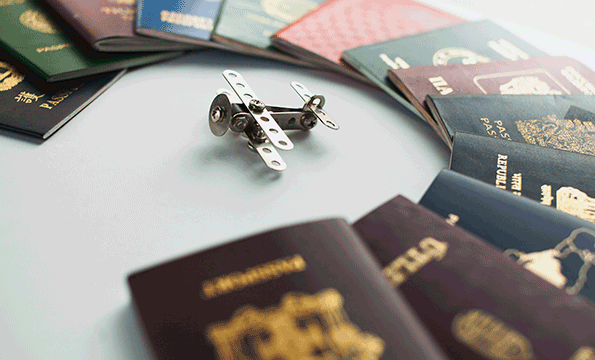
Best PassportsArton Capita, a financial firm that assists wealthy individuals obtain multiple citizenships, has ranked what it considers to be the world’s most powerful passports. Rankings were determined by analyzing how many countries passport holders can visit without an advance visa, or how quickly they could be granted a visa upon arrival.


In their opinion the 14 top-ranked passports, in order of preference:

Continue reading “The World’s 14 Most Powerful Passports”

jet lag to heart risks
For flight attendants and other frequent flyers that experience jet lag on a regular basis, a recent study has linked chronic jet lag to increased health risks. The research, published in the July 20 issue of the scientific journal Current Biology, was conducted on female mice with a predisposition to breast cancer. The mice were raised in a simulated environment with changes made to light and temperature once a week, which had drastic effects on sleep patterns.

Results showed that jet lagged mice developed cancer at a more rapid rate than the control group, which did not have any changes made to their habitat. The affected mice developed tumors eight weeks sooner than control mice, and also experienced significant weight gain despite eating the same amount of food. The impacted group was also found to have slept more in response to an irregular sleep-wake cycle.

Study authors from the National Institute of Public Health in the Netherlands surmise that the health issues were linked to the mice’s circadian rhythm, an internal clock that controls bodily functions in nearly every living organism. The mechanism regulates important functions such as breathing, sleeping and digestion. Scientists monitored changes using biological markers, including melatonin and cortisol hormones and body temperature.

Researcher Harry van Steeg compared what the mice endured to flying back and forth from Amsterdam to Australia once a week in the entirety of a single lifespan.  Since human and mice organ structures are nearly identical, scientists expect the findings would be similar in humans.

Mammalian circadian rhythms take into account environmental feedback, such as light patterns. The body’s organs function in accordance and change their timings when there is a disruption to its schedule. In cases of jet lag, an offset circadian rhythm can cause the brain to take longer to adjust, and thus affect other organs. This imbalance is believed to be the cause for arising health issues.

The study concludes that: “Due to the growing 24/7 economy, shift work will become increasingly part of our society and will, therefore, increasingly affect public health outcomes. Our experimental setup provides a unique tool for exploring underlying mechanisms as well as devising countermeasures.”

Like this content? Click here to get it Delivered FREE to your Inbox or your  Mailbox

ibtm america 2016

Nashville’s thriving entertainment scene is drawing one of its biggest acts yet. IBTM America 2016 has chosen Music City as host for its next meetings and events exhibition. It will take place from June 15-17 at the Gaylord Opryland Resort & Convention Center, which offers some of the largest hotel exhibit space in the U.S., with approximately 600,000 sq. ft.

The Gaylord Opryland Resort & Convention Center offers 2,882 guest rooms, six ballrooms, an exhibit hall with more than 260,000 sq. ft. of space, 17 restaurants, nine acres of indoor gardens and an additional 100 conference and breakout rooms that can accommodate up to 500. The property is located close to Nashville International Airport (BNA) and downtown-area attractions.

“The excitement behind delivering our event in different key convention cities in the U.S. adds variety and new experiences for all our attendees. Nashville is one of the hottest convention cities in America right now,” Jaime McAuley, event director of IBTM America, said in a statement.

IBTM America 2016 follows this year’s format, which took place in Chicago. More than 5,200 pre-scheduled appointments matched suppliers and buyers in a closed show environment at Chicago’s McCormick Place. Attendees averaged around 29 appointments in two to three days. IBTM America 2016 exhibitors will also be able to take advantage of a modular booth. Its pod design was a big hit with exhibitors, such as Tina Gerson, director of national accounts at The Diplomat Hotel Florida. Gerson said that the innovative pod concept took the show to another level.

“There is no doubt that IBTM America 2016 will deliver not only another successful business event, but it will also deliver a real experience for all of our attendees,” added McAuley. “We fully expect many will want to either arrive early or stay on to make the most of the facilities, whether it’s to spend more time in downtown Nashville or at the Gaylord, as this resort is certainly one of a kind.”

Never miss out on great new destinations. Subscribe to Smart Meetings magazine  – FREE!

Secrets to a Relaxing Summer Vacation

The season for summertime vacation and relaxation is finally here. But let’s face it. Not everyone comes back feeling well-rested and ready to return to work. Did you fly home from paradise late Sunday night, only to have to arrive at the office early Monday morning? Were you unable to disconnect from your mobile devices and fully enjoy your break? Or perhaps relaxation was next to impossible on a trip to see family. Whatever the reason, a much-deserved break could be sabotaged from the get-go without a few pre-planned tweaks to your travel itinerary. Here are six secrets to a relaxing summer vacation, so you don’t feel like you need a second one.

1. Leave With a Plan in Place

Make sure your colleagues are comfortable with their roles during your absence. Cover your bases by writing an action plan that they can refer to.  Consider delegating specific tasks to your team. For business clients, set up email memos to let them know how long you will be away and who they can contact. If you still need to keep communication open while you’re away, choose one point-person to report to.

2. Detach from Social Media

As tempting as it is to Instagram every fancy meal or beautiful vista, technology can stand in the way of fully embracing the moment. Cut out all mobile usage, including data roaming, push notifications and, yes, email. If you absolutely must be connected, limit email checking to once a day.

3. Slow Down and Stay Present

Resist the temptation to fill the day with activities from sunup to sundown. Fill the majority of your vacation time with relaxing activities such as poolside reading, midday massages or simply doing nothing. If you want to return feeling well-rested, vacation is not the time to overextend yourself.

4. Create Some Buffer Time

Give yourself an extra day of transition before returning to work. This gives you time to tackle post-holiday tasks, such as laundry, grocery shopping and emails. When you return to the office, schedule a coffee break so your co-workers can fill you in on what happened while you were away.

5. Intersperse Family Contact

If you experience stress in anticipation of an annual family visit, it may help to keep in touch more frequently. Maintain contact in different ways throughout the year, so that you aren’t trying to cram a year’s worth of contact in one trip. Skype, email and text to feel connected to loved ones more often.

6. Take a Staycation

Traveling to faraway destinations is not in everyone’s budget. And perhaps what you need most is sleep. But if you choose to stay home, don’t give in to your endless list of household chores and home improvements. Even if you don’t leave the house, you can still experience unfamiliar activities and relax in luxury. Hire a personal chef or call housekeeping for the week. Go to a different restaurant or see a new exhibit. Staying home doesn’t mean you can’t deviate from the norm.

Like this content? Click here to get it Delivered FREE to your Inbox or your  Mailbox

checked-bag-feesCongressman John Mica (R-FL) has introduced a bill that would limit the amount airlines could charge passengers for checked baggage to $4.50. Why $4.50? That’s the Passenger Facility Charge (PFC) that airports tack onto the cost of every airline ticket.

Mica, who serves as Chairman of the House Transportation Oversight Subcommittee, says, “This is fair and equitable since airports have been held to that fee level for handling passengers at the same $4.50 limitation by law for the past 15 years. During that decade and a half, most major carriers have imposed dramatically increased baggage and service fees. What’s good for the goose is good for the gander.”

As Brad Tuttle reports for money.com, airports are limited to $4.50 for each leg of a journey, and, in the case of a flight with multiple layovers, are capped at a maximum of $9 per one-way trip and $18 per round trip. The money is used—or at least is supposed to be used—to fund airport infrastructure maintenance and improvements.

Mica, however, believes that this is not the case. Although airlines are reaping the rewards of increased baggage fees, those revenues are not directly contributing to improvement in airport infrastructure. As Jelisa Castrodale points out on roadwarriors.com, Mica prepared a Congressional report in May called “U.S. Airports in Crisis,” highlighting the key infrastructure crisis that our domestic airports are facing.

Castrodale notes that Airlines for America, the country’s largest airline trade association, has criticized Mica’s proposal, stating, “What’s good for travelers is to not nearly double the tax they pay to step foot in an airport when airports have more than enough resources to invest in infrastructure today.”  Indeed, it is difficult to think of an airport project in America that has been halted due to a lack of resources.

Yet Checked Bag Fees Add Up

In the not too distant past, airlines charged nothing to check one—or even two—bags. The practice of tacking on fees of $25 or more per bag is now commonplace. This has resulted in a huge windfall for the airline industry. Revenue garnered from airline fees has tripled since 2008. According to statistics from the Department of Transportation, airlines collectively took in $3.6 billion in extra baggage fees in 2014, a 5.3% increase from 2013.