american-airlines

American Airlines will begin offering a host of free amenities, including snacks and more free movies, to coach passengers this month.

Passengers will receive Biscoff cookies on flights departing before 9:45 a.m., and a choice of Biscoff cookies or pretzels for flights leaving after 9:45 a.m. Beginning this month, the snacks will be available on American AIrline’s transcontinental flights, including routes between New York’s John F. Kennedy Airport (JFK) and Los Angeles International Airport (LAX); JFK and San Francisco International Airport (SFO); and LAX and Miami International Airport (MIA).

All other domestic flights will offer an assortment of complimentary snacks to coach passengers by April. The airline hasn’t offered free snacks in the main cabin since 2003.

Beginning in May, passengers in the main cabin will receive free meals on all flights between Hawaii and Dallas/Fort Worth International Airport (DFW).

American Airlines also is expanding its free options on domestic flights equipped with in-seat TVs. Choices will now include up to 40 movies, 60 TV shows and 300 music albums.

Starting in March, passengers in the premium cabin on long intercontinental and transcontinental flights will be given new, designer-label amenity kits and luxury sleepwear. International-, first- and business-class customers on several transpacific flights also will receive new luxury pajamas.

“We want customers to choose American every time they fly,” said Fernand Fernandez, the company’s vice president of global marketing, in a statement. “We are giving our customers more choices to enhance their personal flying experience by offering new service and new entertainment options in all cabins.”

Later this year, American will introduce premium economy seats on international routes served by the new Boeing 787-9 Dreamliner. Passengers will enjoy fully lie-flat seats, an upgraded assortment of health food and beverages, international Wi-Fi and more in-flight entertainment options.

A survey conducted by the Global Business Travel Association (GBTA) foundation in partnership with American Express asked business travelers with and without TSA PreCheck about their travel experiences to find out if the risk-based program really does make a difference in travel experience.

The online survey was conducted between September 21-29, 2015 and polled 804 business travelers whose primary residence is in the U.S. and took at least four business trips in the last year. The survey inquired about overall travel experience, corporate environments, social media, travel safety, and travel management policy, among other topics.

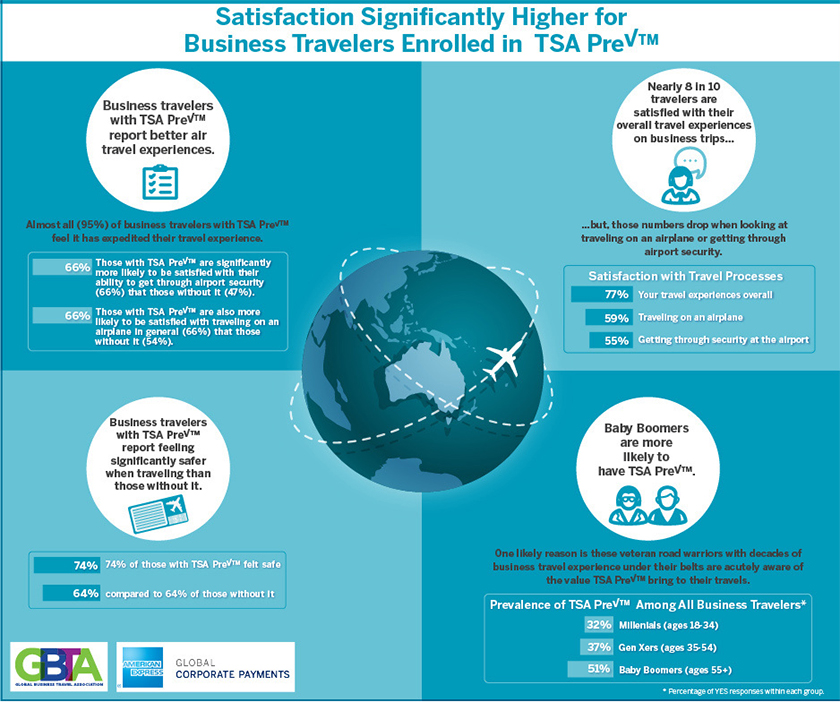
Of those who answered that they are satisfied with their experience getting through airport security, 66 percent are enrolled in TSA PreCheck, compared to 47 percent who are not enrolled in the program and answered the same.

Those enrolled in TSA PreCheck are more likely to be satisfied with traveling on an airplane, too. 66 percent of those enrolled agreed, versus 54 percent for those not enrolled.

The survey also indicated that business travelers ages 55 and up are much more likely to enroll in the program than their younger co-travelers. 51 percent were 55 or older, 37 percent were between 35-54, and only 32 percent were between 18-34-years-old.

(Photo courtesy GBTA.org)
The study found those with TSA PreCheck had higher satisfaction rates. (Photo courtesy GBTA.org)

Getting through security at the airport is consistently cited as one of the largest pain points for business travelers.

“This insight into the mindset and attitudes of business travelers shows that programs like this work and make for a better business travel experience,” said Michael W. McCormick, Executive Director and COO of the GBTA.

Do You Qualify for TSA PreCheck?

TSA PreCheck is a risk-based screening system designed to make the air travel process safer, smoother and more secure. It lets eligible, low-risk travelers enjoy expedited security screening (those enrolled don’t need to remove shoes, liquids from their carry-on, laptops, light outerwear, belts, etc.) The application fee is $85 and is valid for five years.

Eligibility is specific to U.S. citizens and lawful permanent residents (LPR) that haven’t been convicted of certain crimes. The program is available at more than 150 participating U.S. airport locations and for most international itineraries. Airlines that offer TSA PreCheck are Air Canada, Hawaiian Airlines, United Airlines, Alaska Airlines, JetBlue Airways, Virgin America, WestJet, OneJet, Allegiant Airlines, American Airlines, Southwest Airlines, Delta Air Lines, and Sun Country.

zika-virus-outbreakCDC has issued a travel alert (Level 2-Practice Enhanced Precautions) for people traveling to regions and certain countries where Zika virus transmission is ongoing: Brazil, Colombia, El Salvador, French Guiana, Guatemala, Haiti, Honduras, Martinique, Mexico, Panama, Paraguay, Suriname, Venezuela, and the Commonwealth of Puerto Rico.

This alert follows reports in Brazil of microcephaly and other poor pregnancy outcomes in babies of mothers who were infected with Zika virus while pregnant. However, additional studies are needed to further characterize this relationship. More studies are planned to learn more about the risks of Zika virus infection during pregnancy.

Until more is known, and out of an abundance of caution, CDC recommends special precautions for pregnant women and women trying to become pregnant:

Pregnant women in any trimester should consider postponing travel to the areas where Zika virus transmission is ongoing. Pregnant women who must travel to one of these areas should talk to their doctor or other healthcare provider first and strictly follow steps to avoid mosquito bitesduring the trip.

Women trying to become pregnant should consult with their healthcare provider before traveling to these areas and strictly follow steps to prevent mosquito bites during the trip.

Because specific areas where Zika virus transmission is ongoing are difficult to determine and likely to change over time, CDC will update this travel notice as information becomes available. Check the CDC travel website frequently for the most up-to-date recommendations.

Currently, there is no vaccine to prevent or medicine to treat Zika. Four in five people who acquire Zika infection may have no symptoms. Illness from Zika is usually mild and does not require hospitalization. Travelers are strongly urged to protect themselves by preventing mosquito bites:

Wear long-sleeved shirts and long pants

Use EPA-registered insect repellents containing DEET, picaridin, oil of lemon eucalyptus (OLE), or IR3535. Always use as directed.

Insect repellents containing DEET, picaridin, and IR3535 are safe for pregnant and nursing women and children older than 2 months when used according to the product label. Oil of lemon eucalyptus products should not be used on children under 3 years of age.

Use permethrin-treated clothing and gear (such as boots, pants, socks, and tents).

Stay and sleep in screened-in or air-conditioned rooms.

In addition to the steps announced today, CDC is working with public health experts across the U.S. Department of Health and Human Services (HHS) to take additional steps related to Zika. CDC is developing interim guidance for pregnant women as well as sharing additional information about Zika with public health officials, clinicians and the public.  In addition, efforts are underway across HHS to develop vaccines, improved diagnostics and other countermeasures for Zika.

In-Flight Wi-Fi

A massive expansion of in-flight Wi-Fi and strategic use of accent lighting throughout cabins are among the top airline trends, suggests a short list of submissions for the 2016 Crystal Cabin Awards.

The awards, which have been given out annually since 2007, are the only international prizes for excellence in aircraft interior innovation, and are intended to initiate a significant improvement in passenger comfort. This year, 98 entries were submitted from 18 countries, and 78 made the short list. Based on the nature of the entries, Skift identified seven major trends in the airline industry.

-In-Flight Entertainment manufacturers are increasing airline options: More innovations could soon emerge, following such products as the iPAX by Lumexis wireless IFE system, which offers passengers a selection of high-definition entertainment on thin, light-weight seat-back screens. Such new aircraft products will continue to compete with the rapid growth of Bring Your Own Device (BYOD) entertainment devices.

-Wi-Fi continues to expand and improve: Several airlines have been upgrading aircraft to third-generation of in-flight Wi-Fi, progressing from “basic” to “better” and now “best,” according to Routehappy’s State of In-Flight Survey, which also found that many more non-U.S. airlines now have substantial Wi-Fi offerings.

-Innovative device-charging is emerging: Concepts are being developed that will facilitate charging of devices on surfaces, without the needs of cables of plugs. This will become all the more important as BYOD entertainment continues to require more power, since cables and plugs can be a nuisance.

-Virtual reality headsets could take off: They offer a personal immersive entertainment experience that neither personal electronic devices nor in-seat entertainment systems can match. These virtual reality items are not carry-on friendly, however, and tests suggest that prolonged use of them can cause nausea and headache

-Airlines are evolving from basic mood lighting to accent lighting: Boeing engineers are looking to enhance the passenger cabin experience with strategic use of accent lighting throughout the cabin. They’re also developing projections of light and imagery on the ceiling, walls and bulkheads. Future aircraft could project starry nights on the ceiling to help passengers sleep at night or sunny, blue skies during the day.

-New 3-D printing technology will revolutionize manufacturing: Airbus already is using additive layer manufacturing—involving  3-D printers producing prototypes and series components—on some of its jetliners, resulting in shorter lead times, fewer materials used during production and a significant reduction in the environmental footprint left by the manufacturing process. And the possible applications for aviation components will keep growing.

-Cabins might become more comfortable: Airlines’ concerns about profit margins aren’t likely to allow for increasing passenger space, but companies such as Airbus are considering designs that could better use available space. Some proposals require radical structural redesigns, while others would tear traditional airline service models down to build better ones. In one model, a traditional nine-across seating configuration is transformed into a section with two rows of triples, which can be further separated by movable tide breaks and noise-canceling hoods to create ad-hoc spaces. On the other side of a divider panel, which lets in plenty of light, three seats are divided by a row, making room for couples and passengers traveling alone.

tips-for-marketing-your-eventOn Jan. 19, Bizzabo Content Marketing Manager David Epstein presented a Smart Meetings webinar where he shared strategies and tips for effectively marketing events and conferences. He discussed proven strategies that can help planners attract more registrants, and better engage them before, during and after the event.

To hear an archived transcript of the presentation, click here.

Since Epstein did not have the opportunity to answer all the questions posed from the audience during the webinar, he is happy to provide those answers below.

Is it necessary to create marketing personas for every event you plan?

If you only plan to implement a very basic market strategy, like simply emailing a few of your contacts, than it isn’t necessary to create marketing personas. However, if you’re organizing any sort of event or conference that might involve a series of marketing channels, then creating marketing personas is a great thing to do.

It’s important to keep in mind that personas are designed to make it easier for event organizers to better understand what their marketing plan should look like—they are a tool to help you make better decisions.

It’s typically a good idea to start by creating one or a few (up to four) marketing personas so that you can better understand what marketing channels will be most effective to bring attention to your event or conference.

What percentage of an event budget would you use towards paid advertising?

Investment in ads, or any other channel, should be proportionate to the return on investment that channel brings. If paid ads are bringing you 80% of ticketing revenue, that means investing a majority of your marketing budget is justified.

If after a week or so of experimentation you aren’t seeing a return on your investment, that means that your ad strategy is wrong (revisit your personas in that case) or, that other marketing channels might serve you better.

How often have you retargeted an ad and what was your success rate, i.e., was it at the 50-60% rate?

Retargeting ads have been shown to be quite successful because they help to persistently remind users who are already engaged about your brand. The level of success that you can expect will vary depending on your industry and budget, among other factors.

Expecting a 50-60% conversion rate from retargeted ads would be a very ambitious goal, but expecting a 50-60% better conversion rate is reasonable. A conversion rate that’s a bit under 1% has been reported by a few different online advertisers.

What is an on-page registration system? Is Bizzabo considered an on-page?

Bizzabo does offer an on-page event registration platform as part of an all-in-one event planning software platform. Unlike other systems that redirect event registrants to another website, Bizzabo’s solution keeps registrants on your own event website. Not only does this mean that organizers have full control over the brand experience that visitors enjoy, but it also makes it easier for event marketers to employ retargeting ads.

Is it always better to have social media posts redirect to an event web page?

Contrary to popular belief, social media platforms aren’t just about driving traffic to your own event website. In order to cultivate an audience of truly engaged followers or fans, it’s important to share genuinely helpful content with them.

If you have an event blog that consistently publishes great content, than it might be ok to regularly share those articles on social media. But if you simply have an event website that doesn’t feature a lot of helpful resources, consider sharing content from related outlets first, while occasionally promoting your next event as well.

To use blogs as content marketing, what topics do you think are impactful to start with and to build a following?

Blog post topics that work best will vary depending on your marketing personas. In order to get a sense for what your audience might find interesting, consider turning to platforms like Quora, or LinkedIn Groups.

Take note of the questions users are already asking about the industry your conference is covering. Then, ask your event speakers, influential event attendees or sponsors to help you create an article, video interview, eBook or other piece of content to better educate those in your industry.

Is search engine optimization (SEO) a part of content marketing, or is that a different marketing strategy?

Search engine optimization isn’t the same as content marketing, though the two strategies are related. SEO has to do with improving on-page and off-page ranking factors to improve your organic search engine presence.

Content marketing is about providing valuable resources to those in your audience in an effort to raise brand awareness, capture leads and build a following. Certain aspects of content marketing, like blogging, can be made SEO-friendly, but content marketers and SEO experts specialize in different things. For more information on SEO for event organizers, you can grab this SEO eBook.


bizzabo-event-designDavid Epstein is the Content Marketing Manager at Bizzabo. Launched in July 2012, Bizzabo is the world’s first event success platform. It helps organizers create successful events by empowering them to build amazing websites, sell tickets, grow communities, go mobile and maximize event experiences – using a beautiful, user-friendly platform.
aria-key-meeting-propertiesIt’s no surprise that some of our favorite meetings properties are on top of the U.S. News and World Report’s “Best Hotels in the USA” list that came out Jan. 28.
Grabbing the No. 1 spot for best hotels is The Lodge at Sea Island, off the coast of Georgia on St. Simons Island. There are 40 luxurious guest rooms, with expansive views of the Atlantic Ocean, St. Simons Sound and the resort’s golf courses. Offering 25,000 sq. ft. of meeting space, The Lodge can host both intimate executive retreats and galas. When meetings are done, attendees can play a round of golf, go kayaking or fishing, or just relax on the private oceanfront beach.

Closing in on its 100th birthday The Jefferson, Washington, DC, is ranked No. 2 in the Best Hotels report. Dignitaries have been meeting at this grand dame since it opened in 1923. There are 95 guest rooms and two specialty suites. There are historic meetings spaces with character, including a cozy library that can hold 30 and a banquet room that can host 80 for receptions and 46 for a seated affair.

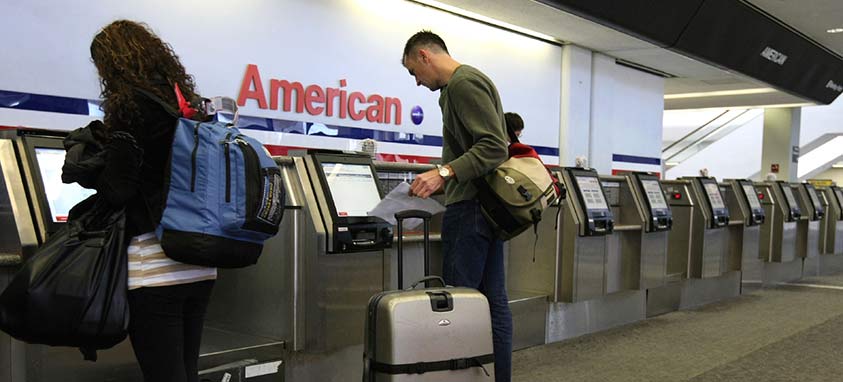
Aria Sky Suites in Las Vegas ranked No. 3 among Best Hotels. The AAA Five Diamond Sky Suites are located on top of Aria Resort & Casino, which is one of the top meeting properties on The Strip. Aria has 4,004 guest rooms, including the Sky Suites. Aria’s meeting space is incredible and it’s about to get even better. In December, Aria announced a $154 million convention center project that would add 200,000 sq. ft. of event space and bolster its total to more than 500,000 sq. ft. Construction will begin in May and is expected to be completed by 2018.

“Convention business at Aria is booming, and demand is currently exceeding the space we have available,” said Bobby Baldwin, Aria’s president and COO. “Hosting large meetings and conventions is a core part of our business; as our clients’ needs grow, we are committed to grow with them.”

Best Hotels

Here are the Top 10 from the Best Hotels report:

The Lodge at Sea Island, St. Simons Island, Georgia
The Jefferson, Washington, DC
Aria Sky Suites, Las Vegas
Four Seasons Resort Hualalai, Kailua Kona, Hawaii
The Peninsula Beverly Hills, California
Montage Palmetto Bluff, Bluffton, South Carolina
The Langham, Chicago
Mandarin Oriental, Las Vegas
Waldorf Astoria Chicago
Auberge du Soleil, Rutherford, California

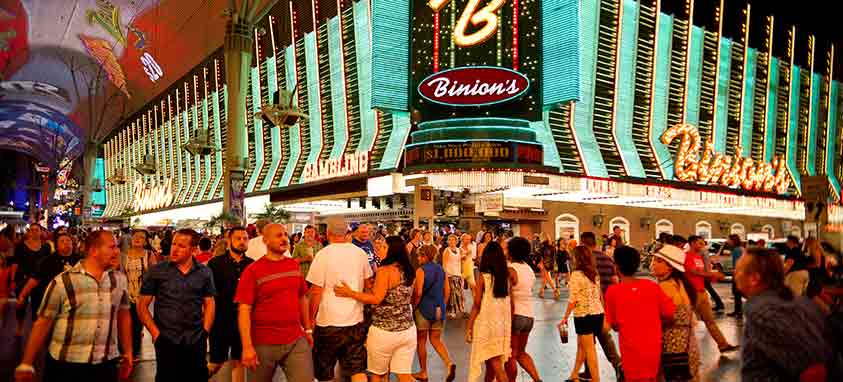
tourism-from-indiaIn an effort to attract more business from India, Nevada is opening a tourism office in New Delhi. State Lt. Governor Mark Hutchison headed to India this week on an official visit. He will return Feb. 1.
“Opening an office in India will provide Nevada with greater opportunities to promote international travel and tourism to our state,” Hutchison said in a statement. “With a new office in New Delhi, I am confident that our increased presence will encourage even more tourists from India to visit the Silver State.”

Indian Travel Market is Strong

The most common reasons cited by Indians for overseas travel are to visit family in the United States, shop at big malls, view wildlife, go camping and visit historical monuments. The Associated Press reports that Nevada currently has a 6.5 percent share of the India travel market.

According to an article in the Las Vegas Review-Journal, 19 percent of Indian immigrants to the U.S. live in California. The majority have settled in the Bay Area, which Nevada actively targets for tourism.

The individuals representing Nevada in India are not employed by the state of Nevada. The newspaper quotes an email from Bethany Drysdale, public relations director for TravelNevda, who writes, “We have approximately four people who will work directly with us to represent Nevada in India, but they are not employees of the state of Nevada, they are employees of the representative firm, Sartha Global. They were officially contracted with us late last year, but this is the first public event announcing our presence in India.”

Drysdale notes that in addition to India, Nevada has travel and tourism representative offices in Australia, Brazil, Canada, France, Germany, Mexico, the U.K. and South Korea. The offices provide media outreach, press releases, sales calls, in-market websites and collateral. They also conduct familiarization tours in Nevada and coordinate sales and marketing campaigns.

State of the International Traveler Study

The 2015 State of the International Traveler study surveyed 829 international travelers in India, learning that Indian travelers take an average of 9.1 overnight trips and 2.5 international trips annually. More than half of those queried (59 percent) anticipate more international travel in the coming year, and they expect to spend more money. On average, Indian travelers budget $5,451 annually for overseas travel. They tend to stay in mid-priced hotels.

The Las Vegas Review-Journal notes that:

India has a population of around 1.2 billion; roughly 65 percent are under the age of 35.

More than 50 million people have passports.

The percentage of Indian residents with disposable income has grown 14 percent in the last three years.

Incentive Travel

As any business owner or senior HR executive will attest, finding ways to effectively motivate your staff is an ongoing challenge. While it may seem like a relatively simple solution to throw money at the problem, studies and reports reveal that incentive travel is an effective motivator thanks to the intangible spirit of adventure.

With the upturn in the economy, more employers can afford incentive travel programs for employees, making incentive travel a potentially bigger motivator than it’s ever been.


Discover the Secret of  an “All-Inclusive” Meeting in our FREE Webinar – Earn CEU Credits

Recent data from the Incentive Research Foundation appears to bear this out. For example:

At least 46 percent of U.S. businesses use incentive travel.

Organizations that provide non-cash rewards have revenue increases three times higher than average.

Companies with the highest customer retention and sales growth offer group travel to reward year-end sales goals.

Well-designed and well-executed incentive travel programs can increase sales productivity by 18 percent and produce an ROI of up to 112 percent.

Among other conclusions about the popularity of incentive travel, the top destination for incentive travel programs is the Caribbean. In fact, “all-inclusive” incentive travel packages to exotic locations are among the most popular incentive programs available right now.

But did you know these all-inclusive travel packages actually got their start over 20 years ago?

To find out more about the origins and the opportunities behind all-inclusive resort packages and to get ideas on how you can leverage these packages for your own incentive travel reward programs, please join John Iannini, vice president of meetings and events for Meliá Hotels International,  in our “All-Inclusive” webcast on Tuesday, June 23.

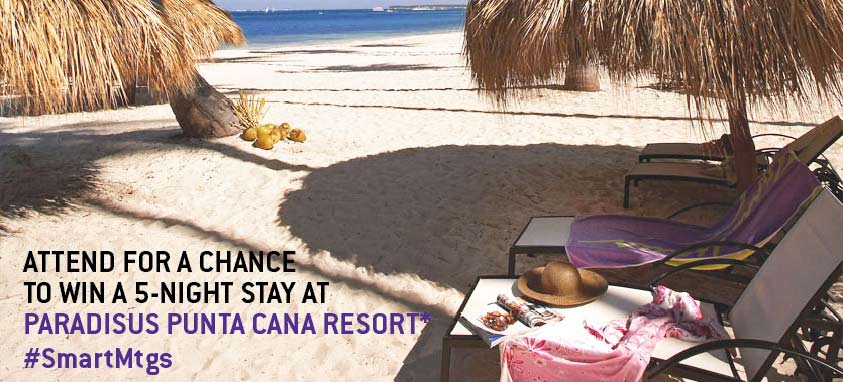
Meliá has 351 hotels in 35 countries on four continents. It’s the 16th largest hotel chain in the world. Among Meliá’s all-inclusive properties are its Paradisus brand properties in Cancun and Playa del Carmen, Mexico, Punta Cana, The Dominican Republic, and Guanacaste, Costa Rica.

paradisus-punta-cana

Organize A Green EventFrustrated, confused or tired of green or sustainable meetings? You’re not alone. Between diverse standards, complicated issues and conflicting priorities sometimes it can seem easier to not bother. Over the last ten years Paul Salinger and Shawna McKinley have seen a lot of event sustainability ups and downs while steering responsibility efforts for Oracle events. They’ve seen ideas come and go, and learned (sometimes the hard way) what works and what doesn’t when it comes to developing and implementing a successful and manageable sustainable event program.

Fresh from our Smart Meetings Webinar Series, we bring you an in-depth Q&A with Salinger and McKinley as they answer some of our audience’s questions and provide insight on the best ways to green-up your events.

Q&A

Sponsored By

Hyatt Regency Maui Resort and Spa


Where can one get the standards?
ISO 20121 is available for purchase via the ISO website. The APEX ASTM Environmentally Sustainable Event Standard is available for purchase via the Convention Industry Council website (which also includes some helpful FAQs). The Global Reporting Initiative Event Organizer’s Sector Supplement is a reporting standard, and is available for free via the GRI website.

Are there any certifications that event planners can obtain to demonstrate their green meeting expertise?

While the CMP has integrated more content related to sustainability, it obviously certifies broader expertise. So if you’re interested in demonstrating your expertise just for this aspect, the Sustainable Event Alliance offers an on-demand Accredited Professional designation that tests your expertise in event sustainability, including green meetings. The Green Meeting Industry Council and Meeting Professionals International have also run certificate courses in-person and virtually, so it can pay to see if there are any upcoming courses scheduled that you might join.

Are you aware of any venues adding a “green” savings on their invoices to validate a green savings?

Directly sharing cost savings from “green” venue practices is not a common thing. Mainly because the financial benefits of running a “greener” building are hard to translate to an event-specific context. Once you install thermal windows or upgrade to water-conserving fixtures, for example, the reduction in operating costs is universal, and experienced by everyone who uses the facility. You may not see a benefit on the invoice, but these features help keep costs of operating the building in check. The one exception can be waste which is variable event-to-event. Venues may itemize the bottom line benefit of reducing waste, which results in less garbage cost where this is charged separately. In some cases, venues will charge a reduced fee for recycling compared to landfill, and might itemize the cost-benefit. This is typically something you need to ask for, however, as it’s not automatically shared.

Would you say running a more sustainable event is more costly? If so, do you have examples on how to stay on budget?

When you are looking to gain support, savings help. However, there typically comes a point where the low-hanging, cost-saving fruit, such as reducing printing, are harvested, and you need to look at things that may be more costly. Ideally you try to do both at the same time: a little bit of cost saving on vegetarian entrees or portion control so you have a bit extra to invest in organic ingredients, for example. There are also opportunities for sponsorship to consider: Fair Trade breakfasts or breaks, pedometer challenges that promote walking and reduce shuttling, branded waste stations, or volunteer activities. These can actually help increase the budget. Another new and exciting option involves sharing materials and service providers across events. For example, approaching your venue CSM to see if you might contact organizers of events before and after you to economize on production costs by working with the same staging, AV or general services contractor.

How do you suggest promoting the event’s sustainable efforts without making it sound like you’re tooting your own horn?

There is a fine line between being transparent and being too marketing-oriented with your sustainable event effort. A good step is to learn and disclose what your impacts are first, then the ways you are trying to reduce those impacts and lastly the benefits you’re creating as a result. Sometimes we jump ahead to only show the good things, and avoid recognizing our event has negative impacts, too. When we gloss over these it can put us at risk of greenwashing, or misstating our efforts. It can help to focus on the most meaningful impacts and actions, too. So if your objective is to reduce waste, state what your waste impact is, then the steps you’re taking to reduce that impact. Accompanying data also helps evaluate your success and earns credibility, so share it to build trust. Be honest and humble. It can also help to focus on what your participants care about. This can naturally shift communications away from tooting your horn to affirming that you are responsibly addressing problems that matter to them.

When budget is normally the driver, how do you promote the tradeoff of a possible small increase in expense but an ROI that is more than financial?

Try to describe the non-financial sustainability objectives that matter to you. This is not a checklist, it’s a statement of purpose. Maybe you’re looking to reduce landfill or food waste, or increase participation without increasing carbon impact through virtual approaches. Or perhaps you want to give back through a service project that enhances your reputation. What is important is to have a clear objective and ways to measure success against it. Data points might include weight of waste per person, carbon emissions per person or the financial value of volunteer service at your event. This way you have data that can be considered along with costs, so the non-financial ROI is known specifically and can be defended. Until you have a clear purpose and way to measure it, non-financial sustainability ROI may not survive budget cuts.

What are some good resources to see how/where you can donate food from a meeting?

Several we would recommend for reducing food waste and donating food:

Food Waste Reduction Alliance
La Tablee des Chefs
Rock and Wrap it Up
Food Donation Connection
Feeding America
Food Banks Canada

Also, the Whole Earth Calculator is a great way to socialize your donation at an event.

How do you get hotels to bypass health regulations to be able to donate leftover food?

Successful food donation happens when a caterer has the desire, equipment and staff that is able to maintain the hot/cold food handling chain to ensure perishable food is safe to donate, and a partnership with a beneficiary who can do the same once the food leaves the venue (by having a refrigerated truck, for example). And it requires the planner to be open to service norms that maximize recovery potential. So that means being okay to not pre-plate 100% of tables so salad can be kept cold in the kitchen in case there is extra to donate, or not refreshing buffets until pans are empty. So it’s not a question of skirting the regulations really, it’s about working within them to maximize recovery. For example, unserved portions are kept in the kitchen cold or hot storage and placed in pans and frozen for pick up. Or, perhaps sliced tropical fruit platters become local whole fruit bowls so items are more easily kept fresh for donation.


Live Webinar Updates:


san-antonio-boosts-convention-offeringsSan Antonio unveiled the transformed Henry B. Gonzalez Convention Center on Tuesday, featuring a new 54,000-square-foot ballroom and approximately 260,000 sq. ft. of additional exhibit space.

The $325 million expansion increases the center’s footprint to 1.6 million sq. ft. The facility now offers 514,000 sq. ft. of contiguous exhibit space, 86,500 sq. ft. of column-free multipurpose space, 70 meeting spaces and the 54,000-square-foot Stars at Night Ballroom.

Others new features include enhanced access to areas throughout the building, innovative eco-friendly design, advanced technology and public art that exudes the history and culture of San Antonio.

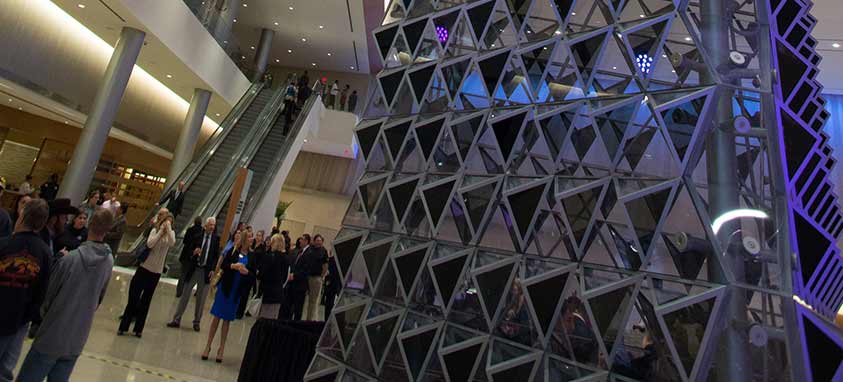
Tuesday festivities included the unveiling of Liquid Crystal, a public art installation by artist Jason Burges that is located in the center’s expansive new lobby atrium. The piece’s 3,510 LCD interactive panels create a digital fountain effect where the flow depends upon the number of people inside the atrium.

The convention center, set on the Riverwalk, was built in 1968 when San Antonio hosted the World’s Fair. Several renovations and additions have taken place since then, but this new expansion is the largest capital improvement project in the city’s history. It aims to further solidify the convention center as a top destination for conferences and events while finding creative ways to integrate it into the surrounding downtown area and neighboring Hemisfair Park.

Plans call for Hemisfair Park to be expanded to provide enhanced opportunities for outdoor events. This will be made possible by the demolition of the original convention center structure at the site, and a new addition that has already been built on the west side of the conference center.