michael-dominguez-imex15Virtually everywhere you look, things are rapidly changing in the meetings industry, highlighted by exciting developments in technology, sustainability, health and wellness, and the need to implement changes to satisfy millennials.

But one of the leaders of the industry, Michael Dominguez–senior vice president and chief sales officer for MGM Resorts International, views many of these developments as efforts to get back to the basics of human interactions.

“In trying to make meetings impactful, sometimes the industry forgets the importance of connections,” he says. “At MGM, we’re making a real, conscious effort to promote engagement and interaction.

“In Las Vegas, part of this requires getting away from the old image of the destination as a place where people just stay inside properties and meet in boring conference rooms.”


Like this content? Register for our next FREE Webinar, “Casinos: Why Integrated Resorts Are The Perfect Meeting Partner” with presenter Michael Dominguez

One of MGM’s major effort to expand options is the Monte Carlo and New York-New York revitalization, which will feature The Park, an immersive outdoor destination spanning more than 8 acres. It will offer spaces for exploring, socializing, relaxing and sampling the tastes, sights and sounds. Casual restaurants and bars, live music and social games will be among the highlights. It’s expected to open in 2016.

He expects that The Park will be a big draw among millennials. Dominguez disagrees with a stereotypical image of millennials as totally immersed in technology, often at the expense of personal interaction. He also feels millennials should be divided into two groups.

“Older millennials, the 28-to-34-year-olds, are generally immersed in careers, while most younger millennials aren’t in the real work world yet,” Dominguez says.

“The older millennials generally are drawn to engaging, interactive experiences,” he adds.
“The question is, ‘How do we make experiences impactful for them?’ They are looking for networking and membership.”

He views the sometimes-strained relationship between baby boomers and millennials as an opportunity for growth.

“Baby boomers need to sit down with them, ask how they would like to develop, and then set up a structure for them,” Dominguez says. “We all need to start over by talking more with each other.”

video-conferencing

As satellite offices, work travel, and even employees working from home and from coworking spaces become mainstream in so many businesses, the ability to videoconference has become more sought-after than phone calls as a way to keep those working remote more connected. Seeing faces and responses in real time ensures everyone participating in the conversation is alert and involved, versus a phone call which can allow for distracted multitasking.

But while many remote employees agree that videoconferencing makes them feel more like part of the office, it comes with its share of hang-ups, too.

Communications firm West Unified conducted a survey on different conferencing methods and found that workers prefer audio over videoconferencing three-to-one and less than 25 percent of workers receive any training on the nuances of video etiquette.

Here are some of the most interesting takeaways from the survey:

82% of employees prepare more for video calls and 73% are more engaged versus audio calls.

Millennials are twice as likely to be uneasy about video sales calls than those of the baby boomer generation, yet baby boomers are more likely to be uneasy about video job interviews.

Some of the biggest concerns about video calls include fear of public speaking and physical appearance, and reported annoyances include distracting background noise, late callers, and participants talking over one another.

Videoconferencing, despite its hindrances, provides huge convenience for multi-location offices and work-from-home employees, and isn’t showing any signs of fading. So its up to businesses to tackle the issues first-hand, by providing physical hardware training as well as etiquette training, and by listening to feedback and implementing changes to make video conferencing as seamless and effective as possible.


capitol-hill white house correspondents' dinner

Washington Hilton was featured thousands of times over the weekend following the White House Correspondents’ Dinner held on Saturday night. In his final speech at the annual Capitol Hill roast, President Barack Obama landed jab after jab on 2016 presidential candidates, national media members and even himself, joking about how much he’s aged during his two-term run.

For those of us in the meetings and events industry, the coverage begs for a few answers to questions most of us asked ourselves:

Where is Washington Hilton located?
How much meeting space does it boast?
How many guest rooms does it have?
What other prominent events have been hosted at this property?

The 12-story property opened in 1965, establishing itself as an entertainment center with performances by The Doors in 1967 and Jimi Hendrix in 1968. Washington Hilton has also been a key meetings and events venue. For example, in 1972, it hosted the International Conference on Computer Communications, where Department of Defense technology was introduced and helped established the foundation for the Internet. Besides the White House Correspondents’ Dinner, the Hilton annually hosts the National Prayer Breakfast.

Located four blocks from the Dupont Circle Metro station, the Hilton straddles Washington, DC’s trendiest neighbors. Besides Dupont Circle, the Hilton is near Adams Morgan, U Street and 14th Street. The fact that you can walk or cab it to and from the Metro station is huge, especially for attendees.

Washington Hilton offers 110,000 sq. ft. of meeting space, including the 36,000-square-foot International Ballroom that regularly hosts black-tie galas for up to 2,670.

White House Correspondents’ Dinner

The White House Correspondents’ Dinner is limited to 2,600 seats, with news organizations grabbing tables and seats with aggressive strategies. It’s one of the top tickets every year, but even more so during the Obama presidency due to his humor and popularity. (There are 260 tables with 10 seats each; the cost of the dinner is $300 per seat, with proceeds benefiting scholarships.)

The Hilton offers more than 1,000 guest rooms and four restaurants. Amenities include a car rental desk, gift shop, multilingual staff and tour desk. Of course, the tour desk is key for attendees hoping to do a little sightseeing while in town.

On Saturday night, all eyes were on President Barack Obama during his final speech at the White House Correspondents’ Dinner.

Xperience Design Project

During the opening keynote at Springtime Expo, which was held on April 28 at Walter E. Washington Convention Center in Washington, D.C., American Society of Association Executives (ASAE) announced a new event for the association industry called Xperience Design Project (XDP). The new design thinking format will be a two-day, business event for association professionals and industry partners to co-create solutions around shared challenges in the meetings industry. The inaugural Xperience Design Project will be held May 23-24, 2017, at Gaylord National Resort & Convention Center in National Harbor, Maryland.

“We are excited about XDP because it will be a game changer for the association industry. It will provide attendees and industry partners the opportunity to discuss topics together and create innovative and effective solutions,” said ASAE President and CEO John H. Graham, IV, FASAE, CAE. “The event will be 100 percent interactive, allow for one-on-one conversations, and build important relationships, so our members and industry partners can elevate how they conduct business as well as implement their meetings.”

XDP will have various formats, including The Lab, Connections and Business Exchange. On day one, attendees will participate in The Lab, an immersive, interactive learning experience around six key topic areas, and Connections, an evening social event. On the second day, attendees will hear key takeaways from each of the six topics and take part in the Business Exchange, a series of one-on-one conversations with industry partners.

ASAE partnered with 360 Live Media, a D.C.-based marketing and experience design agency, to develop the concept of the new event. ASAE and 360 Live Media went through a three-part development process that included research, experience strategy and design, industry co-curation and branding of XDP.

“We are honored to partner with ASAE in developing the vision, strategy and experience design for XDP. This will be a transformational experience for the association community, and it will showcase and advance ASAE’s leadership in innovation. We can’t wait to launch XDP with ASAE in May 2017,” said Don Neal, founder and CEO of 360 Live Media.

ASAE is a membership organization of more than 21,000 association executives and industry partners representing 9,300 organizations. Its members manage leading trade associations, individual membership societies and voluntary organizations across the United States and in nearly 50 countries around the world. With support of the ASAE Foundation, a separate nonprofit entity, ASAE is the premier source of learning, knowledge and future-oriented research for the association and nonprofit profession, and provides resources, education, ideas and advocacy to enhance the power and performance of the association and nonprofit community. For more information about ASAE, visit asaecenter.org.

top 10 companies for diversity

It’s no surprise that hospitality and entertainment brands are among the leaders for diversity. According to a survey of more than 1,800 U.S. companies, DiversityInc has identified its Top 50 leaders for diversity.

Marriott International Inc. leads the way among hospitality providers with a No. 9 ranking. Wyndham Worldwide checks in at No. 27, The Walt Disney Company is at No. 38 and Hilton Worldwide was rated No. 42.

In its 17th year, the free report card assesses performance based on four key areas of diversity management:

-Talent Pipeline: workforce breakdown, recruitment, diameter of existing talent, structures

-Equitable Talent Development: employee resource groups, mentoring, philanthropy, movement, fairness

-CEO/Leadership Commitment: accountability for results, personal communications, visibility

-Supplier Diversity: spend with companies owned by people from underrepresented groups, accountability, support

The survey, which ranks Kaiser Permanente No. 1, revealed that the Top 10 rated companies feature diverse senior management, with women making up 39.2, and Blacks, Hispanics and Asians at 18.3 percent. For the top 50, those numbers dipped to 33.3 percent and 15 percent. Among all companies surveyed, women in senior management accounted for 28.2 percent and Blacks, Hispanics and Asians made up 13 percent.

Marriott’s Top 10 ranking is a result of ongoing efforts to be inclusive. In a statement, the company says “At Marriott International, we leverage our core values to embed diversity and inclusion so deeply that it is integral to how we do business globally.”

Commitment to diversity is reinforced by Marriott’s Committee for Excellence. Established in 2003, this group of senior-level executives meets regularly to help identify diversity objectives throughout the organization. The company also has 18 Diversity and Inclusion Councils and Associate Networks that meet annually with Marriott President and CEO Arne Sorenson.

Marriott excelled in several areas, especially in diversity among managers. Its total of blacks in management is 68 percent higher than the Top 10 and twice the Top 50 average. Total Latinos in management is double the Top 10 average and more than double the Top 50 average.

Marriott has more than 4,400 properties in 87 countries and territories. It reported revenues of more than $14 billion in fiscal year 2015, and recently completed negotiations to acquire Starwood Hotels & Resorts Worldwide, Inc. The Marriott-Starwood marriage has created the world’s largest hotel company.

cruise to cuba

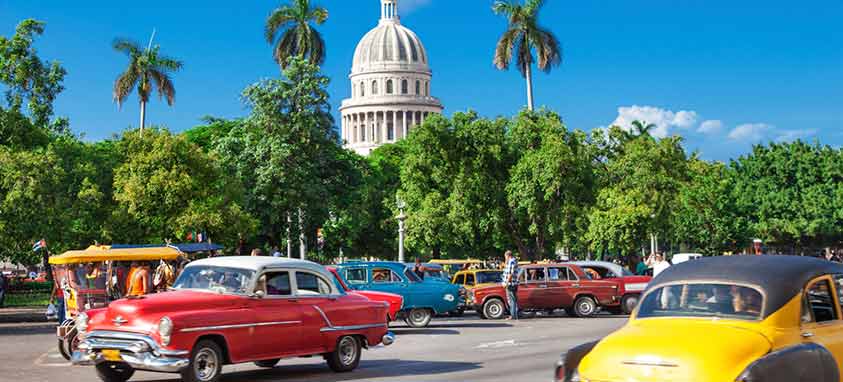
A cruise ship carrying 704 passengers arrived in Havana Harbor today, marking the first U.S cruise to Cuba in nearly 40 years.

The seven-day cruise, offered by Carnival Corps’ Fathom cruise line, reflects the stronger ties that have been established during the past five months between the United States and Cuba. The boat, MV Adonia, set sail from Miami at around 8 p.m. on Sunday as salsa music played.

Upon arrival, a conga band and a colorful welcome display greeted American travelers as they disembarked from the ship.

MV Adonia will cruise twice a month from Miami to Havana, with additional stops in Cienfuegos and Santiago de Cuba. On-board workshops and activities focusing on Cuban history and culture, and tours of the cities will be offered that qualify the cruises as “people-to-people” educational travel, thereby avoiding a ban on general tourism that remains part of U.S. law.

The trips start at $1,800, and include all meals on the ship, onboard experiences and ground activities. The cost of Cuban visas, taxes and port expenses are not covered. Optional activities include a walking tour of Old Havana’s colonial plazas and a $219 per-person trip to the Tropicana cabaret in a classic car.

The Cuban government sees U.S. cruise tourism as a much-needed major moneymaker. More than a dozen lines plan to offer U.S.-Cuba cruises, and if they all do so, Cuba could earn more than $80 million a year, according to the U.S.-Cuba Trade and Economic Council in a report released Monday.

Most of the money goes directly to the Cuban government, council head John Kavulich said, estimating that cruise companies will pay the government $500,000 per cruise, while passengers will spend about $100 person in each city they visit.

Carnival’s Cuba trips were in doubt last month due to a Cuban law that prevented Cuban-born passengers from coming to the island on boats. This led to a lawsuit from Cuban-born passengers wanting to participate in a cruise and an announcement by Carnival that it wouldn’t sail unless Cuba changed its policies. Soon afterward, the Cuban government scrapped its longstanding ban.

unique venues in downtown los angeles

Downtown Los Angeles might be one of the most underrated places in America’s second largest city. The Historic Core around Pershing Square holds some of Los Angeles’ most iconic architectural landmarks amid several new restaurants, hipster bars and art galleries taking root. Have a look at some of the edgiest meeting and dining venues giving Los Angeles the serious cool cred it deserves.

Amazing L.A. Eats

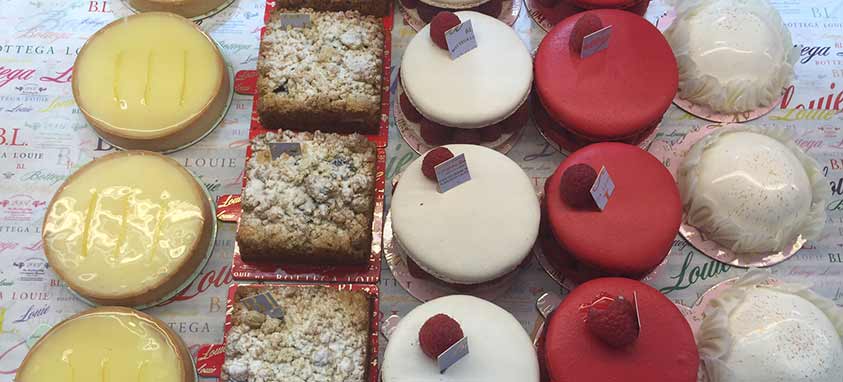
When Bottega Louie opened in 2009, the restaurant had to arrange shuttle buses for transporting diners from L.A.’s outlying neighborhoods to the once gritty area on the corner of South Grand Avenue and 7th Street. What used to be considered an undesirable area is now one of the hottest dining destinations in the city. The place to see and be seen, Bottega Louie is credited with creating Restaurant Row along the 9th Street Corridor, which is now lined with dozens of trendy restaurants and establishments.
downtown los angeles

Looking inside Bottega Louie’s wide picture windows, the restaurant and bakery is filled to capacity, nearly at all times. The cavernous white marbled room echoes loudly with diners conversing over delectable confections and artisanal treats. Across the street, hundreds of bakers are busy assembling technicolor macaroons, miniature fruit tartes and glazed eclairs. Bottega Louie was voted “Most Popular Restaurant” in the country in 2012 by review website Yelp.

On the same street, Little Sister opened last year and is already a local favorite. Following its original location in Manhattan Beach, the restaurant serves regional Asian cuisine made from local, organic ingredients. From Vietnamese banh mi sandwiches to Chinese doughnuts and congee, the menu is a mix of familiar dishes and adventurous concoctions.
downtown los angeles

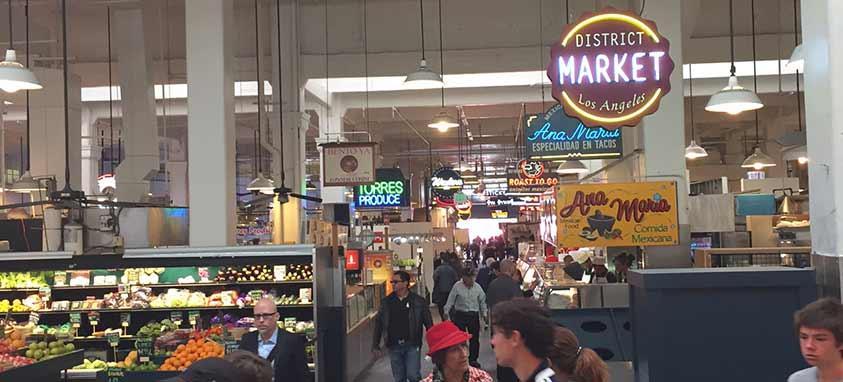
When foodies come to Downtown L.A., there is always one particular stop on everyone’s must-eat list: Grand Central Market is the city’s culinary melting pot. Located on South Broadway, just across from the defunct Angels Flight funicular, little ethnic markets and food stalls cover nearly every inch of the 30,000-square-foot dining hall. The market has been in continuous operation since it opened in 1917, and shows no signs of slowing down.
downtown los angeles

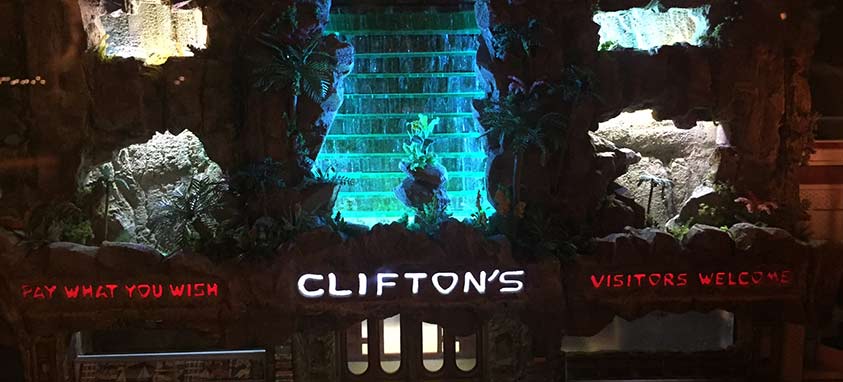
After hours, there are plenty of trendy bars and swanky lounges for a taste of Downtown nightlife. Clifton’s Cafeteria is about as quirky as it gets. Inside the multistory throwback establishment is fairytale woodland setting replete with a neon-colored waterfall, very tall trees and exotic taxidermy in every corner. The kitschy cafeteria-style restaurant is a Los Angeles institution that opened back in 1935, when there were a total of eight locations in the city. Back then, Clifton’s was a refuge for the city’s poor and needy, offering pay-what-you-want meals served a la carte.
downtown los angeles

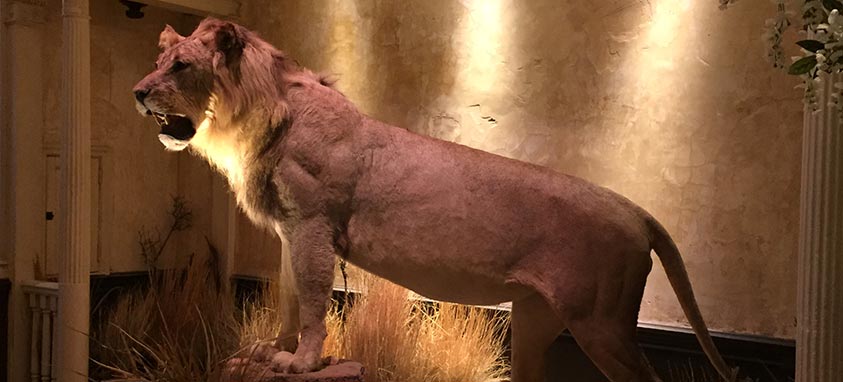
After years of remaining shuttered to the public, the restaurant finally reopened last October to the delight of Angelenos far and wide. The revamped building has multiple dining and drinking establishments on each level, including a version of the classic cafeteria on the ground floor and a third-floor Gothic bar designed from a Boston church altar. When visitors are not gawking at stuffed lions, bison, deer and peacocks, the focal point is a behemoth faux Redwood tree that shoots up into the rafters. Clifton’s is available for private parties and buyouts.
downtown los angeles

Iconic L.A. Venues

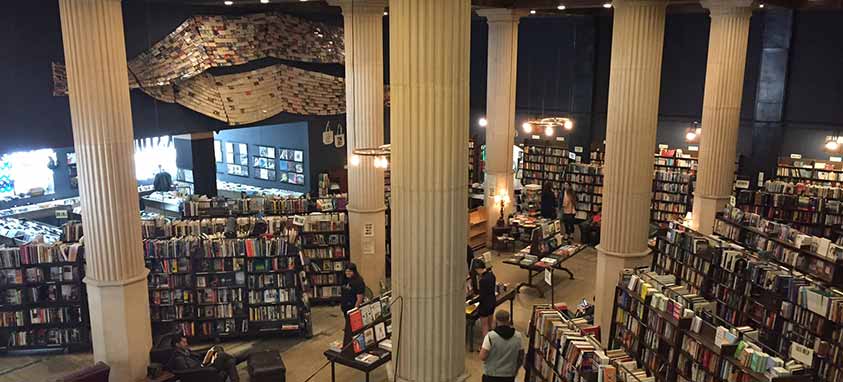
Spring Street Financial District went from being known as the Wall Street of the West in the 1890s to a blighted row of empty office buildings in the 1970s. Current gentrification efforts have turned the cluster of old city banks and financial institutions into upscale lofts, art galleries and independent stores. On the corner of Spring Street and 5th Street, the Last Bookstore is the largest new and used book and record store in California.
downtown los angeles

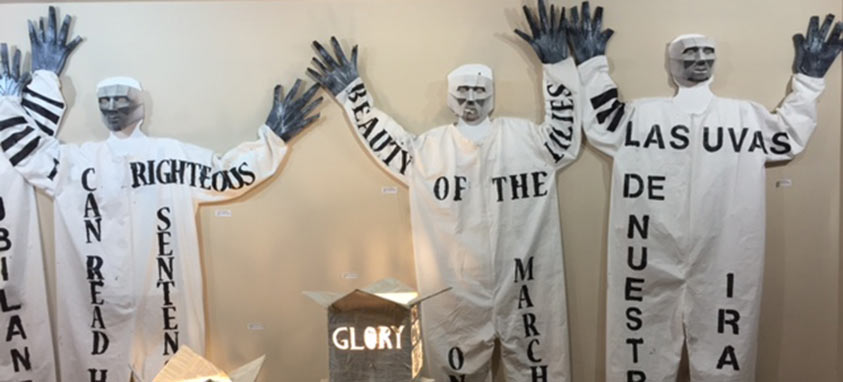
Inside the main floor of what used to be Crocker National Bank, the massive 22,000-square-foot space is filled to the brim with eclectic books and vinyl records, and sectioned off by austere columns. The bookstore contains several nooks and crannies behind repurposed bank vaults, and upstairs there’s a labyrinth and gallery shops in Spring Arts Collective. Events can be held in the bookstore’s 6,000-square-foot audience area that can hold up to 500 people.
downtown los angeles

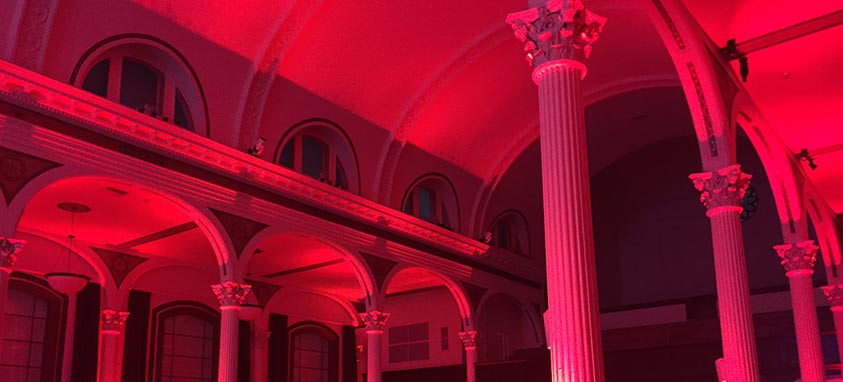
If a late-19th century bank-turned-bookstore wasn’t cool enough, groups can meet and dine in one of L.A.’s most fabled churches. The Cathedral of St. Vibiana was a church and rectory of the Roman Catholic Archdiocese of Los Angeles for more than 100 years. Completed in 1876, the building eventually became the city’s domain after it was nearly destroyed by an earthquake in 1994. Preservationists rebuilt the historic landmark into a full-service event facility called Vibiana.

The stunning cathedral interior has been retrofitted with state-of-the art sound and lighting systems and offers custom rental equipment. Lit up in stunning shades of cherry red and magenta, Vibiana is a popular venue for weddings, charity events and even mayoral announcements. It has a cocktail reception capacity of 789 and a seated reception of 550 inside and 300 outside. The main hall, enclosed patio and outdoor courtyard also lend a one-of-a-kind backdrop for events of all kinds. Attached to the church, Redbird is the venue’s modern American restaurant that offers private dining for up to 50 guests and is available for buyouts.
downtown los angeles

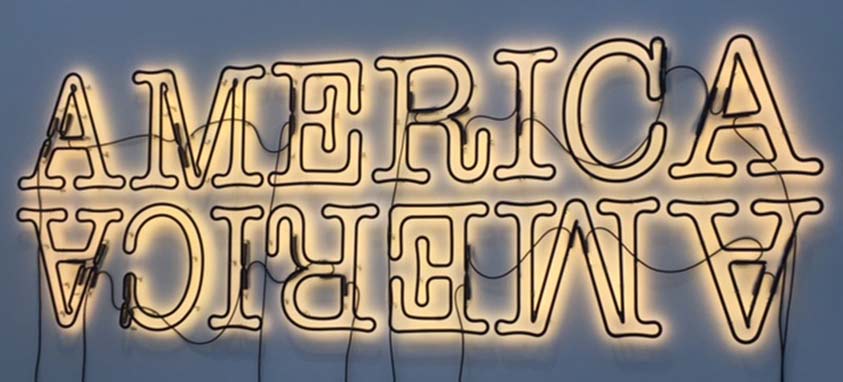
L.A.’s modern art scene is positively thriving with The Broad, a newly opened contemporary art museum across from the Museum of Contemporary Art, Los Angeles. Within seven months of its opening, more than 450,000 visitors have already viewed the museum’s inaugural installations and special exhibitions. Among two floors of gallery space, there are more than 2,000 works of art from around the world, ranging from postwar to contemporary.
downtown los angeles

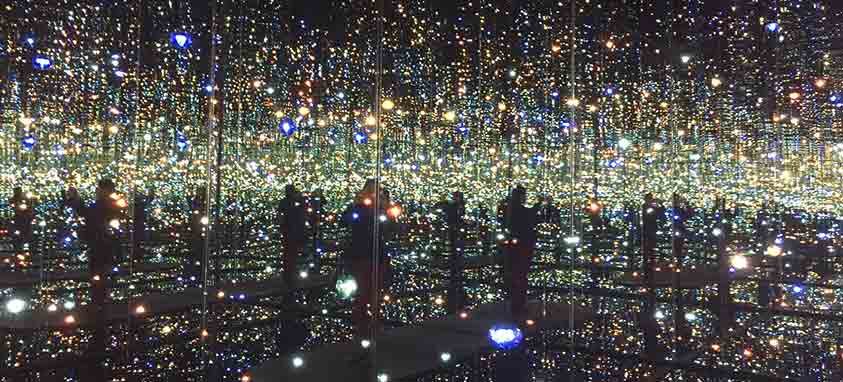
The Broad’s most popular art installation is Yayoi Kusama’s Infinity Mirrored Room, a star-spangled spectacular full of colored light baubles dangling from the ceiling. The small black room is lined with mirrors and filled with a pool of water to reflect a seemingly endless display of twinkling light that mimics stars in the galaxy. The installation is so popular that visitors must queue up for a brief 45-second turn inside the room. Other exhibits include Jeff Koons’ shiny blown-up metallic toy pieces, John Ahearn’s life-like human molds and Takashi Murakami’s fantastical Japanese pop art. The Broad offers free admission.
downtown los angeles

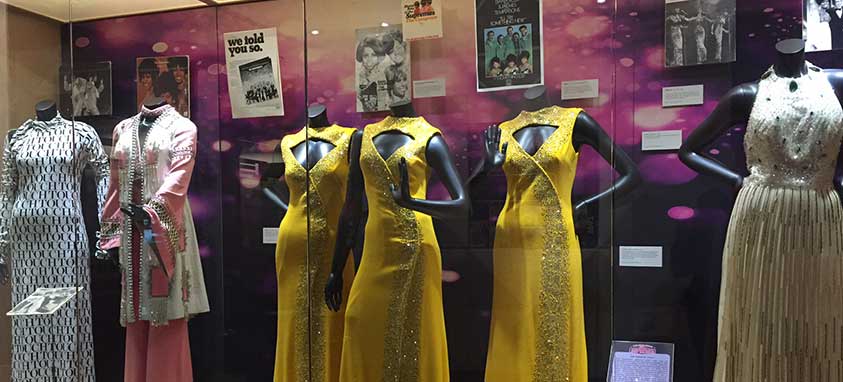
Within the L.A. Live district, The Grammy Museum offers meeting attendees a musical diversion that aims to inspire and educate groups about the cultural significance of American music. Interactive exhibits span several genres and significant periods of musical history, from the Legends of Motown exhibit featuring The Supremes to a display of Michael Jackson’s influence and legacy. The 30,000-square-foot museum is available for buyouts and offers several dynamic event spaces, including the 200-seat Clive Davis Theater, the 8,100-square-foot rooftop terrace and the fourth floor gallery, which can hold up to 100 for cocktail receptions.

new-orleans

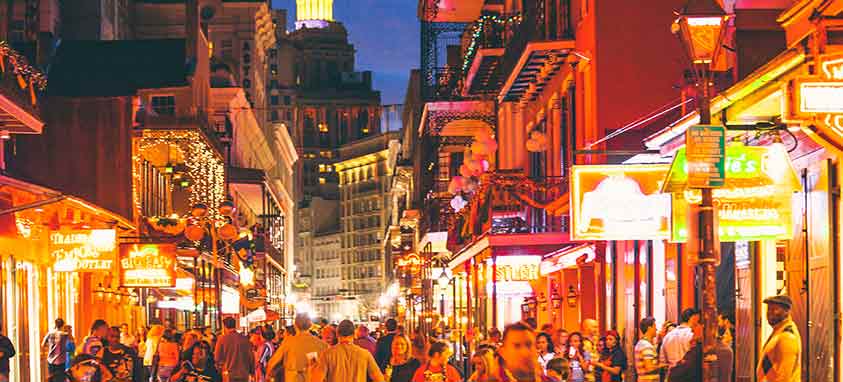
There are many reasons why New Orleans is everyone’s favorite city. Historic, colorful and totally unique, Crescent City is a mecca for fantastic food, hot music and beautiful architecture. It is also a spectacular place for meetings.

Smart Meetings Senior Content Producer Susan Jacobs is in New Orleans this week, reporting on all that is new in this desirable destination. Follow her on Twitter @SmartMtgsSusanJ, and stay tuned for an in-depth story. As the locals say, “laissez les bons temps rouler!” (Let the good times roll!)

Last updated: April 28, 2016 – 12:17 PM

Following a $75 million renovation, Sheraton Grand Los Angeles debuted April 27 as a rebranded property that is keeping pace with all that is fascinating and trending downtown. Upgrades include the complete renovation of all 496 guest rooms and suites, and a refresh of the lobby and meeting spaces.

The emergence of the Sheraton Grand brand is part of the Sheraton 2020 initiative, designed to position Sheraton as a leading global hotel brand. Formerly known as Sheraton Los Angeles Downtown Hotel, the newest Grand is one of 24 in the brand’s  premier tier of hotels.

“Sheraton Grand Los Angeles has become a shining star and wonderful representation of not only the Sheraton Grand tier, but of the brand itself,” says Dave Marr, global brand leader for Sheraton Hotels & Resorts. “It’s exciting to see how this hotel has completely transformed, representing the Sheraton brand’s new elevated and customized approach to design, as well as its Sheraton 2020 efforts.”

Sheraton Grand Los Angeles offers 30,000 sq. ft. of meeting space, with 26,000 sq. ft. part of the renovations. The 10,000-square -foot California Ballroom accommodates 900.

The redesign was led by internationally renowned interior and product designer Colum McCartan of McCartan.

“It goes without saying that the hotel team and management put a lot of time and passion into elevating Sheraton Grand Los Angeles to become a true flagship property for the brand,” said Jonathan Litvack, general manager of Sheraton Grand Los Angeles. “Downtown Los Angeles is going through a full resurgence with businesses flocking to the neighborhood, which is buzzing with new restaurants and retailers every day. It is important more than ever for our hotel to exceed guest expectations from both a design and service culture perspective.”

Sheraton Grand Los Angeles is adjoined to the Macy’s Plaza. The property is walking distance to such meeting, cultural and entertainment attractions as Los Angeles Convention Center, Staples Center, Museum of Contemporary Art and Disney Concert Hall.

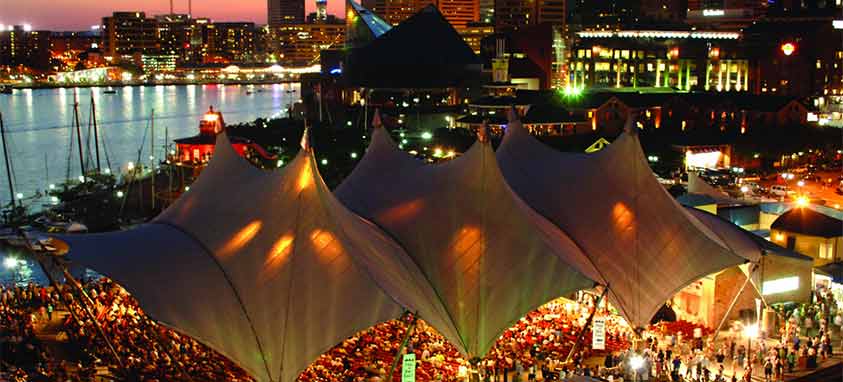
citywide destinationPier Six Concert Pavilion at night during an event

Visit Baltimore has high hopes for the summer tourist season, as it prepares for 28 citywides this year, after having broken the record last year with 30 citywides.

Light City Baltimore kicked off the tourism boom this year, with more than 400,000 visitors flocking to the Inner Harbor area for a festival of light, music and innovation, and filling the neighboring hotels and restaurants as a result.

Events took place at the Columbus Center, American Visionary Art Museum, Baltimore Visitor Center (8,000 sq. ft.), McKeldin Square, Pier 5 Hotel, and various other venues around the city from March 28 to April 3. It was the first large-scale, international light festival in the United States and included a 1.5 mile BGE Light Art Walk displaying 50 attractions, plus free musical performances. CNN named the event in their “16 Things to See and Do in 2016.”

Baltimore as a citywide destination is a no-brainer. The 300,000-sq. ft. of exhibition space at the Baltimore Convention Center is within three blocks of more than half of the city’s 9,000 hotel rooms.

Baltimore Convention Center Terrace

“We’re a city that’s easy to get to and we’re also a city that’s easy to navigate once you’ve arrived,” said Amy Calvert, Senior Vice President of Convention Sales and Services for Visit Baltimore. “We have one of the most walkable cities on the East Coast, a great airport, and transportation from the airport directly to downtown.”

On top of making a name for themselves as a midsize meetings city, their culinary reputation is also on the up and up. Spike Gjerde of Woodberry Kitchen took home Baltimore’s first James Beard award for “Best Chef: Mid Atlantic” in 2015.

“I was really happy about what it meant for Woodberry [Kitchen] and for Baltimore,” Gjerde told Baltimore Sun after the victory. “Baltimore has an underdog kind of status. I just felt it was really great validation for Woodberry and for Baltimore as a city.”

Calvert echoed those sentiments, ensuring Baltimore is so much more than Maryland’s Chesapeake blue crab. The innovative culinary scene, in addition to the charming brick and mortar downtown and myriad brand hotel choices, add up to a meeting destination that meets any objective.

“With all brands represented, including a newer Hilton and several new boutique properties, we have something for everyone,” said Calvert.

National Aquarium on the Inner Harbor features panoramic views, five levels of exhibits and live-viewing tanks, and the ability to host events for 3,000 attendees. Another harbor-front attraction that works well for groups is the Baltimore Museum of Industry. Formerly an oyster cannery, the museum divides its galleries into machine shop, cannery, garment loft and print shop themes. Guided tours of each can take place during a reception, and seated dinners for 300 people and receptions for 500 are available within each gallery.

In 2015, Visit Baltimore unveiled a program for midsize groups that offers a dozen immersive team-building and social activities that emphasize unique aspects of the city. These range from learning how the American railroads were built to understanding the science of wine, making Neapolitan pizza and learning about the life and mind of Baltimore native Edgar Allan Poe.

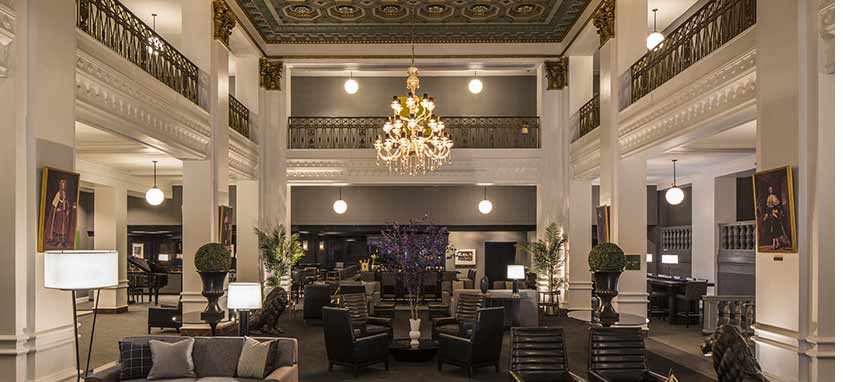
Lord Baltimore Hotel

Recent hotel developments include a full historical restoration of the 440-room Lord Baltimore Hotel (a 1928 French Renaissance landmark) and a $5 million renovation of Baltimore Marriott Waterfront’s ground-level restaurant, lounge and great room that has integrated these spaces for more socializing.