Too many people are falling into unhealthy cycles. We wake up, go to work, idly stare at screens and then idly stare at different screens when we get home—all without much thought. In a highly competitive world, too often we’re encouraged to keep our eye on the prize, no matter what.

The U.S. Department of Health and Human Services estimates that only 17 percent of the U.S. population is functioning at optimal mental health and one in five is struggling with a diagnosable mental health condition. Meanwhile, a survey by British health care company AXA PPP found that seven in 10 bosses believe stress, anxiety or depression aren’t valid excuses for taking time off (even though 25 percent have suffered from a mental illness themselves).

Recently, a Tweet went viral about this very topic. It shows an email between Madalyn Parker and her boss, who commends her use of mental health days. The Tweet has earned praise for countering the stigma. Many believe that there’s no shame in sometimes taking a day to recoup, recover and get some perspective.

Meeting and event planners have particularly stressful jobs. Therefore, many people think that it’s important for the industry to acknowledge the value and necessity of mental health days. Like any other illness, a poor mental state can be infectious. But people need to find the right times and ways to take a mental health day.

Benefits

Reduce stress: According to the 2017 Attitudes in the American Workplace VII survey, 80 percent of workers feel stressed on the job. At times, they need extra time to decompress.

Fix the clutter: Need to clean the house or make those calls you’ve been delaying? A mental health day is the perfect time to clean the clutter and consequently strengthen future concentration.

Reinforce health:  A mental health day might even be used as a preventative measure—but that can be crucial, as well. Aim to spend a good amount of time on your physical and mental health, and plan ahead to continue these habits every day.

Increase productivity: A recent Harvard study estimates that sleep deprivation costs American companies $63.2 billion a year due to lost productivity. Consider the toll all poor mental health factors have on individuals and their companies.

When You Need It

Everyone is unique, with particular circumstances and mood fluctuations. Only you can be sure it is time to take a mental health day; every case is different and sometimes the reason can’t be pinpointed. That being said, you have to be brutally honest with yourself. For instance, staying home to watch the latest House of Cards show is an abuse of the system—and is unfair to everyone. Taking a mental health day is warranted if you are experiencing the following situations:

  • Battling a mental health disorder (for more than one day)
  • Dealing with a death in the family
  • Experiencing persistent insomnia
  • Needing to see a doctor, but have been putting it off
  • Feeling overwhelmed (low energy, stressed, anxious or apathetic)
  • Stuck in a poor mood (for several days)
  • Lashing out at others
  • Enduring a difficult break-up
  • Falling behind on something essential, such as visiting someone sick or tending to bills
  • Unable to remember the last time you had fun or did something just for yourself

How to Take a Mental Health Day

Don’t lie: Faking an illness is never a good idea, but unfortunately, the stigma of having a mental health issue still exists. If you’re concerned about the response, then simply explain that you need the day for “personal reasons.”

If possible, plan: Ideally, take off a day that won’t put extra stress on others or cause you to miss an important deadline, a meeting or an event.

Give the day some structure: Even though this is a day off from work, you still want to make the most of it. The purpose is to support your mental health—so plan and engage in activities that work for you. Try to avoid mindless activities such as watching TV.

Unplug and relax: Once you’ve decided to take the day off, there’s no reason you should allow work to keep intervening. Turn off all forms of communication, and whatever you do, stay present.

Avoid guilt: This is probably the hardest, but most important, step. If you’re feeling guilty, that ruins the entire purpose of the day. Remember that every person is entitled to a mental health day and the world will continue spinning if you’re not in the office.

Apply new perspectives: If you have a fulfilling mental health day, it will likely bring you some perspective on your life. Which activities could become a daily routine? Is your job in line with your values? Is something bigger at play that might require a specialist? Or perhaps, was this just the break you needed to recharge?
It’s been an unsettling year, to say the least, for air travelers. In March, U.S. Homeland Security banned laptops in passenger cabins on flights originating from eight countries. As of this week, six of these had stepped up security measures and had their ban lifted.

In April, security guards dragged a hapless Kentucky doctor off an overbooked United Airlines flight. The airline paid him an undisclosed cash settlement, so at least there was a happy ending.

In June, the federal government unveiled enhanced security measures for commercial flights arriving from 280 airports in 105 countries. These meant longer security lines for heightened levels of screening of personal electronic devices and passengers.

So, what’s next?

Would you believe five more years until a mere half of the world’s commercial aviation fleet is equipped with onboard Wi-Fi? That’s the unwelcome prediction of United Kingdom-based Juniper Research, Ltd., which estimates one in four planes currently allow passengers to log in at 30,000 feet.

But there is sunnier news. Here’s a sampling of advances in airline amenities recently introduced or currently on the drawing board.

Onboard tablets for rent: Hawaiian Airlines already offers in-flight entertainment tablets with unlimited access to Hollywood releases, TV shows, games and more on flights.

Anti-jet lag lighting: The Airbus A350 and Boeing 787 use LED lighting throughout the cabin to replicate the natural patterns of sunlight and reduce jet lag that comes from hurtling through time zones.

Tiered arm rests: Economy-class passengers will love this one. Instead of the usual psywar over that single, shared strip of arm space, a new patented design boasts an armrest with a top and bottom tier—without eating up more precious space. Several airlines are said to be penciling out the cost versus benefit.

Personalized climate control: This concept goes far beyond the adjustable air-flow nozzle that’s phased out on many newer airliners. We’re talking heated seats, and seats with personal humidifiers and air vents. They’re reportedly under study by several airlines.

Immersive screens instead of windows: A French company, Technicom Design, has a windowless jet concept called Ixion with floor-to-ceiling “wallpaper screens” that could offer entertainment or expansive views of the skies outside. Imagine if virtual reality visors were built into seats, as well. Incidentally, windowless aircraft would be more fuel efficient. A prototype is possible within a decade.

We’ve all been there—in your robe, lounging on a hotel bed, when pangs of hunger stab like an invading army of cutlery. So, what are your options?

Standard dull burger from room service? Cardboard pizza from the pie joint down the street?

Knock, knock! Who’s there? It’s superstar chef Mario Batali with a heaping plate of lasagne al pesto e patate. Or chef Jean-Georges Vongerichten with his freshly shaken Mercato Negroni, caviar, crispy sushi, and roasted Maine lobster over Meyer lemon risotto.

Michelin-starred chefs aren’t just going to Las Vegas to expand their brands anymore. They’re partnering with hotels to launch new restaurants and then offering some or all of their menus as room service to hotel guests.

Recently, Conde Nast Traveler did the heavy lifting to identify the Best Hotel Room Service in the United States. It includes several pairings of upscale hotels and celebrity chefs.

The Mark with Jean-George Vongerichten: At this tony Madison Avenue hotel on New York City’s Upper East Side, the famous chef created a room-service menu that’s impressively extensive and includes his signature black-truffle pizza.

SLS South Beach and SLS Brickell with Jose Andres: These two Miami outposts of the trendy SLS brand have bragging rights to 24-hour room service designed by legendary Spanish chef Jose Andres. Think Spanish and Cuban accents, as in croquetas de pollo (bechamel chicken fritters).

The Maritime Hotel with Mario Batali: Batali’s acclaimed Sirena restaurant, in the lobby of this quirky-chic hotel in the Meatpacking District of Manhattan, doesn’t offer its entire menu to denizens of the guest rooms above, but Batali’s rendition of Italian comfort classics such as bucatini al pomodoro are enough, thank you very much.

The Surrey with Daniel Boulud: Another Upper East Side luxury boutique hotel in New York City, The Surrey also is home to renowned Cafe Boulud. Hotel guests can indulge their cravings for seasonal, French-inspired cuisine at breakfast, lunch or dinner—or at any hour of the day or night.

olympic city wins

The International Olympic Committee made a historical announcement on July 11 in Lausanne, Switzerland, with the unanimous decision to award the 2024 and 2028 Summer Olympic Games simultaneously to Los Angeles and Paris, which each made strong pitches during the bidding process. The city to go first will be determined at a later date.

The Olympics is essentially one of the largest meetings on earth. It brings together athletes, fans, broadcasters, organizers and volunteers from every continent except Antarctica.

What makes The City of Angels and The City of Lights such great host cities? It’s a level playing field when it comes to language. The official languages of the Olympic movement are English and French. According to the International Congress and Convention Association’s (ICCA) 2016 rankings, the number- one city for international association meetings is Paris. However, the United States took home the most gold during the last summer games, in 2012 (France was only a few spots behind, in fourth place).

Other considerations:

Los Angeles

Los Angeles successfully hosted the Olympic Games in 1932 and 1984. The Southern California city is ready to take on its third Olympiad by utilizing pre-existing venues.

The Athlete Village will be on the UCLA campus, which has several venues for meetings. The Luskin Conference Center is the university’s newest event space. Open since 2016, it has 25,000 sq. ft. of conference space, 254 guest rooms, a restaurant and underground parking.

https://www.youtube.com/watch?v=dMUIS9lJ3uY

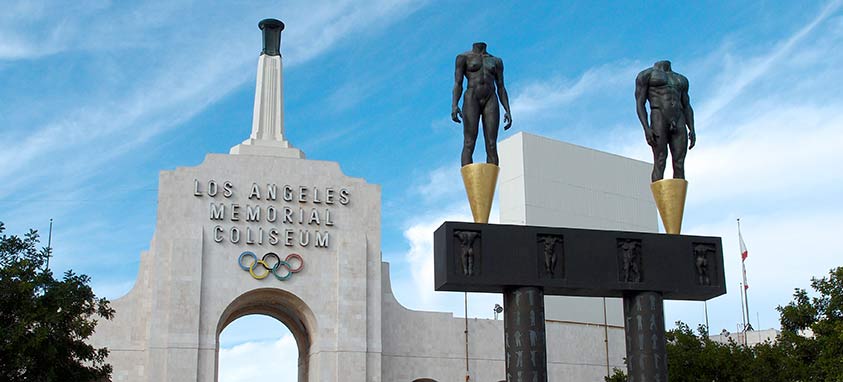
JW Marriott Los Angeles L.A. Live in downtown L.A. is close to the Los Angeles Coliseum, where the opening and closing ceremonies will take place for the third time in history. It’s also walking distance to Staples Center, home of the basketball competition, and the Los Angeles Convention Center, which will welcome athletes from the sports of fencing, taekwondo, table tennis and boxing. The JW Marriott has 76,687 sq. ft. of event space, 14 event rooms and 35 breakout rooms all under one roof.

Paris

Paris also hosted the Olympics twice previously, but it’s been a long time. Games were last held there in 1924, and before that in 1900. Yet France is deep in Olympic history. Paris was the original home of the International Olympic Committee (IOC) headquarters, until it relocated to Lausanne, Switzerland, in 1915.

Paris proposes that all Olympic action take place in two zones—central Paris with its historical backdrop and metropolitan Paris. There are 90,000 hotel rooms within roughly six miles of these two areas. The city boasts of the world’s best public transportation system to get people from destination to destination. Paris also emphasizes that 95 percent of the sporting venues already exist or will be temporary. Only two sites will be newly constructed.

https://www.youtube.com/watch?v=NEdt23nJUhw

Some of the attractions along the Seine river’s Olympic Trail are the Champ-de-Mars (at the foot of the Eiffel Tower), Parc de la Villette, La Defense and Chateau de Versailles, where the equestrian events will take place. Café de l’Homme will be at the center of much of the action and very close to the beach volleyball competition.

The restaurant is available for complete and partial rentals for up to 400 guests in its dining room, mezzanine and terrace. It provides the perfect setting for press conferences, seminars, product launches, breakfast meetings, lunches, business dinners and cocktail receptions with unobstructed views of the Eiffel Tower and Champ-de-Mars.

The gilded Palace of Versailles also offers extensive event space in The Gallery of Great Battles, The Crusades Room, The Orangery, Le Salon D’Hercule, Le Vestibule Haut de la Chapelle, La Galerie Basse, The Cotelle Gallery and Royal Opera House. Meeting professionals can book dinners, cocktail parties, performances and more for groups of up to 2,500.

solar eclipse path destination

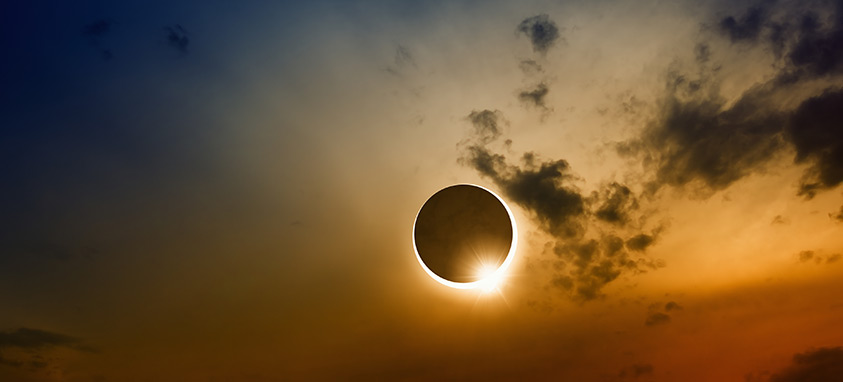
Don’t be left in the dark when the first coast-to-coast total solar eclipse in 99 years parades across American skies on August 21. Venues along its path are hosting special events and hotels are offering promotional rates for this astronomical phenomenon. Although reservations are already booked for the big day in August, many of these sites are also great places to hold meetings another time.

The eclipse will pass over portions of Oregon, Idaho, Montana, Wyoming, Nebraska, Kansas, Iowa, Missouri, Illinois, Kentucky, Tennessee, Georgia, North Carolina and South Carolina, but research what specific locations will get to enjoy totality, some of which are very remote and uninhabited. Many areas, including numerous major cities, will only see a partial eclipse.

Smart Tip: If you plan to watch the eclipse, be sure to wear proper eye protection to prevent blindness and vision damage. Custom eclipse glasses with a brand, company or event name printed on them would be a great promotional item to give out at meetings leading up to August 21.

Brooks Winery (Amity, Oregon)

Pop the cork on a great meeting held at Brooks Winery. The vineyard’s hospitality team and executive chef will work directly with meeting professionals to customize an experience at the estate. Packages can include wine tasting, a tour of the winery and a history lesson about the area.

Four Seasons Resort and Residences Jackson Hole (Teton Village, Wyoming)

Four Seasons Resort and Residences Jackson Hole has approximately 10,000 sq. ft. of meeting space and 125 guest rooms. Its beautiful Cottonwood Ballroom has a large wood-burning fireplace, wood paneling and stone finishes. The Four Seasons offers year-round activities from skiing in the winter to swimming in the summer and everything in between.

Lone Tree Ranch (Glendo, Wyoming)

Lone Tree Ranch offers meeting and conference rooms in a distraction-free environment from Mondays through Thursdays. There is an on-site commercial sized kitchen or you can choose to have meals included in your package. Lodging is available for an additional fee. One of the housing accommodations is a remodeled train caboose. Choo-choo! Lone Tree Ranch is owned by Fire Rock Church.

Moonrise Hotel (St. Louis)

Get ready to blast off at Moonrise Hotel. What better way to remember the eclipse than at a space-themed boutique hotel? Meeting rooms are named after the Apollo missions and the hotel also offers a boardroom, rooftop terrace under the stars and an elegant dining room. AV and sleeping accommodations are available as well.

Cheekwood Estate and Gardens (Nashville)

Have an event of galactic proportions at Cheekwood Estate and Gardens. The lush 55-acre estate dates back to 1929 and became an art museum and botanical garden in 1960. Guests at a private function can enjoy a leisurely stroll through its 12 gardens and take advantage of complimentary admission to the art exhibits.

Adventure Science Center (Nashville)

Take your attendees out of this world to Music City’s Adventure Science Center, offering a beautiful view of the Nashville skyline. Besides a meeting room, classroom and theater, the science center rents out its planetarium for lectures and presentations. You can also host a function inside their Space Chase exhibit to mix and mingle amongst the solar system.

Smart Tip: Rent out the entire facility for groups of up to 2,500.

Dancing Bear Lodge & Appalachian Bistro (Townsend, Tennessee)

Tucked in the Smoky Mountains, the 36-acre Dancing Bear Lodge & Appalachian Bistro added a new event center in 2015 for corporate events of up to 150 guests in conjunction with renting its adjoining restaurant. If weather cooperates, the lawn and outdoor pavilion can be used for larger groups of 250. Dancing Bear also offers AV equipment, on-site catering and over 20 guest rooms. The resort is within close proximity to Clingmans Dome, the highest point in Tennessee and home to one of the coolest observation decks in the world, according to Travel+Leisure. Additional accommodations are available four miles away at their sister property, Changes in Altitude, a four bedroom, 4,200-square-foot luxury house with a lot of bells and whistles.

Chattooga Belle Farm (Long Creek, South Carolina)

Chattooga Belle Farm is situated on 138 acres of land. The working farm is located in what was once the largest apple producing region east of the Mississippi in the 1950s. Groucho Marx owned the orchard at one time and its 5,000-square-foot barn is available for events. The rustic barn features a covered patio offering 270 degree views of the Blue Ridge Mountains.

Smart Tip: Ask about farm-to-table dining experiences.

amenity

Meeting professionals and convention attendees often spend more time on the road than with their families. They may be out of sight, but they certainly are not out of mind. Loved ones can kick that FOMO to the curb by being part of the trip from a distance. Here are some creative ways to make thoughtful gestures easy.

Message Delivery

It’s not healthy to bottle up your emotions…or is it? Sheraton Hotels & Resorts and Coca-Cola have found a way to quench a thirst for homesickness with a special program called “Message in a Bottle.” Loved ones can write a personal message to their favorite jet-setter and have the hotel concierge deliver it to their hotel room, rolled up in a classic glass Coke bottle. The labels can also be customized with a few short words up to 18 characters.

“We all know that business travel can be tough on families and loved ones,” says Indy Adenaw, vice president and global brand manager for Sheraton. “As a brand, we are committed to going above and beyond for our guests to make them comfortable and at home, and we feel this exciting program allows us to do something extra special for business travelers this holiday season.”

https://www.youtube.com/watch?v=lOh1hX4X3Wo

Sweet Surprises

Westin Hotels & Resorts’ Thoughtful Touches initiative gives secret admirers and meeting professionals alike the opportunity to purchase an in-room amenity to be delivered to a hotel guest’s room. Options vary property-to-property, but some offerings include food items unique to the destination. For example, The Westin Book Cadillac Detroit offers a selection of Detroit-themed gift packages. “The Detroiter” includes a Detroit shirt/hoodie, two local beers and popcorn, while “Welcome to Detroit” showers the recipient with memorabilia of the city, Germack nuts, Better Made chips, Faygo soda and Sanders fudge.

Disney Hotels & Resorts are common destinations to hold meetings and nothing’s more magical than opening your hotel room door to a Mickey Mouse ambush. The Disney Floral & Gifts department has various in-room celebration options that meeting professionals or families can book for guests. Unbeknownst to them, visitors will be loaded up with Disney swag upon arrival that will surely leave them grinning from ear-to-ear.

Hosts frequently drop logo items off in hotel rooms during turndown service for guests on Fam trips, so make sure to leave some extra space in your suitcase because you’re likely to return home with more than you came with.

What do you think of when you hear the term “hotel art”? Imitation watercolors, lifeless nature and mass-produced splatter likely come to mind. Hotel art has long been synonymous with subpar displays—but that’s beginning to change. Across the country, hotels are recognizing that quality art is a worth-while investment.

The hotel art on this list demonstrates local flavor and history. Not to mention, many of these were created by the best artists on the planet. So, next time you’re staying in these planner-frequented hotels, you might be lucky enough to appreciate a true gem.

1. Gramercy Park Hotel, New York City

Artwork: Gramercy Park Hotel is known for its contemporary American-styled collection that includes work by Jean-Michel Basquiat, Enoc Perez, Keith Haring, Tom Wesselman and Damien Hirst. Most notable pieces can be found behind the front desk, Diamond Dust Shoes by Warhol, and in the Rose Bar.

Guest rooms: 190

Meeting and event space:  6,000 sq. ft.

2. Cosmopolitan Las Vegas

Artwork: Cosmopolitan Las Vegas hosts a variety of art, from digital exhibits that use LED screens to hundreds of large scale paintings. Artists such Maya Hayuk, Marilyn Minter, Rosemarie Fiore, Alex Da Corte, Jonathan Borofsky, Nicola Lopez, Siobham Liddell and Sylvia Hommert have left their mark in the trendy hotel. Cosmopolitan also offers six “Art-o-mat” machines, repurposed cigarette vending machines which dispense original.

Guest rooms: 2,959

Meeting and event space: More than 100,000 sq. ft. 

3. 21c Museum Hotel, Louisville, Kentucky

Artwork: The 21c Museum Hotel offers a contemporary museum that’s free to the public, open 24-hours-a-day, 365 days a year. Some exhibits even double as a guest room. Open galleries rotate often but some permanently reside, such as the double-sized replica of David. Perhaps most famously, there are two works by Brazilian artist Vik Muniz.

Guest rooms: 91

Meeting space: 9,000 sq. ft.

4. La Fonda on the Plaza, Santa Fe, New Mexico

Artwork: The art at La Fonda on the Plaza is definitely a reflection on the character and history of Santa Fe. The space is full of paintings by local Native American artists. Additionally, the hotel has curated an impressive collection of handmade items, including glass tiles, wooden headboards and chandeliers.

Guest rooms: 180

Meeting space: 20,000 sq. ft.

5. Hilton Anatole, Dallas

Artwork: Most people think of hotel art as safe, but at Hilton Anatole—which offers the largest collection ever assembled in an American hotel—these masterpieces dare you to consider their message. Treasures include one of the few pieces of the Berlin Wall on display outside a museum and an 18th century reclining Buddha from Thailand. Many of the more than one thousand rare works of art are part of the Crow Family collection.

Guest rooms: 1,606

Meeting space: More than 100,000 sq. ft.

6. The Alexander in Indianapolis

Artwork: Art is everywhere you turn at The Alexander in Indianapolis. The hotel’s commissioned pieces are popping with color and eye-catching materials. In the lobby, guests can view a giant portrait made out of more than 3,400 combs of local hair empress Madam C.J. Walker.

Guest rooms: 209

Meeting space: 12,000 sq. ft.

7. Hotel Des Arts in San Francisco

Artwork: From its creation, Hotel Des Arts’ mission has been to create guest rooms that double as art. Artists have travelled from all over the world to leave their mark. You might discover video installations or simple, yet remarkable, drawings. The variety makes staying here an exhilarating treat.

Guest rooms: 13 tourist rooms; 38 residential


Meeting space: N/A

8. The James Chicago

Artwork: Since its 2006 opening, The James Chicago has been known for its art. In particular, its sculpture by local artist Joel Ross has gained widespread fame and now sits in the lobby. Rooms also embrace the aesthetic, featuring abstract nude photographs by Wolfgang Ludes, and black and white photos of Japan by Michael Kenna.

Guest rooms: 297


Meeting space: 7,000 sq. ft.

airport over bookings

Problem: Air traveler anger and airline embarrassment over mishandled bumps on overbooked flights.

Solution: Technology that manages buyouts on flights nearing sell-out up to five days in advance.

United Airlines, which has taken a public-relations beating this year over several incidents, including overbooking, is testing a Flex Schedule Program invented by Volantio, an Atlanta-based tech startup.

With this technology, travelers with flexibility can be awarded travel vouchers in the comfort of their own homes, to be used on future flights. The airline can upsell their seats to last-minute travelers or even business-class travelers at a much higher profit.

The technology allows United to pinpoint sold-out flights that are most likely to have significant last-minute demand, where Flex Scheduling can enhance revenue the most. Then, travelers who have booked on the airline’s website and opted to receive marketing emails can be asked to switch to a different flight in exchange for a $250 travel voucher. The substitute flight will be to the same destination on the same day.

A click of the mouse and the deed is done.

More airlines will partner with Volantio in the coming months, according to the Chicago Tribune. These include Australia-based Tiger Airways, Alaska Air and Qantas. Delta has already been offering auction-style bids for travelers to change flights 24 hours or less before departure.

Tech companies say they invent stuff to make the world a better place, and this time it might be true. The only loser in this scenario may be the poor people who think they might be offered much more money—as much as much as $1,350—to be bumped at the gate.

Immigration policy during the Trump administration jumped back into the news today, as the Supreme Court temporarily allowed the federal government to throttle back the nation’s refugee program, but agreed with a Hawaii court that grandparents be included among those allowed to travel to the United States to visit family.

Both decisions were made pending an appeal of lower court rulings killing the travel bans that exclude many travelers from six mostly Muslim countries, as well as many refugees.

The justices rejected the administration’s request that it clarify their decision last month that temporarily reinstated the ban, but allowed people with “a credible claim of a bona fide relationship with a person or entity in the United States” to enter the country. The court said the U.S. Court of Appeals for the Ninth Circuit, in San Francisco, should decide that.

Only last week, a federal court in Honolulu ruled the administration’s narrow interpretation of who had a credible claim should include grandparents.

“Common sense, for instance, dictates that close family members be defined to include grandparents,” wrote Judge Derrick K. Watson. “Indeed, grandparents are the epitome of close family members. The government’s definition excludes them. That simply cannot be.”

Challenges to Mr. Trump’s travel bans have, in the words of The New York Times, “been ricocheting around the federal courts for almost as long as he has been president.”

His first ban, issued in January, was blocked by the courts. The administration issued a revised executive order in March. Federal appeals courts ruled it violated the Constitution by discriminating based on religion.

The Supreme Court has scheduled appeals of those decisions for October.

The coalition known as Meetings Mean Business is back in business with Worth Meeting About, a refreshed campaign to underscore the importance of face-to-face meetings for people, businesses and communities.

The campaign’s framing message is “When it’s important, it’s worth meeting about.”

“We will demonstrate the industry’s unique ability to bring people together and solve difficult challenges,” says Richard Harper, co-chair of Meetings Mean Business Coalition and executive vice president at HelmsBriscoe. “Despite having a multitude of ways to communicate with one another, when the stakes are high and when it matters most, we meet face-to-face to build connections and develop solutions.”

Digital storytelling will underscore the unique value of face-to-face meetings in every facet of life, from major world events and business to human relationships.

In brief, dramatic messages, professionals in the meetings industry and others will share personal experiences about what’s worth meeting about in their lives. The coalition also plans to film video testimonials and tap into the coalition’s Meeting Professionals Task Force and Ambassadors program to generate longer-form case studies.

“We will demonstrate the industry’s unique ability to bring people together and solve difficult challenges,” Harper says.

Comprised of more than 50 members, Meetings Mean Business is an industry-wide coalition that showcases the undeniable value of business meetings, trade shows, incentive travel, exhibitions, conferences and conventions.