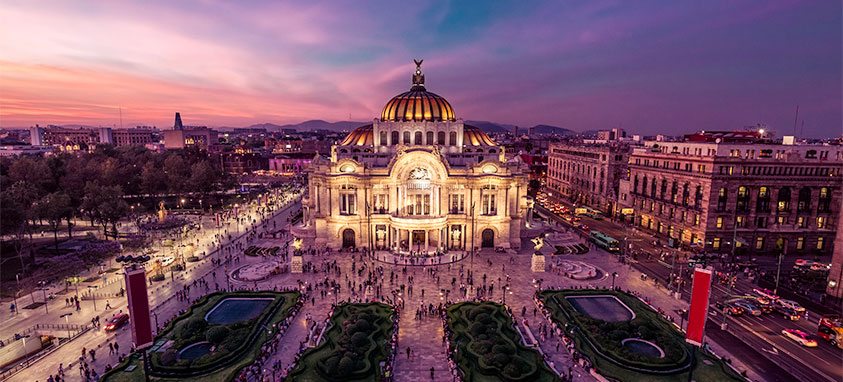
dallas-view_843x342

The possibilities for BIG moments in Dallas are endless. It starts with an effortless arrival into one of two major airports and continues with magnificent meeting spaces, breathtaking views and world-class cuisines. Whether you’re looking at Dallas for an annual meeting or planning exciting things for your incoming group, we have something extraordinary waiting for you.

Get Here and Get Going

Getting to Dallas is easy. A prime location puts nearly every major city in the continental U.S. within a quick three-hour flight from Dallas. Two major airports service the city: Dallas/Fort Worth International Airport (DFW) and Dallas Love Field (DAL). Dallas can seem like a big place, but don’t worry – we have that covered too. Once you’re on the ground, Dallas Area Rapid Transit (DART) gets you where you need to be. The recent extension of DART’s Orange Line allows for an easy ride into the city from DFW.

Get to know the Kay Bailey Hutchison Convention Center Dallas

dallas-cvb_843x342

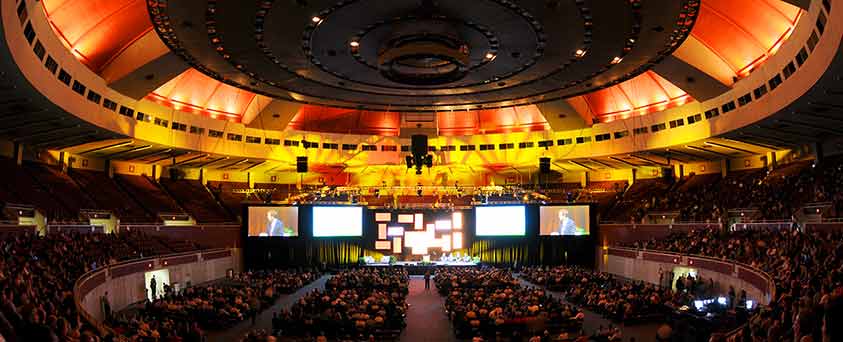
The Kay Bailey Hutchison Convention Center Dallas (KBHCCD) offers over one million square feet of exhibit space. It is one of the largest in the country, yet with flexible spaces that make it just as suited for large tradeshows and international conventions as for intimate business meetings and corporate functions. Events can take advantage of 726,726 square feet of contiguous exhibit space, including a 203,000-square-foot, column-free exhibit hall – the largest in the United States. Additional venue options include the 9,816-seat arena, 1,750-seat theater, two ballrooms and 96 meeting rooms.

Blending form and function, KBHCCD is not just a practical choice for major events, but also a beautiful one. Welcoming guests to the center is Pioneer Plaza, where one of the largest bronze sculptures in the world re-creates a Texas cattle drive with 40 longhorns and three cowboys. Inside, terrazzo flooring and art depicting the history of Dallas and its residents create an inviting setting for attendees.

For events large and small, the convention center provides state-of-the-art technology that keeps visitors connected. In fact, it was the first wireless convention center in the world, and remains one of the fastest with its Cisco-Certified system. Other amenities include a fiber-optic transmission system for audio and video broadcasts throughout the center; catering by award-winning chefs of Centerplate; three permanent first aid rooms; and two gift shops that, in addition to souvenirs, offer small parcel shipping, copying and faxing.

In late 2011, the city of Dallas debuted the center’s headquarters hotel. Connected to the Dallas Convention Center by sky bridge, the Omni Dallas Hotel has 1,001 guest rooms and incorporates more than 110,000 square feet of meeting and event space. Included among its 40 meeting rooms are the Dallas and Trinity ballrooms, boasting 32,000 and 15,000 square feet, respectively. The hotel also boasts an impressive lineup of dining options, and recently added four more restaurants just outside of the hotel and in walking distance of KBHCCD.

Plan your BIG moment

Convention-Center-Main-Meeting-Room-Event

Dallas is a hotbed of vibrant entertainment, world-class dining and family-friendly attractions and thanks to easy access – a stress-free three-hour flight from almost anywhere in the country – you and your attendees will arrive quickly. Your next meeting will be complimented with unparalleled amenities and unforgettable experiences. Dallas is the city where Big Things Happen. Book your next meeting at VisitDallas.com.

J.D. power-rated hotels

The 2017 J.D. Power North America Hotel Guest Satisfaction Index Study released the second week of July showed that once again two Marriott International brands—The Ritz-Carlton and JW Marriott—tied for first for guest satisfaction in the luxury category as rated by their guests. Four Seasons Hotels and Resorts was only a point behind.

The annual study polled 63,000 guests between June 2016 and May 2017 to determine overall satisfaction on things like reservation, check-in/ check-out, guest room, food and beverage, hotel services and price.

The study found that those who use a brand’s mobile app and sign up for rewards programs report higher guest satisfaction. With that in mind, we surveyed the hotels in each group to determine just how rewarding those programs are.

Luxury: The Ritz-Carlton Rewards (The Ritz-Carlton and JW Marriott)

  • Lounge access
  • Breakfast for two
  • Late checkout
  • Transfer points with Marriott Rewards and Starwood Preferred Guest for status at more locations

Upper Upscale: World of Hyatt

  • Earn and redeem points at more than 600 locations
  • No blackout dates at Hyatt hotels
  • Use points for airline miles or car rental awards
  • Share points with other World of Hyatt members

Upscale: Hilton Honors* (Hilton Garden Inn)

  • Guaranteed discount
  • Digital check-in
  • Free Standard Internet Access
  • Quick reservations and check-in

Upper Midscale: Gold Key Club (Drury Hotels)

  • Trade points for American Airlines or United miles
  • Donate points to American Red Cross
  • Give points for a free night as a gift
  • Trade in for gift cards

Midscale: Wyndham Rewards (Wingate by Wyndham)

  • Go Meet program allows meeting planners to earn rewards for booking group events
  • Best available rate
  • Discounts at Avis, Budget and Six Flags
  • In addition to earning points, you can buy them

Economy: Hello Rewards (Americas Best Value Inn)

  • Free night every 7 stays
  • Express check-in and check-out
    Late check-out
  • Room upgrades

Extended Stay: IHG Rewards Club (Candlewood Suites)

  • Free Internet
  • Exclusive rates
  • Reward nights count
  • Use points anywhere, even if one of 5,200 IHG hotels are not available

*Hilton Honors is also the rewards program for Staybridge Suites, top in Upper Extended Stay category

new offerings united

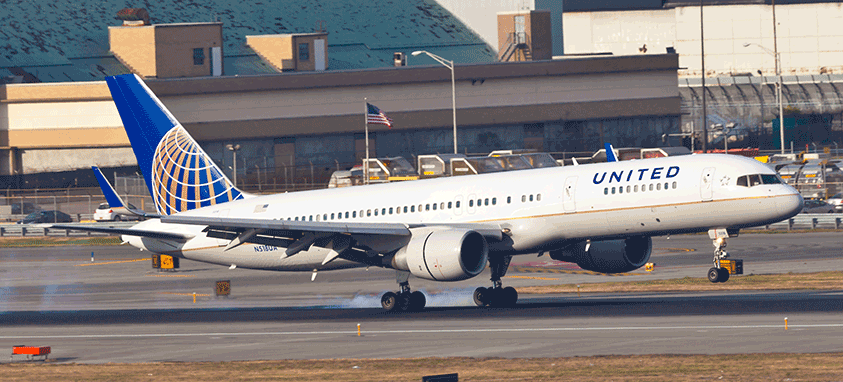
United Airlines is revving up its business class to provide every passenger with aisle access, improved food and beverage offerings, and more comfortable seats.

The improvements are part of an ongoing project that United began four years ago to revolutionize its business class—rebranded Polaris, after the North Star. United has used focus groups to better establish what changes its clients are seeking.

United’s old business class areas were densely packed, but British design company Acumen Design Associates has provided aisle access by “slightly staggering and aligning the seats, one in line and one slightly angled on the aisle,” Acumen CEO Ian Dryburgh told CNN.

Seat manufacturers Zodiac Aerospace created sets that maximize comfort and luxury. A focus group emphasized the importance of comfort and ample storage.

To determine what food changes are needed, United organized menu workshops in 16 cities and on five continents. Then, accompaniments for the dishes were selected.

“The flight attendants will serve three red or three white wines for each customer to taste,” Susan Carter, senior manager of gallery planning and beverage provisions, told CNN. On early morning flights, passengers have their choice of a bloody mary or a mimosa.

The airline recently had a dress rehearsal—a pretend flight to Paris—to assess the new Polaris services. It was the first time that all of the new features that United has been developing were tested together.  The new amenities were popular, and the “passengers” had a comfortable flight, although they didn’t have anywhere to put extra pillows, and an ice cream bowl cracked.

United also is experimenting with offering a new lounge experience for business-class travelers. It is hoping that all its efforts to boost its business-class offerings will help to re-establish a more positive image of the company after suffering widespread criticism when a video showed a passenger being dragged off one of its planes in April.

Meanwhile, other major airlines are also revolutionizing their business-class cabins. Delta Air Lines is focusing on boosting privacy and Qatar Airways now offers double beds.

As they continue to experiment, all of the airlines are relying heavily on customer feedback, particularly from frequent business travelers.

With all eyes on Florida over the weekend, victims of Hurricane Harvey in Texas have not been forgotten. Of the more than $157 million pledged by U.S. businesses to Harvey relief efforts so far, more than $9 million, about 6 percent, has come from travel and hospitality companies.

The single largest of these pledges came from Wynn Resorts, which committed $3.75 million to aid those affected by Harvey, with a focus on the financially disadvantaged. A similar amount will be directed to Macau, in the People’s Republic of China, which was lashed and flooded by Typhoon Hato on August 23, killing ten people.

Wynn operates properties in both locations. “These events, 8,000 miles apart, have affected the lives of our employees and our friends in both cities, and we have felt compelled to help in some small way,” said Steve Wynn, Wynn Resorts chairman and CEO, in a statement.

Other donations include:

Carnival Cruise Line: The cruise line and its philanthropic arm Carnival Foundation are donating $1 million to relief efforts. Carnival Chairman Micky Arison and wife Madeleine are also contributing $1 million from their foundation.

Enterprise Rent-A-Car: The Enterprise Rent-A-Car Foundation is donating $1 million to the Red Cross.

Hilton Hotels & Resorts: The company is donating $500,000 to the Red Cross and to the Hilton Responds Fund for affected employees. The Conrad N. Hilton Foundation, a private family foundation established by the founder of Hilton Hotels, has also pledged $500,000. The hotel chain is also giving Hilton Honors Members the chance to donate reward points to the American Red Cross.

American Airlines: American’s AAdvantage customers and team members have donated more than $1,000,000 to the American Red Cross to assist in Hurricane Harvey relief efforts. From August 25, 2017 through September 24, 2017, AAdvantage members can earn 10 miles for every dollar donated to the Red Cross with a minimum $25 donation. American also donates $1 million annually to Red Cross’s Annual Disaster Giving Program (ADGP).

Delta Airlines: Delta Air Lines Foundation pledged $250,000 to the American Red Cross to help Harvey victims. This grant is in addition to the foundation’s $1 million grant to the American Red Cross as an Annual Disaster Giving Program partner. Customers can support relief efforts for Harvey victims by donating miles to the Red Cross through SkyWish, the charitable arm of Delta’s SkyMiles program. Delta will match donations up to 10 million miles. Customers can also donate through Delta’s Customer Microsite, created in partnership with the Red Cross.

United Airlines:  The airline says it has donated $1.1 million between cash contributions, food and amenity donations, plus the value of relief flights. United will also give up to three million bonus miles to MileagePlus members who donate to disaster relief organizations such as the Red Cross or AmeriCares. Included in United’s cash contributions is a $200,000 match raised in donations on a crowdfunding campaign the airline is jointly sponsoring with Chase Card Services. To date, this campaign has raised a total of $2,329,065.

IMEX mandalay bay

With the annual IMEX America show less than a month away, organizers of the massive incentive travel, meetings and events exhibition announced on September 13 that in 2019 and 2020, it will be moving the event to September dates, and in 2021, the Las Vegas show will shift from its traditional home at Sands Expo & Convention Center to Mandalay Bay Convention Center.

“The Sands Expo team have been wonderfully supportive partners since well before our inaugural show in 2011 and we are looking forward to four more successful shows working with them, through 2020,” said Ray Bloom, founder and chairman of the event. “However, we were not able to lock in space from 2021 onward. Therefore, after celebrating ten years working together and enjoying a fantastic relationship with the Las Vegas Sands team, we shall be moving to Mandalay Bay.”

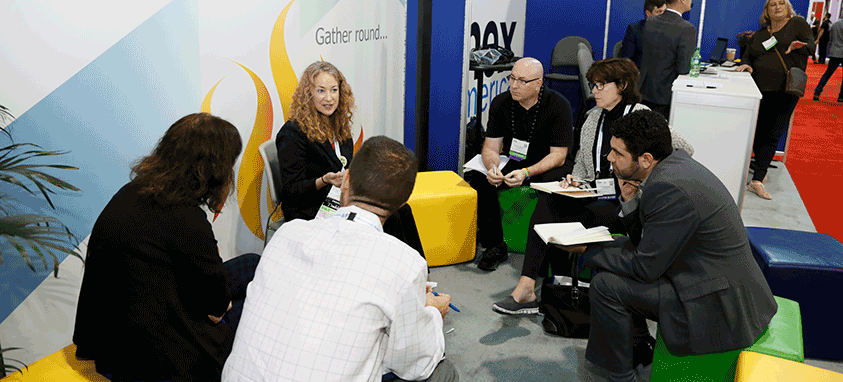
Starting Oct. 9, the 2017 IMEX America event will bring more than 12,000 attendees and 3,200 exhibitors from more than 130 countries to Sands Expo and The Venetian/The Palazzo for education, networking and inspiration. Last year, 60,000 pre-scheduled one-on-one meetings were held. That represents hundreds of thousands of dollars of business getting booked. The theme for the week this year will be Purposeful Meetings: How to Plan with Deeper Meaning, Innovation and Insight in Mind.

New this year will be an expanded Technology Pavilion to facilitate Tech Tours. “Meetings technology is growing at such a rapid pace; we try to celebrate that, but also focus in and spark learning and conversations that help people slow down a bit and make sense of it all,” explained Carina Bauer, CEO of IMEX Group.

Dates and venues for IMEX America for the next eight years will be:

  • 2018   Oct. 16-18   Sands Expo
  • 2019   Sept. 10-12  Sands Expo
  • 2020   Sept. 15-17  Sands Expo
  • 2021   Nov. 9 -11  Mandalay Bay
  • 2022   Oct. 25-27   Mandalay Bay
  • 2023   Oct. 10-12   Mandalay Bay
  • 2024   Oct. 8-10   Mandalay Bay
  • 2025   Oct. 7-9   Mandalay Bay

supreme court ruling travel ban

Much of the event and travel industry was surprised on Sept. 12 when the United States Supreme Court announced the Trump Administration would be allowed to enforce a travel ban for refugees from six Muslim countries in advance of an expected hearing on the issue October 10.

The court blocked a federal appeals court ruling that would have exempted banned refugees from Iran, Libya, Somalia, Sudan, Syria and Yemen who have a “contractual commitment” from resettlement organizations, a decision that could impact as many as 24,000 people and hinder some international meetings in the United States.

John Graham, Center for Association Leadership (ASAE) president and CEO, said the following day that the announcement just added to the confusion around travel and could have a negative effect on the event industry. “We still don’t know the definition of a relationship as it relates to events,” he said. “If someone is a confirmed speaker can they enter the country? What if they are member of an association?”

Graham says his members are reaching out to him to ask for clarification and he has asked the State Department for guidance. “At least with the blanket travel ban, we knew the lay of the land. Now people are worried that they won’t be allowed in the country, or once they get here, they won’t be able to get back out.

The impact might be felt most strongly in the scientific and academic community, Graham warned. Researchers from around the world meet regularly to share information. “Confusion can lead to doubts and doubts can lead to cancelled meetings,” he said.

The same day, Paul Van Deventer, president and CEO of Meeting Professionals International, reiterated his call for balance in travel policy. “Our position is the same. MPI believes that it’s critical to strike the right balance between enhanced security and travel facilitation,” he said. “We continue to encourage the administration to enhance our country’s safety, while also promoting it as a welcoming destination for international travelers. We look forward to hearing more from the Supreme Court on the legality of the travel ban in October.”

Dossier, Portland

Provenance Hotels’ new 205-room hotel is reminiscent of a private club steeped in hospitality. Guest menus offer selections that are spiritual—Tao Te Ching, anyone?—sleep-inducing—down or down alternative pillow?—and addictively yummy—what flavors of Portland’s own Salt & Straw ice cream do you crave? Pets have room service menus, too, including a spiritual menu (books ranging from dog massage to pet psychology), as well as welcome amenities. Meeting rooms are intimate spaces with original artwork and arched floor-to-ceiling views of downtown.

Hotel Amapa, Puerto Vallarta, Mexico

Opening in the vibrant and historic Zona Romantica in early February 2018, this Design Hotels property fuses traditional Mexican aesthetic with a spirited vision in contemporary design. It offers 55 guest rooms and indoor and outdoor event space a block from the popular beach of Playa Los Muertos. Named after the neighborhood in which the hotel is located, an Amapa is also a beautiful tree with lush pink blossoms.

Moxy Times Square, New York City

True to its name, cheeky and playful are words that come to mind at this brand-new property in midtown Manhattan. Its Magic Hour, the largest rooftop bar and lounge of any New York City hotel, has views to the Empire State Building, plus an antique carousel, putt-putt golf with follies of animals “in compromising poses” and a fun house mirror. The 612 guest rooms range from suites to quad rooms with twin bunks. All with lightning-fast Wi-Fi and spacious walk-in rain showers. Seven meeting rooms total 20,750 sq. ft.

Kona Kai Resort & Spa, San Diego

On Shelter Island, this hallmark resort and club was a playground for Hollywood celebs in its heyday. By January, it will add 41 luxury suites, an outdoor terrace and a reimagined pool area. Coastal Revival suites offer bathrooms showcasing hints of patterned, Spanish-inspired accent tiles (pictured). Total guest room count goes up to 170, and flexible indoor and outdoor function space increases to 55,000 sq. ft. The resort’s marina is the closest to San Diego Bay, with 518 slips.

scotland

Gentlemen, pack your kilt if you are headed to Scotland for a meeting. It is a land of legends, such as the Loch Ness Monster, and legendary scientific innovations, a la Dolly the cloned sheep.

On November 6, VisitScotland Business Events launched a new digital campaign called “Scotland. Where ideas become legend.” The country has four main convention bureaus—Glasgow, Aberdeen, Edinburgh and Dundee—who are working on this joint effort to promote offerings in the meetings world.

Over the course of two years, the tourism board will showcase 12 sectors—technology, education, creative, energy, life science, engineering, marine, surgery and medicine, digital, space, health and food and drink—for two months apiece. During that time, they’ll post blogs and video podcasts featuring experts in the field being highlighted. First up is technology.

“Pioneering innovation is in Scotland’s soul. We have a legacy of invention, research and knowledge that continues to this day and is being secured for the future,” Rory Archibald, business development manager for VisitScotland Business Events, says in a press release. “Scotland is home to leading pioneers from industries as diverse as engineering and robotics to computer gaming and medicine which are the exact stories the campaign will highlight to the world. Quite simply, Scotland is a place where ideas come to life. Ideas enable change, events create ideas and Scotland is a place where ideas become legend.”

The hope is for meeting professionals to use Scotland’s history of discovery to incite groundbreaking breakthroughs of their own. The country wants to position itself as a global destination for the meetings, incentives, conferences and exhibitions (MICE) market. Business travel accounts for 20 percent of tourism in Scotland and they find business travelers spend nearly twice as much as vacationers.

In addition to convention centers and typical hotel accommodations, Scotland offers unique experiences such as castle tours and overnight stays, bagpipe performances, cultural dancing and the famous Highland Games, where strength is put to the test in competitive tug-o-war and hammer throwing.

Mexico City wants planners to know it is open for business, and ready to host your meeting or event—even as clean-up from September’s 7.1 magnitude earthquake continues. Other Central Mexico destinations are similarly eager play host.

Herewith, noteworthy data points and tips…

Mexico City

  • The capital has hosted an Olympics and two FIFA World Cups. Its rankings by International Congress and Convention Association (ICAA) have risen steadily over the decades: In 2016, Mexico City hosted more association meetings than Toronto, New York City or Washington, D.C.
  • Other highlights:
  • 12 million visitors per year
  • 38,479 hotels rooms (four-star and above) at 600 hotels
  • Major convention venues (none of which were seriously damaged in the earthquake):
  • Expo Reforma Centro Banamex—Most renowned meeting space in Latin America, overlooking a race track; Earthcheck Gold-certified; 15,393 sq. ft. of expo space and 78,791 sq. ft. of meeting and convention space
  • Expo Bancomer Sante Fe—In the most modern business district of the city, close to headquarters of many Mexican and international companies; 60,277 sq. ft. of meeting and convention space, and 403,915 sq. ft. of expo space.
  • World Trade Center Mexico City—Boasts Pepsi Center, a major concert and event venue; 138,208 ft. of expo space and 128,661 sq. ft. of meeting space
  • Blackberry Auditorium—15,091 sq. ft. of expo, meeting and convention space
  • 3,000 tourist-quality restaurants
  • In 2016, Mexico City ceased to be called the Federal District (Distrito Federal) and is now a formal state with more autonomy. In Spanish, you’ll see it written out as CDMX, a brisk acronym that reflects its modern, dynamic image.
  • Within an Hour:
  • Cuernavaca—Once the private hunting grounds for Aztec royalty, the Colonial city 50 miles south of Mexico City offers 30 hotels with 1,394 guest rooms. Don’t miss 16th-century Palace of Cortez, built atop a destroyed Aztec pyramid and the residence of conquistador Hernan Cortez. It now houses Cuaunahuac Museum and is home to a significant collection of pre-Hispanic and colonial artifacts as well as famous murals painted by Diego Rivera in 1930.
  • Teotihuacan—Thirty miles northeast of Mexico City sits this vast Mexican archaeological complex, once a flourishing city of 150,000 that predated the Aztecs. Established around 100 B.C., Teotihuacan was one of the largest cities in the ancient world, and shows evidence that its builders had advanced knowledge in mathematics, geology, astronomy and engineering. The Pyramid of the Sun is one of the tallest pyramids in the world.

Guadalajara

  • Guadalajara is no stranger to large gatherings, and many of them are cultural and gastronomic. September, for example, sees the International Mariachi and Charreria Encounter, when hundreds of thousands watch the world’s best mariachis and Mexican rodeo performers strut their stuff. It also hosts the world’s second-largest international book fair.
  • More than 23,550 guest rooms at 370 hotels
  • Major convention venues:
  • Expo Guadalajara—Largest convention center in Mexico, with 1.16 million sq. ft. of event space; recent upgrades include a room dedicated to press conferences and Festilia, a space with the latest tech for social events.
  • Palace of Culture and Communications (PALCCO)—opened in February 2016, as a design-forward setting for corporate and social events; three auditoriums for 400 to 5,000 attendees, four meeting rooms for 30 to 360 attendees, plus exhibition areas.
  • World Trade Center Guadalajara—66,131 sq. ft. of meeting space
  • 700 tourist-quality restaurants
  • Local flavor:
  • Torta ahogada—This “drowned sandwich” gets its name from the chili-forward salsa that covers the salty sandwich roll, which is stuffed with meat, beans and onions.
  • Birria—Goat or lamb is slow-cooked alongside glowing embers of hard wood, then served in a spicy broth accompanied by lime wedges, sliced jalapenos, diced onion and warm, corn tortillas.

Puebla

  • Meetings often revolve around the city’sagricultural, commercial and manufacturing businesses.
  • More than 11,000 hotel guest rooms
  • Major convention venues:
  • Puebla Exhibition Center—One of the largest in Mexico and ranked in the top 10 for Mexican venues; in the Cinco de Mayo civic center, surrounded by museums and public parks; Earth Check silver certification; 430,556 sq. ft. of new meeting space, including the largest room without columns in Latin America; 24 breakout rooms.
  • Centro Expositor Puebla—430,400 sq. ft. of meeting space.
  • Centro de Convenciones Puebla—Also known as Convention Center William O’Jenkins; can host up to 3,400 attendees; 96,875 sq. ft. of event space, 12 meetings rooms and an auditorium.
  • University Cultural Complex—Auditorium seating for 3,494; outdoor plaza seats 15,000.
  • Local flavor:
  • Mole PoblanoThis single culinary classic is why Puebla is regarded as the second-most important culinary heritage city of Mexico, after Oaxaca. The story goes that nuns at a Puebla convent invented it for a visiting archbishop by combining no fewer than 20 indigenous and imported ingredients, including chocolate and various chili peppers to make the thick, lustrous, brown sauce that is ladled over cooked turkey. Muy rico! (Very tasty!) A dish for the ages.
  • Chiles en Nogada—Inside plump poblano chili peppers goes a stuffing of minced meat, dried fruits and spices. Over the top is spooned a walnut-based cream sauce and pomegranate seeds. It’s no accident the dish echoes the green, white and red of the Mexican flag.
  • Within an Hour
  • Cholula—Only a few miles away, the tiny pueblo of Cholula has two claims to fame—a church for every day of the year and the Great Pyramid of Cholula. It’s the largest pyramid on the planet, with a base four times larger than the Great Pyramid at Giza. Built in the second century B.C., it is made of seven stacked trapezoids. You can test your stamina by climbing the exterior staircase or explore its antechambers and tombs.

More Colonial Gems

Guanajuanto

This beautifully preserved Colonial city in Mexico’s central highlands, a UNESCO World Heritage Site, is a beguiling maze of narrow cobblestone alleyways, underground passageways and buildings with opposing balconies that nearly touch. From humble origins, it grew to be Mexico’s wealthiest city during an 18th-century gold- and silver-mining boom.

Most popular of the city’s several museums is Museo de las Momias (Mummy Museum), which houses a collection of naturally preserved corpses. The surrounding area has haciendas and old mines for group visits.

Guanajuato’s most famous gathering is Festival Internacional Cervantino, a huge celebration of the life and works of Spanish writer Miguel de Cervantes.

The city’s largest meeting space is Guanajuato Convention Center, which offers 19,660 sq. ft. of event space. Guanajuato offers 2,000 guest rooms in 45 meetings-friendly properties.

Guanajuato is located 230 miles northwest of Mexico City and most easily reached via Guanajuato International Airport (BJX), also known as Del Bajio International Airport.

San Miguel de Allende

Named the world’s top destination for 2017 by Travel and Leisure, this is your Mexican Colonial fantasy come true. It sits prettily at above 6,000 feet in elevation, centered on El Jardin (the garden), the main plaza and the cake-icing church Parroquia de San Miguel Arcangel, designed as the fantasy of a man with no architectural training.

The 140,000 who live there, which includes an artsy expat contingent, live the culture on the cobbled streets. Hardly a day goes by without gigantes, huge papier mache heads trailing dramatic costumes, being paraded by on poles, followed by uniformed brass bands and processions of celebrants, penitents or the merely curious.

Saturday sees Tianguis Organico, the best organic farmers market in Mexico, next to Instituto Allende, a visual arts school.

The best meeting and event space in town is Rosewood San Miguel de Allende, a luxury, hacienda-like hotel with 67 rooms and suites that features a rooftop restaurant, bar and event space with spectacular views to the Colonial rooftops, tiled church cupolas and mountains beyond. The hotel can accommodate up to 200 persons for indoor receptions and up to 600 outdoors, and has 4,740 sq. ft. of indoor meeting and prefunction space. There’s also an amphitheater and events lawn.

? Smart Tip

The 0 VAT—Foreign meeting planners can avoid the 16 percent Value Added Tax (VAT) on many services for meetings, conventions and congresses (but not for incentive events) in Mexico. Ask your hotel or meeting venue in advance for assistance.
Another reason to be thankful: You haven’t come down with the flu. Yet. Centers for Disease Control (CDC) fudges when asked how bad this year’s flu season will be. “It’s not possible to predict,” admits CDC’s website.

CDC strongly recommends getting a flu shot, but we all know that doesn’t always guarantee absolute flu protection. When the vaccine was formulated months ago, its manufacturers took an educated guess as to what permutations of flu virus will be taking us down this season.

Catching the flu, of course, is all about exposure to the virus. At work and home, we have limited but significant means to defend ourselves. Practicing good hygiene (regular hand washing). Avoiding touching your face after shaking hands. Working remotely when possible. Co-workers letting everyone know when they aren’t feeling well. And, last but by no means least, boosting immunity through smart nutrition.

Dr. Joel Fuhrman, author of Super Immunity, advises healthy portions of the GBOMBS—greens, beans, onions, mushrooms, berries and seeds.

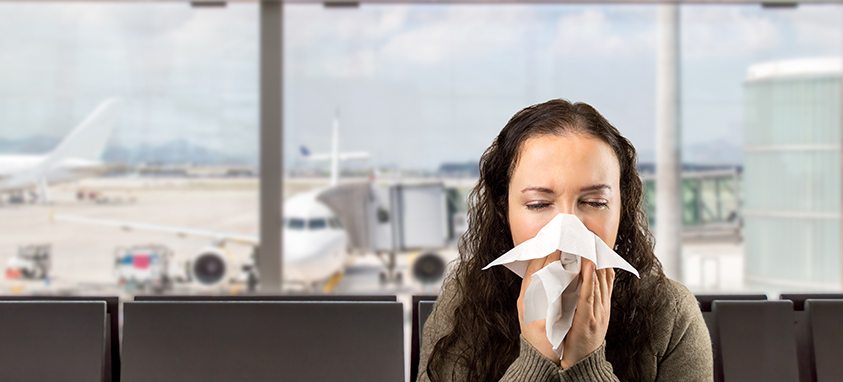
Now, let’s throw an all-bets-are-off variable into the equation. As a meetings professional, you fly. Sometimes often. A Canadian study published in 2004 found passengers were 113 times more likely to have caught a cold during a five-hour flight between San Francisco and Denver than during normal daily life.

But there are strategies for ducking flu and cold viruses when you fly. For those that follow, we are indebted to health journalist Melanie Haiken.

  1. Drink lots of water, before and during the flight.

    Low humidity in an airplane cabin is a chief cause of our likelihood of getting sick, because the mucus membranes in our noses and throats—our primary defenders against letting viruses and germs into our systems—don’t work as well.

  2. Don’t touch the seat pocket in front of you.

    According to the National Institute of Allergy and Infectious Disease, rhinoviruses—which give us the common cold—can live up to three hours on any surface, whether that’s the seat pocket, tray table or armrest. If you must touch, slide your sleeves over your hands first, or use a tissue.

  3. Use disinfecting wipes.

    Wipe down all those icky surfaces in front of and next to you.

  4. Open the air vents.

    Sounds wrong, doesn’t it? But research says actively recirculating air (which is filtered) can help push floating nasties away.

  5. Close the toilet lid before flushing.

    A 2005 study found that large numbers of microorganisms persisted in the toilet bowl surface and in the bowl water, which were disseminated into the air by further flushes. Enough said.

  6. Use your seat as a barrier.

    If you have a hacker or sneezer behind you, keeping your seat upright can help shield you.

  7. Protest if you’re stuck on the runway with the ventilation system off.

    In one research study, 72 percent of passengers became ill with flu within two days after being held on the plane with no ventilation for three hours because of an engine problem. All it took was one sick passenger. Current regulations require passengers to be removed from the aircraft within 30 minutes of shutting off the ventilation system. If your pilot ignores this rule, talk to a flight attendant. If that doesn’t work, try to get other passengers to complain. In past cases, that has worked.