Gal bonding icebreakers

How do you get women to mix and mingle without breaking a sweat? Working these icebreakers into your reception routines could keep even the most nervous guest from getting cold feet and help create meaningful connections that go beyond the event.

1. Common Things

Help people see how similar they are by finding the answer to the question “we all..” The answer could be as general as “have a pet” or as specific as “share a birth month,” but the exercise of finding the answer will help people see how much they share.

2. Run Wild

Sometimes asking random questions is the best way to get a pointed answer. Assign guests to interview each other with the question: “If you were a tree, what kind would you be?” or “What is your Pro Wrestling Name?” The result may be a deeper than surface conversation, and more than a few laughs.

3. Goal Oriented

Have everyone write down on a sticky note the one thing they hope to come away from the conference with and then compare goals. It beats talking about the weather.

4. Around the World

Divide the room up into areas representing continents and then have people go to whatever area that represents where they would most like to visit next. Share fantasy itineraries.

5. Constructive Listiclizing

Have sub-groups compile a list of favorite shared authors, television shows or industry products. Warning, debating priorities could unite or divide the group.

6. Timed Chats

Employing a speed-dating format, have people meet in short, timed bursts to find out a series of facts about each other. Topics could include hometown, best teacher (and why), or last scary thing attempted (other than speed-meeting).

7. Free Advice

Ask everyone to go around the room and give the best piece of advice they have gotten or given in their career. This is a fun way to share what is important—and possibly learn something in the process.

8. Inspired Sources

Add stickers to nametags that represent what inspires them each day—possible categories include family, coworkers, celebrity, important work. This is an effective conversation starter as people compare and explain their source of motivation.

9. Busy Hands

Set up an activity, such as filling backpacks for at-risk children or assembling a bike. This can lead to conversations beyond “pass the screwdriver” and leave everyone with a sense of accomplishment.

10. Missing Piece

Give everyone a part of a puzzle to put together. This can open doors to chatting about bigger pictures and complementary skills. Bonus if the resulting image has a company message.

11. Pay It Forward

Have everyone share their favorite icebreaking questions and record those for the next event.

As a woman, are you afraid of traveling alone? Actress Shirley MacLaine once said, “The more I traveled, the more I realized that fear makes strangers of people who should be friends.” Actress Mae West more famously said, “Good girls go to heaven, bad girls go everywhere.” Wherever you may fall on the fear-of-traveling-alone spectrum, here are four ways to make the experience more fulfilling and less daunting.

1. Be covered.

One of the least threatening but most common fears of female travelers is the “oops, I forgot it” moment. Hyatt Hotels Corp. is among major hospitality companies that want women to know they’re covered. Five years ago, it conducted focus groups with women around the world. One outcome was the introduction of Hyatt Has It, whereby the brand’s properties stock all sorts of things a woman traveler—and men, too—might have forgotten, from a cellphone charger and headphones to laundry detergent and a yoga mat. Or even a crib, booster seat and highchair for those kids tagging along.

Other hotel brands have followed, especially when it comes to personal necessities such as toothpaste, toothbrushes and a sewing kit. A few even have nail polish remover and basic polish colors—just ask.

2. Be healthy.

Health and wellness should be on every traveler’s agenda, and hotels are going beyond the standard fitness center to satisfy guest demand. Women travelers are among the most enthusiastic users of offerings such as Hilton’s Five Feet to Fitness rooms, now at 10 properties—Parc 55 in San Francisco, plus three Hiltons and six DoubleTrees in Texas, Virginia, New York, Florida and Illinois. Essentially, it’s an in-room gym, with high-end equipment and a video kiosk that leads guests through everything from weight training to yoga and meditation.

“What surprised us,” says Melissa Walker, senior director of global brand wellness for Hilton, “is it’s often not the very fit who want them.” Women who may not want to be seen by work colleagues or other guests without makeup and in workout attire are paying a premium for the convenience and privacy of the offering.

Westin, a Marriott brand, is another leader in guest well-being and fitness, female and male. It began in the last century for Westin, in 1999, with the introduction of the Westin Heavenly Bed. What started with promoting a good night’s sleep has become a veritable laundry list for fitness, wellness and well-being: selected guest rooms with Peloton workout bikes, fitness studios with Pelotons and TRX suspension training systems, “run concierges”—200 of them globally—who may work at the front desk but also lead guests on 3-to-5 mile routes that showcase local attractions, workout gear loan, local running maps, in-room workout videos, partnerships with SuperFoodsRx for energy-boosting meals and with The Juicery for healthy juices and smoothies.

3. Be safe.

Of all concerns shared by female travelers, safety is uppermost. Especially when they are journeying alone. NerdWallet.com recently posted 20 hotel safety tips for solo women. Among the website’s recommendations are not being gender-specific when reserving a room (provide only your first initial and last name), not staying on the ground floor of a hotel (easiest intruder access), not allowing the front desk employee to announce your room number (refuse the room unless it is written down only) and packing a rubber door stopper (for extra fortification inside your room door).

Of course, picking a safe hotel in the first place is the first precaution women should take. NerdWallet advices searching Yelp reviews for mentions of safety.

Personal safety app bSafe alerts friends or family—known as guardians in the app—that you’ve arrived at your destination, sends updates on your changing GPS location and sets off an audible alarm on your phone at the press of a button. That alarm also notifies your guardians as to your exact location and starts audio and video on your phone. The app provides directions to the nearest police station and hospital, as well.

And there’s another nifty feature. Called “Fake Call,” you can get your phone to ring to get you out of an unpleasant or threatening situation.

4. Be engaged.

“Women are nearing half of all business travelers, and they make up 85 percent of purchase choices in the household,” Carolyn Pearson, the founder of Maiden-Voyage.com, told CNN. Her website connects female business travelers across the globe and rates women-friendly hotel brands. Aimed at professional business travelers, it boasts members from more than 80 countries. Membership is free.

“We believe that staying in with room service or a supermarket takeaway is a missed opportunity,” Pearson writes on her website. “We want to liberate you, to awaken your passion for travel, to encourage you to get out and explore a new city safely.” The website facilitates connecting with other “like-minded professionals and inspiring women for an evening, perhaps giving you the confidence to try a nice restaurant, see a show or just enjoy some great conversation over a relaxing glass of wine.”

Pearson also promises advice on “where you can grab a good manicure, great shopping or a good hairdresser.”

Tourlina is a free app for women-only travelers that pledges to connect “interesting and entertaining female companions and locals within a secure and trusted network.” You enter a trip by country and time, and then select a travel companion with mutual interests by swiping left or right through the choices. Online chat confirms your decision and plans to meet.

The New York Times wrote about Suzanne Randolph, a former art adviser, after she launched the Alix Experience in New York, San Francisco, London and Paris last year. For an annual fee, ranging from $750 to $2,000 per city, depending on level of service, women can tap into a concierge staff to suggest restaurants and services such as yoga classes. It also lets members connect during events such as wine tastings and art gallery tours.

The Times asked Randolph why a hotel concierge couldn’t do much the same thing. “Hotel concierges are great,” she replied, “but they often have set relationships with restaurants and other service providers, which can influence their recommendations. The local Alix concierge doesn’t play favorites. Our recommendations are based on blind trails using our own money.”

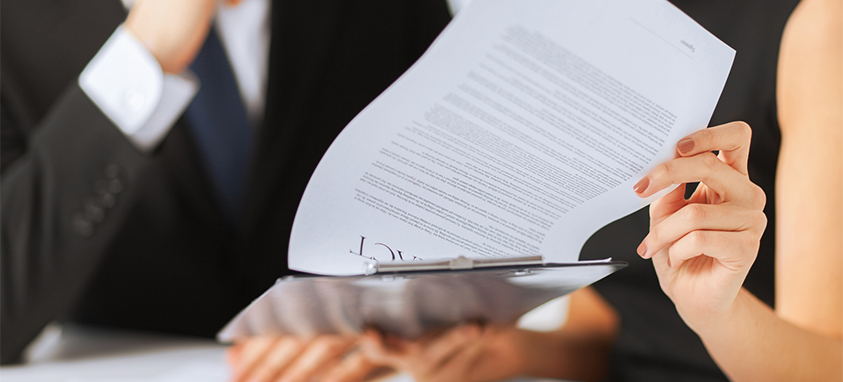
Research shows that women are often very good at negotiating on behalf of others, but are not as successful when negotiating for themselves. You can change that by preparing yourself to negotiate. Here are five simple steps that can empower you as a negotiator and increase your chances of getting what you deserve.

Step #1: Set goals.

Odds are if you don’t know what you want, you won’t be able to ask for it. Research shows that goals are a critical factor in determining how a negotiation plays out. They become a self-fulfilling prophecy. Set the bar too low and you inevitably come away from the table with less than you deserve. Set it higher and you are more like to meet your aspirations.

Step #2: Support your goals with concrete information.

You need to be confident that your goals are realistic. Pluck a number out of the sky for your target salary, and you will find you’ll abandon it quickly at the first sign of resistance. Your goals must fall within industry standards and be consistent with the organization’s compensation system. Proper research converts your goals into defensible demands. The more you know about an industry, a company, a position—the salary it should command and the skills profile it requires—the easier it is to develop a convincing case and one that you will feel comfortable defending.

Women often begin negotiations without solid information about comparable salaries and pay scales. Instead, they tend to compare their salaries to those of other women in their field or organization and not to the full band characterizing the field. This creates a downward bias in their thinking.

Luckily there is a wealth of information on salaries available on the internet. With a firm salary range in mind, you can focus the discussion on the qualifications for the job and what it should pay (which is exactly what you deserve).

Step #3: Develop alternatives.

You always do better in salary negotiations when you have choices; they give you bargaining room. When the other party senses that you have no alternative but to take what is offered, they will be tempted to give as little as possible and you may be forced to take it. Another job offer—or the prospect of one—increases your flexibility. You are not captive of an offer because it is the only one you see on the horizon. Instead you can weigh the offer and decide whether it works for you.

It’s not necessary to have other offers in hand for alternatives to be viable. But they do need to have been explored sufficiently to know that they are real and could produce offers if taken another step. If the options available to you aren’t particularly appealing, ask yourself what you can do to improve them.

Step #4: Anticipate challenges.

Challenges are a normal part of the negotiation process. Bargainers like to keep the upper hand. Think about ways your demands will be questioned or your experience and skills downplayed. It’s next to impossible to negotiate the salary you want or a job in a new field when the interviewer puts you on the defensive.

Luckily challenges fall into characteristic patterns and are fairly easy to predict. “That salary is unrealistic. You’ve never worked in the field before. We get 20 resumes a week.” The list goes on and you can probably add your own variants.

Challenges come up routinely in negotiations. Don’t take them personally, but make sure you have responses ready. Unless you do, you will find yourself backtracking from your goals.

Step #5: Consider how you will introduce your request—and practice.

What you ask for is important, but so is when and how you say it. The good news is that often you’ll know a lot about the other person with whom you are negotiating. Obviously, you can’t plan the entire negotiation ahead of time without the other side’s participation, but you can think about how to introduce your requests and practice various approaches. This exercise forces you to imagine different scenarios and helps you deal with them once you are in the thick of an actual negotiation.

A last bit of advice:

Almost everything is negotiable, but not unless you recognize that it is. Don’t let opportunities to bargain slip by. Even if you cannot realize all your goals immediately, you can still create an impression that you can bank for the future.

Carol Frohlinger (@carolfrohlinger) is the founder of Negotiating Women, was a featured speaker at the 2018 Smart Woman Summit and is a co-author of “Nice Girls Just Don’t Get It” and “Her Place at the Table.” This article was adapted from one she wrote with Deborah Kolb and Judith Williams.

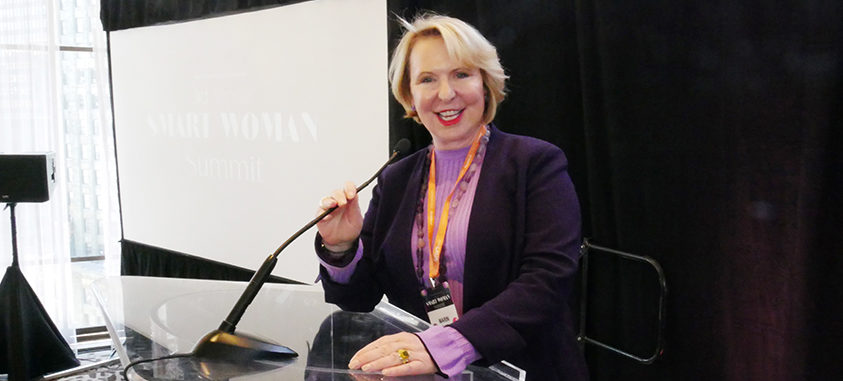
Smart Woman Summit
Smart Meetings CEO, Marin Bright.

This is our moment. The work world is changing and the meetings and hospitality industries are the perfect leaders for the coming equality evolution. Anyone who has stood in line for the ladies room at IMEX knows we are overwhelmingly female in the meetings workforce, but underrepresented in management. This is our chance to step up and show those bankers and computer nerds that a representative C-suite not only can be done, it needs to be done if we are going to keep inventing cool stuff that solves real problems, putting people to work in meaningful jobs and increasing stock prices.

Numerous studies have shown that when more women are in leadership positions, their companies outperform more homogeneous executive teams and boards, have higher sales and better return on capital—66 percent better in some cases. The reason is simple. More diverse points of view result in more insight into what customers want, how problems can be solved and new ways to communicate. Elevating women is just good business.

But an integrated workforce—we are talking about gender, race and age here—is not going to happen by itself. It is going to take hard work. And any big job requires the right tools. That is why we have assembled a resource kit to equip you with the information you need to negotiate, balance, speak up and be healthy. Hopefully you find the information here useful and inspirational enough to bookmark. And because this movement is just getting started, we promise to update it with new nuggets as we cover the cool things you are doing and news about new trends that could help you be even more effective.

Thank you for sharing this moment with us at Smart Meetings. Let’s go out there and kick some paradigms and get stuff started. I look forward to seeing your brilliant solutions.

All the best,

Marin Bright

Several small, independent hotel companies have raised commission rates to third-party planners, just as some large companies have lowered or are considering lowering the rates.

Preferred Hotels & Resorts launched a 60-day promotion in February called “We Appreciate You,” in which independent planners offered independent planners an 11 percent commission.

Plaza Hotel and Casino Las Vegas is offering a 12 percent commission for meetings booked this year. Dream Hotel Group, the owner of Dream Hotels, Time Hotels and Unscripted Hotels, is offering a 12 percent commission for meetings and groups booked and confirmed throughout 2018. Reservations for events must be booked and finalized by Dec. 31.

Some large hotel groups also have recently raised commission rates or vowed to maintain current levels. Eden Roc Miami Beach, Nobu Hotel Miami Beach and Nobu Hotel Los Cabos in Mexico increased their group commission from 10 to 12 percent on newly contracted groups that book a minimum of 10 rooms per night now through Dec. 31. Melia Hotels and Resorts has announced commissions as high as 16 percent on some properties. MGM Resorts International and Wyndham Hotel Group indicated that they intend to keep its group commissions steady, and have no plans to adjust them in the near future.

Marriott, on the other hand, cut its commissions in North America from 10 to 7 percent starting April 1. Hilton will do so starting Oct. 1, and Hyatt is considering whether to do the same. The commission cuts have been criticized by executives of organizations such as American Society of Travel Agents and Travel Leaders, who contend that the reductions downplay the value third-party planners and agents bring to the booking process.

The increase in rates at smaller hotel companies has many wondering whether planners will switch over to these properties solely because of the commission increase. David Bruce, founder and executive director at Meeting Planners Unite, thinks that it all comes down to ethics and what will benefit both parties.

“It would be in the planner’s best interest to look at properties with those higher rates that could best fit their event,” Bruce said. “But we [planners] have to look at what is best for the client and the independent. We can’t base our business on what name is on the wall. It is important to not only look at what is important for the client, but also offer properties that will be able to make you a profit as a small-business owner.”

Editor’s Note: We are updating this story as new announcements are made.

The United Kingdom’s northernmost country has a lot more to offer event professionals than castles and kilts (although those things are great, too). VisitScotland has officially launched a new Scotland is Now campaign to tell travelers about the country’s progressive values. Reminiscent of the Legends campaign promoted in 2017, which continues into  2019, Scotland is Now targets consumer travelers looking for a cultural fit.

Created to “capitalize on the country’s steadfastness to advance progressive, pioneering and inclusive development,” the partnership between the Scottish Government, VisitScotland, Scottish Development International and Universities Scotland hopes to draw in high-value tourists—including business events travelers.

Why Scotland is Now Matters

“Buyers, planners and corporate clients have more choice than ever when considering their meetings, incentives and association conference destinations,” says Richard Knight, director of marketing for The Americas, VisitScotland Business Events.

This new initiative aims to display Scotland’s advanced cities, artistry and inspiring environments and its progressive views on gender and LGBTQ rights. One of the key components of the campaign is a series of video vignettes showcasing Scotland’s diverse culture, from designers at Harris Tweed to a former Somali refugee who has taken on the role of a community leader. These vignettes “showcase Scotland as a tolerant, forward-thinking nation supporting businesses and society of tomorrow and today.”

Scotland is a Go-To for Travelers

An esteemed quality of life co-mingles with convenience, hospitality, conference spaces and food and beverage, making it an ideal place for forward-thinking business and incentive travel. Knight explains that, though Scotland is Now is more overarching than Legends (which was directed more toward the MICE community than travelers), he believes it will resonate with event planners.

“The main impact of this campaign within the MICE market is going to be the unified messaging shared globally from the Scottish Government and its agencies, which will be to promote four core values: visit, work, invest and study in Scotland,” he says. Knight would also like to see the cities, venues and key stakeholders embracing the campaign to further gather speed and strength. “My hopes are that this will further grow the economic benefit of the already very important MICE market into Scotland,” he said.

On May 8, Intercontinental Hotels Group (IHG) became the third major hotel brand to cut independent planner commissions from 10 percent to 7 percent. The announcement follows the lead of Marriott International, which made the announcement in January to go into effect in April and Hilton Worldwide, which made a similar announcement in March to be effective October 1.

IHG’s lower rate will go into effect January 1, 2019 for properties in the continental U.S. and Canada. Senior Vice President of Global Sales Derek DeCross said in a statement that the move “allows us to balance the needs of our guests and owners by reinvesting the savings into programs and improvements that will benefit the guest experience.” He said the change is part of a “near and long-term strategy in order to drive an optimal experience throughout the travel journey…whether that journey includes a corporate customer attending an incentive event, or a parent booking his or her son’s soccer team.”

David Bruce, founder of the independent planner group Meeting Planners Unite and managing partner of Dallas-based CMP Meeting Services, questioned the motives of the brands who have made the change. “It is becoming increasingly more difficult to understand the logic in lowering the commission by these chains other than it is an attempt to increase their profit structure by cutting commission to those who bring them 60 percent of their business,” he said in a written statement. He pointed out that the hotels, for the most part, are not disrupting the commissions of the online travel agencies. “They pay far higher rates [to them] than the 10 percent they pay to their largest block of business (who also keep food and beverage, and other essential hotel income categories employed by our group business).”

Bruce said it is even more important for planners to “work toward a solution which is equitable to all involved.” His goal is to get the properties to negotiate with a collective of independent planners the way they do with large site selection companies, such as HelmsBriscoe.

IHG operates Kimpton Hotels & Restaurants, Holiday Inn and Crowne Plaza Hotels & Resorts along with InternContinental Hotels & Resorts. Similar to provisions issued by the other two properties, franchise properties could be allowed to put different commission structures in place. Bruce theorized that some might see the wisdom of maintaining the status quo. “We believe that these properties, when faced with the decision to either keep the 10% or lose the business will choose the higher commission option,” he said.

Some hotel properties, including Eden Roc Miami Beach, Nobu Hotel Miami Beach and Los Cabos, Plaza Hotel Casinos Las Vegas and Dream Hotel Group actually announced promotions to raise commissions as high as 12 percent. MGM Resorts International and Wyndham Hotel Group made statements saying they plan to keep group commissions steady for the near future.

San Diego has become the ideal mix of casual with class. Though it’s known for its sand-in-your-toes, beach-town vibe, business is no stranger to the city—from plenty of hotels offering ample meeting space to the San Diego Convention Center, which can hold up to 125,000 attendees, there are plenty of choices to host both big and small events.

And after the meetings, there’s an assortment of activities to participate in. If your group is looking for a good adrenaline rush following a day of workshops, panels and networking, San Diego is entirely willing to accommodate. From surfing to paragliding to bouldering, you’ll find endless opportunities to bring out your inner adrenaline junkie.

Hang Ten

It wouldn’t be a trip to San Diego without dipping your toes in the water. Why not kick it up a notch by surfing? La Jolla Shores is the best bet for rookies learning how to catch a wave. It offers sandy bottoms with calm water. Don’t worry if you can’t find an instructor—experienced surfers are happy to pass along tips at Tourmaline Surf Park and Coronado Beach. Looking for a challenge? Head to Swami Beach in Encinitas for an added level of difficulty. Those looking for an extra thrill can travel to Sunset Cliffs, Black’s Beach and Windansea.

San Diego Soaring

San Diego boasts the longest zipline in California. La Jolla Zip Zoom takes place in the La Jolla Indian Campground with 6,273 feet of zipline waiting for you to ride, offering breathtaking views of canyons, mountain peaks and rustic slopes. The San Diego Safari Park also features a zipline, allowing rides 130 feet above the ground to catch a glimpse of the wildlife from a different perspective.

Glide Across the Sky

If you want the best view of the coastline, check it out from above. Torrey Pines Gliderport, just north of La Jolla, has 100 years of flying history under its belt. For those who are unafraid of heights, paragliding is for you. Tandem paraglide or hang glide with a professional instructor over 300-foot cliffs above the glistening Pacific Ocean beautiful coastline, giving you one of the best views of the area.

Enter the Shark Tank

For the most daring in your group, San Diego Shark Diving allows both certified and non-certified divers to face their fears—or add a checkmark to their bucket list. Each diving excursion is led by a certified staff member who is happy to answer any misconceptions you may have about the great whites. For those combining a vacation with a business trip, embark on a five-day excursion to the waters surrounding Isla Guadalupe, a volcanic island 170 west of Mexico’s Baja California peninsula.

Boulder Your Way Around

Climb to your heart’s content—bouldering is considered a local specialty. Santee Boulders, located in San Diego’s East County, offers a full day of challenging climbs, though even novice climbers will be able to maneuver their way around the slopes and mantles. And at an elevation of 3,000 ft., El Cajon Mountain—aka El Capitan—is not for the faint of heart, but offers a reward of panoramic views of the Pacific Ocean.

Whether it’s during a meeting of five co-workers or a packed auditorium, getting your audience to pay attention can be extremely difficult. Even the pros need to continuously work on their presentation skills to keep their audiences’ interest piqued. How do you keep your audience engaged? These five flawless tricks can help you understand, speak to and captivate your audience.

Connect with your audience on an emotional level.

Speak to people’s hearts and their minds will follow. A powerful way to hook your audience is by connecting through emotions. Appealing to their sense of humor is a great way to do this. Being able to identify what makes them feel joy or compassion can help you leverage the concepts that stir their soul. Think about the theme of the event and what types of people are attending, then do some research into their specialties and the challenges they face.

Once you’ve got their attention, continue to use emotions to get them riled up. For instance, if you want the audience to feel connected to your leadership team, kick things off with a pop culture spoof or skit and let the audience see presenters with their hair down. Laughter isn’t just medicine, it’s a great tool to employ in meetings.

Play it, don’t say it.

Whatever the story you’re trying to convey, find ways to demonstrate it with more than just words. Imagine you’re representing a healthcare company that’s promoting a product for rheumatoid arthritis and you want to convey the patient experience in a relatable way. To show-not-tell, have everyone in the audience wear a brace that limits mobility for the entire first day of the conference. Putting them in the patient’s shoes is wildly more effective than a PowerPoint slide that says, “Limited Mobility.”

Creating an experience for your audience will keep their attention and push your message home.

Be relentlessly authentic.

Audiences generally know if speakers are not being genuine or truthful. One of the biggest mistakes speakers make is trying to be something they are not. The more personable and authentic a speaker is, the more attentive their audience will be.

Some of the best guest are the ones who are also the most vulnerable. Encourage presenters to be themselves—the audience will thank them (and, thank you!).

Be open to new ideas.

Repurpose something that worked at one meeting, is the fastest way to make a good idea stale. To stay ahead of the curve, be open to fresh ideas. You never know where, or from whom, the next great suggestion may come from. Case in point, my company once opened a meeting with an act that one of my employees just happened to catch on America’s Got Talent. It was a huge success! You never know where lightning is going to strike—or which cloud it might come from.

Be a fierce audience advocate.

Never (ever) start your meeting plan by making edits to the last year’s meeting agenda. This is a new audience, at a new point in time, with very new and specific needs. Every meeting needs to be a new experience—not a rehash of what happened last year. It’s a blank canvas and should be treated as such.

Start planning by asking yourself, “What does this audience need, right here, right now?” When you’ve answered that question, it’s time to start building your agenda. Throughout the planning process repeatedly ask yourself: How will this make the audience feel? Are we packing too much into this session? Will this resonate? Does this meet the objectives we set for this audience, today?

These five tips will help you cater to your crowd and create and meaningful and exciting event.

DJ Hanson is a managing partner and co-founder of BlueprintNYC, a powerhouse agency that specializes in audience engagement. BlueprintNYC helps their clients connect with their employees and customers by producing engaging and innovative experiences through live meetings and events, training, and employee communications.

With Earth Day behind us, there is a strong buzz of new sustainability practices. It’s trendy, hip and important to be green—and surveys show attendees and guests give weight to hotels and event properties doing their part to protect resources. The same goes for meetings. Give your attendees a reason to brag about your eco-friendly event (without breaking the bank) by adding a little something extra to your food and beverage menu—alternative straws.

More than 500 million plastic straws are used each day in the United States, and according to a World Economic Forum study, we are on track to living in a world with more plastic straws than fish in the ocean by 2050. A movement has emerged to ban these straws and replace them with reusable or biodegradable alternatives, like straws made out of paper, metal, bamboo or glass, and straws that can fold to fit in your pocket or on your key chain. And then there are edible straws. Remember when you slurped your soda through your Red Vine licorice? While that is still a (very) viable option, these edible straws will have your attendees thinking they stepped into Willy Wonka’s chocolate factory for a tasty treat.

Pasta Straw

The city of Malibu passed a ban on plastic straws that goes into effect June 1. Some local eateries were thrilled with this ban, but others were weary of the increased costs to replace these straws. Paradise Cove Café saw this as an opportunity to showcase two simple ingredients: water and flour. Tested in all types of drinks over multiple hours, these noodles hold their form and allow liquid to pass through as easily as any straw. If margarita-flavored al dente pasta isn’t for you, these eco-friendly straws can be discarded the same way as last night’s spaghetti. Match a drink with an Italian menu for dinner to make your attendees feel savvy and supportive.

Cookie Straws

Although you can find similar straws elsewhere, Seattle-based coffee giants Starbucks has had a hold on the cookie straw market since releasing their straws in 2015. These chocolaty rolled wafers come in signature Frappuccino flavors, and help to save the world. Add these to your dessert menu with a milk shake, or as a sugar kick for breakfast with an iced latte.

Loliware

Designers Chelsea Briganti and Leigh Ann appeared on the television show “Shark Tank” with an idea for edible, flavored cups. Now the two are working to release a flavored, edible straw to go along with their currently sold out cups, which come in tart cherry, yuzu citrus, matcha green tea and vanilla bean. Straw flavors are sure to be just as unique (and eco-friendly).