
Hilton Worldwide Promotes J Peter Lynn to San Diego Area GM
Continue reading “Smart Moves in the Meetings Industry: March 26, 2015”
Continue reading “Smart Moves in the Meetings Industry: March 26, 2015”
 A Conversation with Productivity Expert Steven Steinhart.
We asked Steve Steinhart, one of the nation’s leading hospitality sales consultants, to provide helpful tips and time management strategies you can use to eliminate “time robbers” and get more work done.
What are “Time Robbers?”
Time robbers can be an individual, a group, a meeting or a task. Time robbers are other people’s priorities, an administrative workload, internal meetings that take place. Quite simply, Time Robbers are anything that take you off your daily schedule.
I think we would all agree that we would get more done if we had more time in the day. My position is that we can in fact add more time to our workday by taking back some of that crucial time each day by examining, exploring and eliminating the most common Time robbers.
You’ve done thousands of time and motion audits for your clients. In your experience, what are the top 3 most common time robbers for meeting and event professionals?
The top 3 Time Robbers in the meetings and events industry are:
-Internal staff meetings
-Paperwork
-Lack of organizational skills
What are some daily strategies we can employ to be more productive?
The number one daily strategy to be more effective in getting your tasks done is to begin your to-do list for tomorrow before you leave for work today.
That way you already have a jump on your tasks for tomorrow and you won’t be spending precious time planning during your peak productive hours, you’ll be spending that time completing your tasks instead.
The next most effective daily productivity strategy is to learn how to handle interruptions.
When we have a momentum going we’re often very effective in getting our tasks done. If we’re interrupted for anything unrelated to our tasks, we’re suddenly out of the moment and we lose valuable time trying to regain that momentum. We really need to be able to teach our colleagues to be respectful of our time and not to interrupt us when we are in “peak performance” mode.
Our industry in based on meetings. Are you suggesting that we no longer have them?
We need to distinguish between the two types of meetings. One is the meetings between a planner and a supplier (or a supplier and a client). That’s a good meeting, and the more of those we have, the better. The meetings I’m talking about that act as the biggest time robbers are sales meetings, revenue management meetings, menu reading meetings and the like.
Too many of these meetings are occurring between 9 a.m. and 5 p.m.— and that’s prime time for selling and deal making. We shouldn’t be holding internal meetings during those peak selling times. Every minute that you’re in a meeting between 9 and 5 is a moment that you could have but you didn’t spend talking with a potential customer or client.
In our webcast, we’re going to give you tips and suggestions on what you can do to overcome this biggest of all time robbers.
Such As?
Well, for starters, all meetings need to have specific start and end times. Some meetings need to have an agenda. Your team also needs to be receptive to the idea that some meetings should really be postponed until everyone has had an opportunity to familiarize themselves with the topic before the meeting actually begins.
This sounds like common sense but you’d be surprised at how many meetings start without a set agenda or a clear understanding of the topic to be discussed. Meetings should NOT be brainstorming sessions that are scheduled during valuable sales or booking time.
“Setting priorities” is a phrase that you use a lot in your webcast. How big a factor is that in eliminating time robbers?
When it comes to setting priorities for our time and our tasks, you really need to take it to the next level. For example, you need to tackle your most difficult tasks during your peak performance times— but those times may differ for every individual. In the webcast, we’ll look at how you determine your peak performance times. We’ll uncover that productivity and effective time management is not just about getting through your tasks but getting through them at the best possible times of day.
What other strategies can we employ to help prioritize our tasks?
I recommend that for every task we have, we ask ourselves the following questions:
-Must this task be done today?
-What if this task is not done today?
-What if this task never gets done?
-Can I get someone else to do this task?
Running every task on your to-do list through this algorithm will help you assign the priority on which these talks should be handled. More importantly, evaluating your tasks in this way will often eliminate tasks altogether once you realize that not every task on your list needs to be completed by you.
Be sure to register for our free webcast, Critical Analytics of a Sales Manager’s Day – Selling vs. Servicing vs. Admin.
 Over the course of a 24-hour day, the most productive people juggle multiple projects while meeting their goals. Experts point out that productivity is not about working longer or harder; it is about working smarter. On themuse.com, Travis Bradberry shares the following tips on the habits of productive people and how to increase workplace productivity:
1. Don’t Touch Things Twice
It’s a colossal time-waster. When emails and phone calls come in, immediately act on, delegate or delete them.
2. End the Day by Preparing for the Following One
This valuable practice solidifies the day’s accomplishments and ensures productivity for the next day.
3. Attack the Most Dreaded Task First
Don’t procrastinate! Attacking the most dreaded item on the to-do list frees the rest of the day for more interesting projects.
4. Focus on Key Tasks
Don’t waste time on insignificant tasks, even if others deem them urgent. Keep your eye focused on what is really important.
5. Stick to Meeting Agendas
Make sure meetings are not time-wasters by setting a time limit and sticking to the intended schedule.
6. Say No
The most productive individuals are comfortable saying no to commitments they are unwilling or unable to fulfil. This also helps them avoid stress, burnout and depression.
7. Check Email at Designated Times
Email can be a constant interruption. Productive individuals check it on a schedule, prioritizing the most important messages.
8. Avoid Multitasking
Multitasking is actually less productive than once thought. Researchers have concluded that the brain can only focus successfully on one thing at a time.
9. Delegate
When it is necessary to complete an important project, trust a colleague to handle nearly everything else that comes in.
10. Take Advantage of Technology
Use apps and technological tools to sort and prioritize emails and notifications.
For more ideas on productivity, check out our Smart Meetings Tips and Tools Section.
 New employees typically participate in an orientation session to learn about the company, but too often they don’t learn some things that would help their performance.
Liz Ryan provided some valuable tips on forbes.com regarding what employers need to include in these sessions to improve employee performance. In most cases, the tips pertain to existing employees, as well.
1. Let employees know how your company compares with its competitors and encourage them to network. They then will better understand your company’s unique features and how it fits into the bigger picture.
2. Explain to workers how their work fits into the overall organization and its goals. This helps them to clarify their areas of responsibility and focus on them.
3. Make sure employees know that they need to report any inappropriate activity. Companies with 100 or more workers might consider making a confidential hotline service available.
4. Provide employees with a means of communicating needs for change in your organization. Make sure they understand that everyone—not just managers and supervisors—are welcome to suggest improvements.
5. Find a clear way to communicate what your company is trying to accomplish this year. Don’t make them wade through a sea of complicated material containing loads of numbers; rather, make your presentation visual and concise.
6. Let workers know what they need to do to succeed and be promoted, and then give them opportunities to move up. Your company culture suffers if you hire more outside people than current employees for positions.
7. Familiarize employees with who the company leaders are and what is important to them. Leaders should be instantly recognizable by their staff, and known as people rather than simply as bosses.
8. Make workers aware of any legal issues that might arise in their job, and how they should handle them.
9. Be sure that employees have means to communicate if their boss displays inappropriate behavior.
10. Give employees some flexibility when handling customers’ problems. Too often, workers are given too-strict guidelines, thereby preventing problems from being quickly resolved.


When disaster strikes, the stakes are high for the success of your event. Most meeting planners are well-aware of how unpredictable weather, last-minute venue changes and eleventh hour cancellations can wreak havoc if there is no back-up plan in place. The key is to make sure your team is ultra-prepared for the absolute worst.
1. Floods, hurricanes, tornadoes and snow storms can be a planner’s worst nightmare. They can effectively shut down venues, damage property and halt all forms of transportation. Therefore, it pays off to carefully monitor the weather well ahead of time and by the hour, closer to the event.
2. Ask the hotel or venue if they have a contingency plan in place before you make your own. Planners can ask about shared responsibility in the event of an emergency.
3. If a weather-related event puts attendees’ safety at risk, work with your contacts to find alternative venues and locations. CVBs are well-connected with local officials and emergency personnel and serve as a great resource for rearranging plans.
4. Following a venue change, offer discounts and vouchers. If flights and hotel plans are to be changed, your attendees will appreciate reduced room rates and/or gift cards to offset expenses. Smart Meetings’ Venue Finder provides regional information on venues around the world.
5. To accommodate delays, be flexible with your agenda. Move important keynote sessions to a later time, when the bulk of attendees will be able to make it.
6. Know when to outsource certain tasks. An outside security team can provide a detailed risk assessment and work with hotel security to deal with everything from theft to roadblocks.
7. Appoint team members to field questions because attendees will want to be informed of all changes. Create a unified response to avoid mixed messages and misinformation. One person should be authorized to provide statements to the media and public.
8. Invest in cancellation insurance. If you are obligated to issue a refund, a contingency plan can cover extreme weather, accidents, illness, a vendor going out of business, lost or damaged property, postponements and cancellations. Coverage can be tailored to your budget and specific needs.
9. A speaker no-show pales in comparison to larger catastrophes, but can nonetheless ruin a conference. Prepare in advance by including cancellation in the speaking contract. Determine how much notice the speaker should give ahead of dropping out. You can also include your stance on refunds. With tools such as the Smart Meetings Event Speaker Guide, it is easy to find a back-up speaker ahead of time.
 Defining core values helps mold company direction
A few years ago we took a long, hard look at our company and knew that we could no longer operate as a small entrepreneurial business; we needed to grow and put clear systems in place, and needed a road map to take us to the next level. We were tired of hiring the wrong people and wasting our time trying to get them to perform. We had been beaten down with no clear measurements in place, and our vision was starting to waver.
We decided to hire a business coach, Bill Wagner, who introduced us to the book and business operating system Traction by Gino Wickman.
This operating system has transformed our business and brought clarity and a sense of purpose back to our livelihood. It has given us clear goals and measurements, which has led to renewed passion and strength that we believe is going to move our business by leaps and bounds in the upcoming years.
I’d like to share a few highlights from the book and program, especially if you’re looking for new ways to grow your business.
We started with an offsite retreat that included our department heads. We thoughtfully selected Napa Valley’s Solage Calistoga resort and spa, which was a perfect setting to sequester ourselves, gain inspiration and focus on where we wanted to go and what we wanted our business to be in the next five, 10 and 20 years.
We started by coming up with the core values of our company. This was a very interesting process where we all put the names of staff members on the board and then narrowed them down to one by each voting for our favorite. Then we discussed which qualities about this team player stood out. Once again we voted and wrote those key traits on the board. Then we went around and checked the ones that we felt were the most important, and the top five became our company values.
These core values are what we now use to measure everything, including hiring, performance and company progress. They have become the words that we say out loud, and if the idea we are mulling doesn’t match our core values, then it’s not right for our company. As Wickman writes, “Successful business owners not only have compelling visions for their organizations, but also know how to communicate those visions to the people around them.”
Results
Passion
Customer centric
Self-motivated
Company before self
Once our vision became clear, we proceeded to the next step: the people component. As it’s always said, we must have the right people on our bus to get us to where we want to go the fastest, and they must share our vision and work ethic. We found we can have the right person in the wrong seat or the wrong person in the right seat. We learned how to analyze people better and institute a three-strike rule implementing strong accountability.
Every successful company must have a visionary and an implementer, and we set about putting the right people in these roles and empowering them to do what they do best. This has helped us streamline our roles and make us all more effective.
These days everything is becoming data driven and we understand that we must be able to use our data to create accountability. Thus, we created a scorecard for every department to use as a measuring tool. This gives us a pulse and ability to predict our business, making us more agile and quick to respond.
This also led to an issues and process component that determined the structure of our weekly manager meetings and gave us all an ability to be transparent about challenges each department faces. We then put our heads together to solve them as a company. This has created much more synergy between departments and allowed us to tap into fresh ideas from each team—and that is where we get the most traction!
We have been using this system for almost a year and it is just beginning to move us by leaps and bounds. Our coach told us that this will be a long process, and once we hit our stride, our company will be in a place that is unstoppable. It has been exciting to see the changes we are implementing and exciting to collaborate with many great minds here at Smart Meetings.
If you are looking for a way to increase the quantity and quality of your business, Traction may be the ticket for you, too.
 Marin Bright is CEO and founder of Bright Business Media, LLC, which publishes Smart Meetings magazine. She was honored in June during Folio’s Top Women in Media Awards as a corporate visionary. Her monthly leadership column appears online and in print.

When Jeff Bezos first launched Amazon in 1994, who knew that his online creation would spawn heated debates across the nation about America’s work ethic more than 20 years later? The recent expose by The New York Times on the Internet retail giant and its derisive and demanding work culture has initiated robust conversation about American’s love-hate relationship with work and achieving work-life balance. Response to the article was swift—The New York Times logged a record number of more than 6,600 comments —yet it did not appear to hurt the company’s bottom line. Amazon’s stock continues to rise and the company shows no signs of wavering, with imminent plans to increase its Seattle office footprint threefold.
Although Amazon’s Darwinian workforce selectivity seems unlikely to change anytime soon, could such a negative environment truly foster optimum results and creative talent? Various research and occupational studies suggest that Amazon could be shooting itself in the foot in terms of the long-term goals its CEO prides himself so much on. A wealth of information points instead to a happy and supportive workplace as more conducive to promoting better ideas and increased productivity.
1. Pushing out employees at the drop of a hat without more careful consideration can deprive companies of their best talent. According to the article, ranking employees based on mandatory cull quotas forces managers to dispose of valuable workers just to meet deadlines.
2. If high turn-over and burnout are common among your workforce, consider fixing the system instead of hiring new replacements. Forbes states that underlying problems typically go beyond being understaffed or inefficient. Weed out processes with too many steps, and streamline roles to enable employees to do their jobs better.
3. In several studies sleep deprivation is named as a productivity killer. The National Sleep Foundation links insufficient sleep to decreased performance, problems processing information, less vigilance, lowered motivation and increased moodiness. A high percentage of participants in the study also reported impaired concentration, inability handling stress and relating to others, difficulty in problem-solving and poor listening and decision-making skills. Long-term sleep deprivation is also associated with a number of health risks, including hypertension, diabetes, and obesity—serious medical conditions which could end up costing companies more in healthcare.
4. Neglecting accrued vacation days may actually sabotage workplace opportunities and performance. According to CNN, taking a vacation can increase productivity by 80 percent. Another study from Oxford Economics found that three-quarters of those surveyed reported feeling recharged and more focused after a vacation, and 41 percent said they felt less stressed. Americans work an estimated 1,836 hours per year, yet 42 percent of workers did not take a single vacation day in 2014. Employees might want to reconsider their hours spent in the office, since Project: Time Off found that employees who leave more than 11 days unused were 6.5 percent less likely to receive a bonus or raise. As if there were any more incentives to take a vacation, Robert Kriegel, author of How to Succeed in Business Without Working So Damn Hard, discovered that many workers are more apt to think outside the box when away from the office.
5. Providing better policies for pregnant employees is not only the right thing to do, but is also a smart business move. According to an op-ed in The Wall Street Journal, the Center for Economic and Policy Research found that when paid maternity leave is mandated, 91 percent of employers in California saw a boost in profits or no effect overall. The companies surveyed also noted increased productivity, higher morale and lower turnover. Considering the needs of female employees, in turn, leads to a well-rounded workforce with a diverse range of perspectives.
6. Many would consider a workplace filled with fear and distrust an unappealing environment. For the rest of us who don’t work at Amazon, a destructive or toxic office setting leads to three inevitable results, according to Inner Medicine Publishing. These include poor performance, employee health issues and loss of talented workers. Working in a situation with unrealistic expectations sets workers up for failure. Workplace bullying and gossip also fuel drama, which translates into lost productivity and detracts from business goals. If employees and managers are operating in a cloud of negativity, they lose the ability to see situations realistically and make sound decisions.
7. Passing up older employees for younger talent, or replacing workers who have family commitments with younger counterparts can actually prove to be detrimental. Maturity and experience are indispensable qualities, according to Entrepreneur.com. Older workers are also known to have better communication, organization, listening and detail-oriented skills. Business Insider also points to their leadership skills, loyalty and strong work ethic.
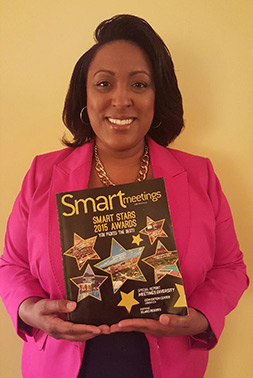
Renee Cash, an avid reader of Smart Meetings, credits the magazine with helping her get into grad school for hospitality and event management. When writing application essays and prepping for her interviews, the director of protocol & senior special events manager for the Department of the Navy’s Commander Navy Installations Command says she sought inspiration and wisdom from articles in the magazine.
“Also, as a good luck charm for my interviews, I tucked a copy of your fantastic magazine in my handbag to carry with me and add a bit of confidence,” Cash says.
She was accepted by two top-notch schools in Washington, D.C.—The George Washington University School of Business Master of Tourism Administration program and Georgetown University’s Master’s in Hospitality Management program. She decided to enroll in the prestigious George Washington University program and began classes as a part-time student on August 31. Cash will continue to work full-time as a civil servant while she pursues her Master’s (and perhaps even a PhD.) at the school.
A big believer in professional development, Cash holds a Bachelor of Science degree from University of Maryland University College, a professional certificate in event management from The George Washington University School of Business, and a professional certificate as a protocol officer and international protocol consultant from The Protocol School of Washington. She is also in the process of becoming a Certified Meeting Professional.
Cash, who lives in Upper Marlboro, Maryland, knew early on that she wanted to work in a field that was customer service-oriented. Recognizing that some of the most in-demand career opportunities were in the hospitality industry, she decided to pursue the field.
“I strongly believe that the hospitality industry is a very stable industry in which to build a future. It’s an industry that is flourishing, and many experts project that the hospitality industry will continue to grow rapidly,” Cash says. “I believe getting a Master’s Degree in Hospitality is heading me in the right direction.”
As part of her job Cash routinely executes a myriad of special events, including bilateral and multilateral conferences and briefings. She says she thrives on variety, and likes the fact that in her chosen field no two days are ever the same, and that there is never a dull moment.
“This industry allows me to meet and work with people from different walks of life, and allows me to express my creativity when planning meetings and events. It gives me the opportunity to let my own personality and unique style shine through,” she says.
Cash, who has worked as director of protocol and senior special events manager for the Department of Defense for almost a decade, adores her job. “When people hear the word ‘protocol,’ there is a misconception that I just deal with diplomatic formality, precedence and etiquette,” she says. She points out that her responsibilities are multi-faceted. In addition to ensuring that place settings at formal dinners are correct and that everyone is dressed appropriately, she must be well-versed in foreign country customs and traditions. She is called upon to suggest, purchase and maintain records of appropriate official gifts to be given by the Commander to foreign dignitaries. As a special assistant to the Admiral, she provides crucial behind-the-scenes support that enables him to create and solidify important relationships around the world.
As might be expected, her position requires keen diplomacy skills. “It’s my responsibility to ensure that we don’t do something unintentionally offensive when meeting with various dignitaries,” she says. “When the Admiral travels abroad, I provide details about what foods may be served, what greetings and toasts are appropriate, and I apprise him about the receipt of business cards. Exchanging business cards is very precise and formal in certain countries such as Japan.”
When distinguished guests come to Washington to visit the Admiral, Cash greets and escorts them to his office. She carefully prepares for these encounters. “Well in advance of the meeting, I read all of their biographies and the news from their country, city or state,” she says.
Cash has an impressive background, working previously as special events coordinator at The John F. Kennedy Center for the Performing Arts and artistic coordinator for the National Symphony Orchestra. In the former position, Cash coordinated and/or supervised more than 800 events per year—from donor cultivation events to major fundraising galas—managing logistics, budgets, vendor contracts, security and event risk management. In the latter position, she developed a deep understanding of Washington’s social and political milieu, and what was required to execute events for world renowned artists, Fortune 500 businesses and high net worth donors and guests.
Cash recently attended a Smart Meetings event in Tysons Corner, Virginia, where she personally met members of the Smart Meetings team, including CEO Marin Bright. “For many years I heard very successful people say that you should find something you are passionate about and pursue it,” Cash says. “I absolutely love that I have your magazine as a constant reference and reminder to keep striving to pursue my passion.”
Cash is excited about what the future holds for her, saying, “Ms. Bright has provided me the tools and the foundation to build a very ‘bright’ and promising future in a career field that I am so passionate about being a part of.”
 Meeting Professionals International (MPI) has confirmed its slate of volunteer leaders for its 2016 Board of Directors. Board member and officer selections are effective Jan. 1-Dec. 31, 2016.
“The new slate of directors includes proven leaders within their own organizations and joins a group of dedicated and knowledgeable board members ready to drive and deliver extraordinary value to our members,” says Michael Dominguez, chair of the MPI Board Development Committee and MPI immediate past chair for 2014-15. “These bold leaders will contribute to moving forward our global meeting and event community.”
Fiona Pelham , managing director of Sustainable Events Ltd and Positive Impact, will assume the role of chair of the MPI Board of Directors. Pelham has been an active MPI member for 10 years and previously served as president of the association’s United Kingdom and Ireland Chapter. She was also a member of MPI’s Corporate Social Responsibility Advisory Council from 2010 through 2012.
Pelham is an avid sustainability champion, currently serving as voluntary chair of ISO 20121, a management system for event sustainability, and was recognized in 2014 with an honorary doctorate from Leeds Beckett University for her contributions to the industry.
“MPI is very fortunate to have such a distinguished group of volunteer leaders serving on our board to help drive the strategy for the future of our association,” says Paul Van Deventer, president and CEO of MPI. “We know with this esteemed group of leaders, each board member’s contributions will further strengthen MPI, benefitting our members and our industry.”
Smart Meetings congratulates these bold leaders!
 Life is filled with decisions, big and small. As Travis Bradberry points out on themuse.com, the average person is confronted with approximately 70 decisions daily. These can range from what to prepare for breakfast (a small decision) to whether to relocate to a new city for a job (a major decision).
For some, decision-making comes easy. Others struggle, always questioning whether they have made the right choice. Below, Bradberry offers nine tips for better decision-making.
Eliminate Small Decisions by Transforming Them Into Routines. For some, deciding what to wear is an onerous chore. A routine habit of dress eliminates that daily decision. The technique works for Catholic school girls (who must wear uniforms), Steve Jobs (who dressed in a black turtleneck every day), Mark Zuckerberg (who always dons a hoodie) and Barack Obama (who wears either gray or blue suits.)
Make Key Decisions in the Morning. Address complex decisions in the morning, before decision fatigue sets in. A successful strategy for some is to make small decisions the night before, thus leaving their mornings free for more important contemplation. Such individuals might make their lunch or set out their outfit for the following day the night prior.
Consider Emotions. Decision making should be rational and objective, which becomes difficult when emotions get in the way. A bad mood can trigger a bad decision. Likewise, a good mood can cause a person to be overconfident or impulsive. Learn to recognize the role emotions play in decision making.
Rely on Your Moral Compass. Morals matter when making important decisions. When you find emotions pulling you astray, use your moral compass to guide you back to solid decision-making.
Sleep on It. Don’t be rash, especially when it comes to an important decision. Focus on acting rather than reacting. Taking some time to think carefully about a decision is wise, and often reveals new facets that previously may not have not been considered.
Seek Other Opinions. When leaning toward a decision, the natural tendency is to find support for it. This is called confirmation bias. Avoid this by specifically seeking advice from those willing to bring a different perspective.
Don’t Fall Prey to Analysis Paralysis. When analysis paralysis sets in, it becomes almost impossible to make a decision. While mulling over many different prospects is advisable, it is important to establish a deadline for reaching a final decision.
When in Doubt, Exercise. Stress produces cortisol, a chemical that triggers the fight-or-flight response in the body and interferes with one’s ability to think clearly. Exercise can bring everything back into balance. Some find that an exhilarating walk or run refreshes the brain and makes it easier to come to a decision.
Reflect on Previous Decisions. We all make mistakes; the key is to learn from them.
