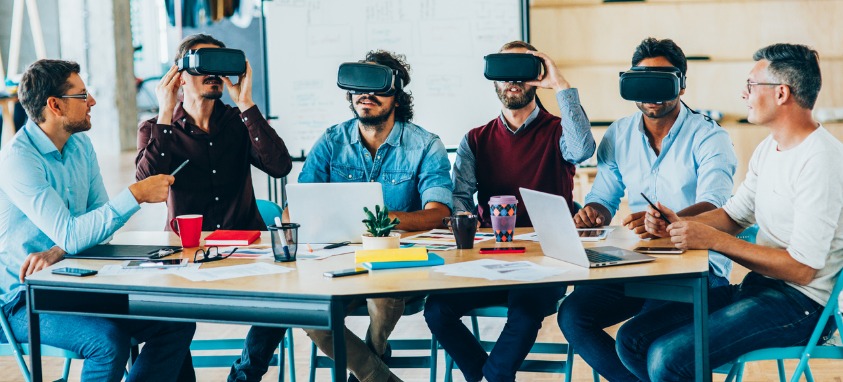
Meeting planners looking to technologically spice things up for their next meeting just might have the answer they’ve been looking for—Infinite Loop, a virtual-reality technology that turns meetings into an opportunity for experiential learning.

One of the first virtual-reality video games that works well for large groups, Infinite Loop was created by team-building specialists Play with a Purpose. Players must be engaged, as the game is fast-paced and requires communication and problem-solving skills to succeed.

Related: Experience Virtual Reality in Atlantic City

The game plays much like an escape room, where clues must be found to proceed to the next level. The objective is to save a young man who is trapped in the virtual world. Team members take turns wearing a virtual-reality headset as they navigate themselves in different virtual rooms. They must observe what they see in the virtual world and echo it back to their real-world teammates, while also using information from the real-world provided by the team. Teammates are encouraged to communicate with one another and are rewarded for it as they progress through the game.

In addition to the Infinite Loop virtual-reality game, Play with a Purpose has plenty of other problem-solving activities for meeting groups to enjoy. If your meeting’s purpose is to encourage collaboration, there are games such as Beat the Box, which requires teams to cooperate to open a box before the given time runs out, and Rat Trap, much like Mouse Trap, but rather than trapping a rat, participants squash one (an artificial one, of course). Each game serves as a metaphor for the work environment, with its many hurdles and hiccups, and teaches employees how to overcome challenges through team-building activities.

If a meeting’s objective is to improve team dynamics, groups can play Blend It Like Bordeaux, where teams make their own Bordeaux—the blend, name, and label—or form a symphony during Orchestrate, in which participants choose an instrument and are taught to play before performing with their group. It sounds nearly impossible, with the lack of instrumental experience that some bring, but that’s part of the fun.


The emergence of e-scooters on street corners all over the country makes it easy for attendees to explore many cities with the tap of a smartphone linked to an active bank card. Visitors can grab any unattended scooter off the street and go for as little as a couple of bucks an hour. But behind the scenes, the colorful battle for market share has been intense and may affect what you will have access to in the future.

The Players

San Francisco-based Lime—formerly known as Limebike—introduced app-based bicycle rentals in June 2017 at the University of North Carolina at Greensboro and expanded a month later to the cities of Key Biscayne, Florida; South Bend, Indiana; Denver; and Lake Tahoe, California. Green electric scooters followed the following March. In July 2018, the ride-sharing company Uber made a “sizable investment” in the company.

Adoption was swift because they provided a convenient, fun way to travel short distances. The number of cities now offering the green rides numbers more than 100 with the largest concentrations in California and Florida. The company has also expanded to 33 international cities.

Similar companies offering dockless scooter rentals cropped up shortly thereafter. Santa Monica-based Bird offers the sleek black rides at a discount to those enrolled in social assistance programs and military in 100 cities in the United States. They later expanded to countries such as Austria, Belgium, France, Israel, Mexico and Switzerland.

San Francisco-based Scoot operates red scooters of both the kick and sit-down type, in its hometown; Barcelona, Spain; and Santiago, Chile. Another San Francisco company, Skip Scooters, which offers the yellow and black rides with top speeds of 18 mph in Portland, Oregon and Washington, D.C.

Lyft has deposited its own fleets of black and pink scooters for rent by the minute in cities around the country, including Los Angeles, Denver, Austin and Washington D.C. The app will allow users to reserve a scooter in advance.

Adoption Hiccups

Not all cities welcomed the ad-hoc transportation option. Amid numerous complaints about potential injuries—as many as 10 scooter-related emergency room visits a day were reported in some cities—in June 2018, the city of San Francisco banned the scooters. Four months later, the city brought them back, but only allowed Scoot and Skip to operate there.

A similar story played out in Denver. After landing on the scene in May, the city first banned them, and two months later gave Lime, Bird and three other companies permits to operate 350 scooters each, with permission to only be ridden on the sidewalk. It wasn’t until city officials realized the danger of allowing them to operate on the sidewalk that they voted unanimously to approve the street use of the electric scooters.

Safety Tips

Although convenient, scooters still require care. Here some tips for you and your attendees hopping on one of the shared devices:

MoreMeeting Planners Prioritize Safety, Cleanliness

Encourage attendees to wear a helmet. The streets are dangerous, anything can happen. Lime, Bird and Skip offer free helmets to riders. These companies often have representatives out on the street handing them out. Scoot scooters hold two helmets in its rear compartment.

Remind attendees to stay in the bike line and off the sidewalk. No one wants a pedestrian-scooter collision on their hands.

Refrain from riding two people on one scooter.

When done, park the scooters on a sidewalk. Try not to block driveways, building entrances or curb ramps.

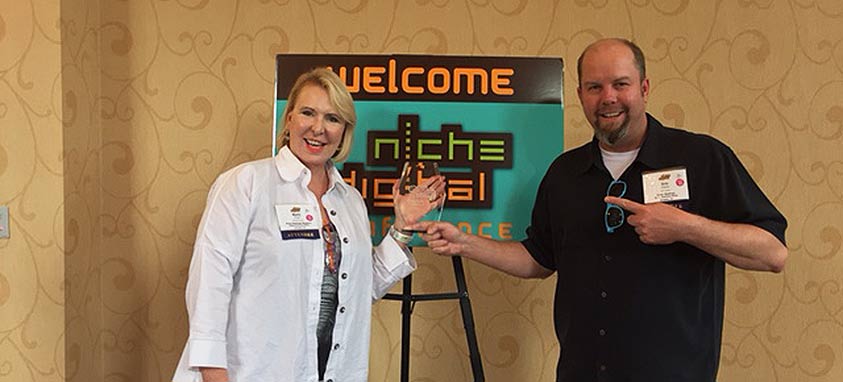
2015-Best-Niche-eNewsletterSmart Meetings’ digital newsletter, which was newly redesigned and launched in August, just won Best Niche eNewsletter at the 2015 Digital Nichee Awards in Savannah, Georgia. Winners were announced at the annual Niche Digital Conference, put on by Niche Media and held this year Sept. 28–30 at Hilton Savannah DeSoto. The event, specifically created to address the concerns of the niche media market, featured workshops, presentations and a surprise appearance by “Forrest Gump,” who willingly shared his box of chocolates with attendees.

Your Digital Link to User-Friendly News

“We are very excited and honored to win Best Niche eNewsletter, and feel it is a testimony to our creative efforts and raising the bar to bring our audience the best news in the most user-friendly format,” says Marin Bright, founder and CEO of Bright Business Media, LLC, which publishes Smart Meetings magazine and produces the eNewsletter.

Smart Meetings’ visually attractive electronic newsletter, which is distributed twice weekly, features breaking news, feature stories, destination pieces, links to upcoming events and other items of interest to those in the meetings and events industry.

“I’m very proud of the Smart Meetings team that helped us bring home this exceptional honor,” says Digital Director Bala Vishal. “This award is another testimonial to the great set of digital products we have, and inspires our team to come up with more such award-winning products. Thanks to Niche Media for recognizing our efforts.”

Smart Meetings Digital Content Editor Miguel A. Sedano says, “Our digital team is very excited to receive this award. We work very hard to bring our readers fresh and engaging content every week.  It’s a pleasure working with an editorial staff that’s on the pulse of cutting-edge trends.”

Sedano points out that the eNewsletter is a quick and convenient way for those in the industry to get news delivered straight to their inboxes.

Click here to sign up to receive the free, and now award-winning Smart Meetings eNewsletter.

marirott-super-bowlMarriott International’s Super Bowl 50 promotional campaign is scoring points with fans eager to win tickets to the mega event. Throughout the football season Marriott is interacting with fans online and through its social media channels, offering chances to win coveted tickets to Super Bowl 50, which will be held in the San Francisco Bay Area Feb. 7, 2016.

Courtyard has been the official hotel of the NFL for the past four years, and this is not the first time Marriott has kicked off a sports-related campaign. Last season it sponsored a full lineup of football-related activities that proved to be a win-win for customers and the company alike. Promotions included tailgating parties, appearances by football legends, interactive fan photo experiences and exciting giveaways.

Marriott Super Bowl Partnership

Marriott and the NFL are partnering to promote Super Bowl 50. “The NFL is the powerhouse of professional sports, and our long-standing sponsorship gives us an opportunity to tap into a passionate group of travelers, bringing the breadth and depth of our brand offerings to fans,” said Karin Timpone, Global Marketing Officer, Marriott International, in a press release. “Our NFL sponsorship represents the company’s ongoing effort to bring exclusive and memorable experiences for our guests and the 52 million members of our Marriott Rewards program.”

“Marriott provides unique and interactive experiences that have resonated with football fans across the country,” noted Renie Anderson, senior vice president of sponsorship, NFL. “We are pleased to work with Marriott to reach our fans in authentic and innovative ways, especially leading up to Super Bowl 50.”

This year, Marriott is scoring points with the following Super Bowl-related promotions.

Suite Stadium Contest (#SuiteSB50Contest)

In a series of social media challenges, fans are vying for the chance to have the world’s first sleepover party at Levi’s Stadium, site of Super Bowl 50.  The one-of-a-kind overnight stay will take place the night before the big game, in a suite transformed into a Courtyard guest room. The winner and three guests will also score flights and tickets to the game, as well as access to Courtyard’s VIP event. The contest closes Nov. 3.

50 to 50 Campaign (#50to50 @MarriottRewards)

Marriott Rewards, the company’s award-winning loyalty program, launched the 50 to 50 sweepstakes. This promotion gives members in three countries the chance to draft their own dream teams of 50 friends and relatives, who will savor an exclusive VIP Super Bowl 50 weekend in the San Francisco Bay area. The winner will get to take a group of 50 to Super Bowl 50. Airfare, hotel, tickets to the game and extra VIP experiences are included.

Members can enter immediately; non-members must sign up for the free Marriott Rewards program. The deadline to enter is Nov. 30. The contest is open to residents of the U.S., Canada (excluding Quebec) and the U.K. The grand prize is valued at $325,000.

London Calling

Marriott Rewards will participate in the League’s NFL on Regent Street Fan Fest event Oct. 24 in London. The event will feature surprise visits from special VIP guests, chances to enter the 50 to 50 sweepstakes and the opportunity to watch the Jacksonville Jaguars face off against the Buffalo Bills from a private suite at Wembley Stadium on Oct. 25.

Journey to Super Bowl 50 Road Trip (#CourtyardNFL )

Throughout the football season, Courtyard is sponsoring the Journey to Super Bowl 50 Road Trip, hosting fan fests at NFL markets across the country. The promotion features themed games, appearances by NFL legends, food samples from the brand’s Bistro and Marriott Rewards gifts.

TV/Video Promos (Courtyard YouTube)

Courtyard continues its tradition of comedic television and video spots. Like last year, the television campaign features NFL anchor Rich Eisen. Courtyard Camera, hosted by actor Ben Schwartz (House of Lies, Parks and Recreation) features humorous interviews and skits with NFL players. View the videos as they become available at the Courtyard YouTube page.

For further information visit courtyard.marriott.com, become a fan at www.facebook.com/courtyard or follow Courtyard at www.twitter.com/courtyardhotels.

disney-#shareyourears-mickey-mouse

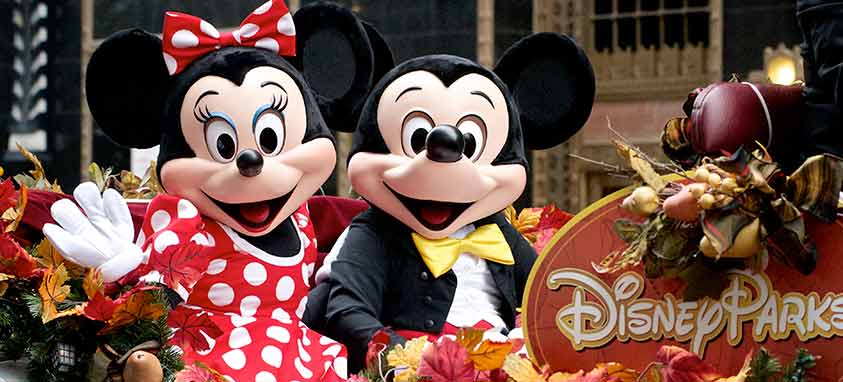
People love sharing their selfies on social media. Disney’s new campaign, #ShareYourEars, encourages fans to post images of themselves with Mickey Mouse ears in order to raise money for Make-A-Wish Foundation. Through March 14, each time someone posts a Mouse ear photo to Facebook, Twitter or Instagram and tags Disney, the organization will donate $5 to the charity, up to $1 million. It’s a fun and easy way to help a nonprofit dedicated to bringing smiles to the faces of those facing life-threatening health challenges.

#ShareYourEars Campaign Details

The rules of the campaign are very simple. Just share your ears. Shots don’t need to be taken inside a Disney Park, and they don’t have to feature bona fide Mickey Mouse ears. Creativity is encouraged. A casual glance through hundreds of images collected thus far show people creating faux ears from balloons, soccer balls and DVDs. Pictures can focus on one person, or dozens, and can be of animals.  Celebrities such as Jimmy Fallon and the members of Fall Out Boy are jumping on the bandwagon, sharing their ears.

A Beautiful Partnership

Disney and Make-A-Wish have been working together for more than 35 years. In fact, Make-A-Wish granted its very first wish at Disneyland Resort in California. Since then, the two organizations have worked together to grant more than 100,000 wishes to children with life-threatening medical conditions.

Disney grants 8,000 wishes per year worldwide in its theme parks and resorts, cruise line and stores. Each wish experience is unique, and usually encompasses the seriously ill child’s family.

From the recipients to the donors, volunteers and medical professionals who help manifest the wishes, the heartwarming grassroots project has literally touched the lives of millions since its inception. Disney Parks, which has built its brand on making wishes come true, maintains that “a wish-come-true brings to life excitement and wild imagination, which is exactly the life-changing experience a seriously ill child and their family need to help them feel better—and sometimes, even get better.”

To view a video about the project, visit http://shareyourears.org/

Expedite Airport Security Lines

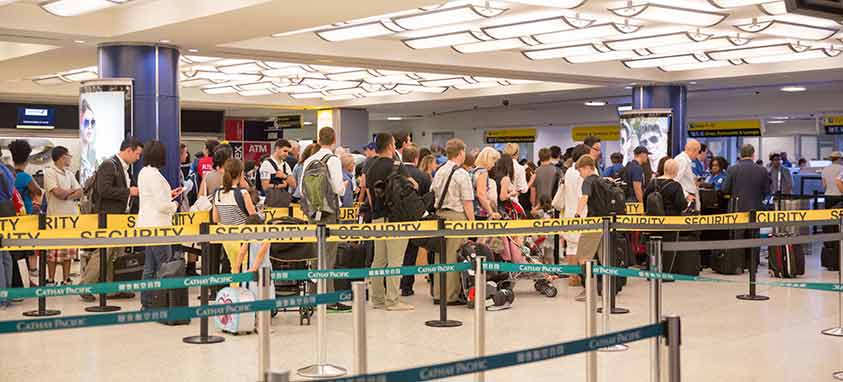
In other Transportation Security Administration (TSA) news, airports around the country continue to be plagued by endless lines, with beleaguered passengers waiting as long as three hours and sometimes more. A barrage of complaints from airports, airlines and passengers on social media has called on TSA to change its policies and hire more screening agents to expedite airport security.

TSA believes the delays are due to a significant uptick in travelers, as well as the number of people traveling with carry-on bags. Airlines for America (A4A), an advocacy group for the airline industry, has disputed these reasons. However, both the airlines and TSA agree that budget cuts are most likely to blame, resulting in a reduction of staffed officers. Congress has already authorized TSA to hire 768 additional employees.

This week American Airlines stepped up to alleviate long lines at various hubs after Port Authority in New York and New Jersey, as well as Hartsfield Jackson-Atlanta International Airport voiced frustration with understaffed TSA checkpoints. American Airlines plans to invest $4 million to hire contract employees at its hubs and various other congested cities.

With Memorial Day around the corner, summer travel is predicted to be busier than ever. TSA expects a record 231 million passengers will fly over the next few months. A4A estimates an average of 2.51 million passengers will travel on domestic airlines every day between June 1—Aug. 31, an increase of nearly 4 percent from last year.

According to Department of Homeland Security Secretary Jeh Johnson, TSA is taking measures to resolve the issue by increasing the number of TSA officers and canine teams and expanding outreach efforts for TSA PreCheck. The agency is also working to collaborate with airports and airlines to hire more contract workers for non-security screening operations, such as returning bins to the front of waiting lines.

In the meantime, the campaign started by A4A is encouraging fliers to post their complaints accompanied by photos of long checkpoint lines using the hashtag #iHateTheWait and tagging @AskTSA.

Check out some of the posts on Instagram and Twitter below:


dmai-social-media-marketing-for-travel

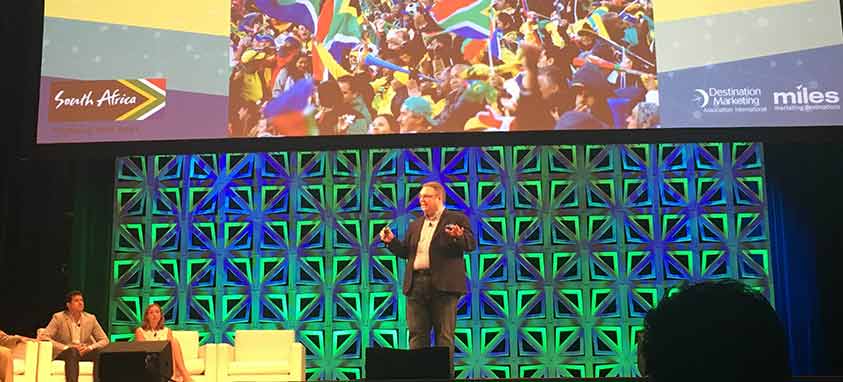
Spokespeople for Tourism Australia, Meet South Africa and Ritz-Carlton spoke to attendees at the DMAI 2016 conference about their advertising strategies and social media campaigns.

Following the presentation, a hands-on Innovation Lab was made available for the duration of the convention, where attendees could try out the latest technologies including VR/AR, live streaming, intelligent assistants and more.

Here are some of the biggest takeaways these destinations illustrated that can be applied by any destination looking to refresh their approach:

An Evolving Strategy

Jesse Desjardins, global head of social content for Tourism Australia, began the presentation by featuring one of the most iconic tourisms ads. Paul Hogan “won almost every conceivable award at the time” following the filming of his tourism commercials, because he spoke the language of the people. He went on to film eight ads for Australia, and though they were affective at the time, today’s strategy does nearly the opposite: leveraging users to tell the story.

Australia is too large and contains too many destinations within it to have a single spokesperson represent it now, Desjardins says.

A quick look at Tourism Australia’s social media profiles shows that today, everyone tells their story.  Skift showcased 200 of the most liked travel photos on Instagram, and 197 out of 200 came from Tourism Australia’s account. How?

Create Millions of Spokespeople

dmai-social-media1
First, Desjardins advises, create value. Not vanity.

“There are two questions we ask ourselves: How much value does this create for the consumer? And how much value does it bring to the organization?” notes Desjardins. Destinations need to look for opportunities that provide value, and come up with a creative way to educate the audience about the experience.

Second, put the spotlight on the user. “When you make other people the hero, you open yourself up to opportunity” (and don’t need to put all the work into it.)

Third, build platforms, not just campaigns. The Paul Hogan campaign while successful in its time, wasn’t scalable.

Tourism Australia’s food and wine campaign strategy is a perfect example of a social media campaign platform. It was based on people, places and produce. People who had experienced the continent’s food industry rated it’s F&B high, and people who hadn’t rated it low, demonstrating a misperception that they aimed to corrected.

The tourism bored launched several initiatives around their food and wine campaign. It’s employees can now come into the office Monday morning, take a look at what was posted over the weekend using the hashtag #RestaurantAustralia and weed through them to create content called “What Australia Ate this Weekend.” Simple, effective, effortless and created by the user.


South Africa Social Campaigns

When the Ebola virus scare hit, tourism dropped for South Africa, despite the fact that the region affected was in West Africa. Justine Barnette, marketing and communications manager of South African Tourism USA was tasked with educating the world about the destination in hopes of recovering.

The tourism group decided to pull a page from the history books. They introduced a mobile app that offered 27 Nelson Mandela experiences offered in South Africa — one for every year he was imprisoned.

They also launched an Instagram influencer miniseries, #MeetSouthAfrica that matched people visiting with locals based on their interests. In a two week period,  @VisitSouthAfrica, the board’s Instagram account, grew their following 38 percent.

See a brief episode of the miniseries, here:

twitter-nfl-live-event-streaming

Twitter CEO Jack Dorsey has a massive goal in his sights, and he hopes live event streaming is going to play a major role in conquering it.

With Facebook, Instagram, Snapchat and others fighting for the attention of their users, Twitter is looking for creative ways not only to keep up, but to become the first billion-user internet service. (They’re currently at about 313 million).

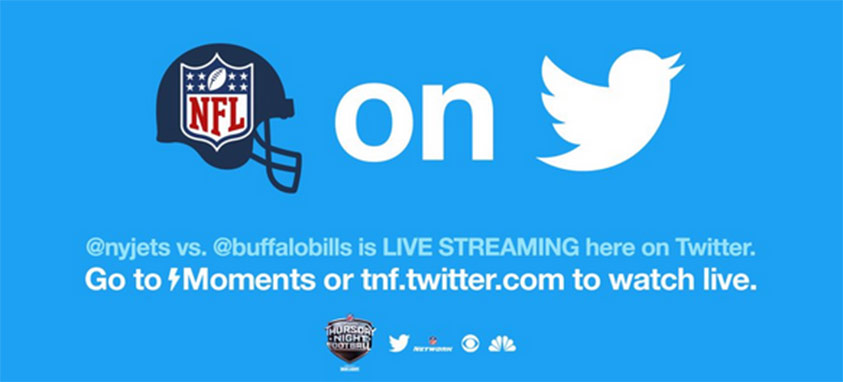
Though often compared to other social networking platforms, Twitter hopes to emphasize its position as a news and media resource, which is why the company has made a high-profile investment in live-streaming NFL programming.

On April 5, NFL commissioner Roger Goodell announced, via his first tweet in 19 months, that Twitter had won the rights to stream 10 Thursday Night Football games for the upcoming season.

Of course, that’s not the first investment Twitter has made to up its video streaming reputation. In 2012, the company acquired Vine, which—until recently—produced six-second-long video clips. Then in 2015, Twitter purchased Periscope, which allows users to broadcast high-quality live videos of any length from a smartphone in real time and within tweets.

“We really ended up with Twitter because we thought it gave us a great opportunity for incremental audience reach and mobile reach,” Brian Rolapp, executive vice president of media for the NFL, told Fast Company. “We have data that says 7 of 10 of our fans have a second screen open [while watching games]. They’re texting, they’re playing fantasy, they’re on Twitter.”

Over the summer, Twitter streamed other highly public events, including Wimbledon, the Republican and Democratic conventions, and red carpet blockbuster premieres.

How does this affect other events such as trade shows? First, it’s making engaging content more accessible and easier to engage with. But more importantly, it’s easy to pick up. Users don’t have to worry about who to follow or tag, what hashtags to use, or even log in to an account to enjoy the content, making it easy for non-Twitter users to hop on board in a snap.

Twitter’s live video streaming capabilities are always a work in progress. In June, it paid a reported $150 million to acquire Magic Pony Technology, an London-based startup with algorithms that Twitter plans to adopt for both Periscope and major-event video streams that analyze imagery to improve how a video looks even when a user has spotty network connection.

Twitter is seeking to break away from the Facebooks and Snapchats to be seen for what it really is: a place where news is being discussed, watched and shared in real time. So while Facebook Live is getting a lot of attention since it’s recent roll-out, it’s not the only solution event professionals should be considering to promote and broadcast their events.

social-media

If you haven’t already heard, live streaming at events has become all the rage. But where does a meeting planner begin? From Facebook Live to Snapchat and Periscope, there are plenty of options to choose from. And then comes the strategy, for which there are numerous ways to integrate social media within event marketing. For those who are new to social media marketing and live streaming, a great way to start is with a social media takeover. Katie Jackson, brand manager at boats.com, suggests seven easy tips for posting fresh, live content from your next event.

1. Develop a Strategy Before the Event

Before the big day, planners should begin by reviewing the agenda and the topics of each speaker and session in detail. Then  decide which sessions or elements of the event are best for sharing on social media. It’s always better to cover a few aspects of the event really well, rather than trying to include everything.

Once you have determined which elements will be featured, such as keynote speakers, product launches or live demonstrations, make sure you know when and where to be in order to recover footage. Think like a journalist and go for the front row seat to capture quality audio and images, or arrive at the booth in time to record the setup of a live demo. Giving yourself enough time is key to delivering unique behind-the-scenes content.

It also takes time to craft posts, filter photos and add relevant hashtags, especially when you are posting on multiple platforms. Allot enough time, at least once an hour, to post content and stay focused on your strategy.

Top Tip: Make sure you have a portable mobile phone charger. Without this, your takeover could be cut short.

2. Be Familiar with the Preferred Audience, Voice and Platform of Brand

You may know your brand and audience inside out, but when it comes to hosting a social media takeover, it’s vital to be familiar with the audience you are trying to reach, as well as how and where to reach them in order to create an effective campaign.

Connect with the brand’s social media or marketing department to discuss which tactics have worked in the past. Also ask for feedback on the most effective marketing campaigns and why they worked.

Let the brand advise you on which platforms they would like you to use, and make sure you are familiar with the platform beforehand. Never posted an Instagram story? Try it out on your personal account and ask for feedback well in advance.

Top Tip: Keep track of all usernames and passwords for each platform you will be posting on, and remember to keep these ready for the event.

3. Know the Key Players, Handles and Hashtags

During the planning phase, make a list of relevant brands and people to interact with on social media during the event, as well as their social media handles and hashtags. This ensures your event will be part of the bigger conversation happening online.

For each topic or session covered during your social media takeover, look up the social media accounts of each company or person you plan to feature. Make sure to like their Facebook pages and follow them on Twitter, Instagram and Snapchat. Tagging them in your post and including their hashtags means you will spread your reach even further.

Top Tip: Follow all of the event stakeholders and feature them in your posts. They will appreciate the support and you will increase opportunities to engage with their audience.

4. During the Event, Greet your Audience

At the heart of every successful social media campaign is the personal relationship with the audience. This holds true especially during social media takeovers, as you are communicating with a new audience. It’s important to gain their trust in order to capture their attention.

Introduce yourself in the first post of the day on each platform—there’s no harm in dropping a selfie, too. Let the audience know who you are and what you’ll be sharing with them over the course of the event. Use a hashtag to indicate your presence on all of your posts, such as #KatieTakesOver.

Top Tip: Not all platforms are hashtag appropriate, so make sure to sign off on your posts the same way every time. Remember, not everyone will have seen your introductory post.

5. Post Live Videos

Live videos are what bring a social media takeover to life. Don’t worry about editing your video to perfection. The fact that it’s raw and gritty makes your video all the more authentic and relatable. You may also notice that the engagement generated from a video post is far more than standard text and image posts.

There are many different channels which support live video, but if you have a strong following on Facebook, the new video streaming option is a great way to interact with an existing audience rather than launching a new channel. Instagram allows you to post videos of up to 60 seconds long.

Top Tip: Quality is better than quantity, so try to keep your videos less than 60 seconds in order to leave your viewers wanting more. Avoid oversaturating audiences with content or boring them with videos that run too long.

6. Give the People What They Want

Successful social media interactions should be focused on creating a two-way conversation to create engagement. Ask the audience what they would like you to share with them. Engaging in a back-and-forth conversation with your new community will help you find out more about what they want to see or learn.

After all, you are their eyes and ears into the event, so you make sure you’re highlighting what is most interesting to them. Depending on the type of event you are covering, ask your followers if there is something specific they want to see, such as a new product launch or upcoming artist performance.

Top Tip: To increase engagement, ask questions and craft posts that invite conversation.

7. After the Event, Report and Repeat

After the event is over, it’s important to take time to review and analyze your results. Look at the performance of different types of posts on each channel. Determine which posts generated the most engagement and on which platforms. There should be some trends which offer insight for future event coverage. You should also notice a spike in engagement compared to a non-takeover day.
attendees-promote-event

Your attendees have a blast at your events—don’t you wish there was a way to capture that fun to show other potential attendees what they’re missing? There are lots of creative ways to do it, as a matter of fact. Here are a few ideas to get your creative juices flowing:

1. Share video of the highlights of your event, either via Facebook Live, Periscope, YouTube or other media solution. This allows attendees not only to experience the event all over again, but to share the event with friends and colleagues, which inadvertently builds your brand awareness. We’ll use some of our own clips from past Smart Meeting events as an example.

Take it one step further and add the video to your marketing follow-up emails that are sent to attendees thanking them for their participation.

2. Provide something at the event that inspires attendees to take photos – whether it’s a mascot, a prop booth or backdrop. Just be sure your event’s hashtag and/or company handle is clearly visible and uncomplicated so that attendees not only use it, but use it correctly. Instagram frame props like the one below are a hit, plus they’re easy to brand!

foamex

(Photo courtesy Foamex-printing.co.uk)

3. Add a gamification element with a photo-centric scavenger hunt that doubles as a networking opportunity. Set cards at your tables with specific photo challenges that encourage your attendees to get up and get talking to other attendees, and snap and share photos. The cue on the card might read, “Snap a photo of you and someone from a different state—remember to use the hashtag #smartmtgs”

4. Another form of gamification that gets people tweeting, posting and tagging is a live media wall that lets them see posts in real time. Events often use Twitter feeds that filter specific hashtags so attendees can post from their seat and watch their post debut on a big screen in front of the audience. Companies such as Strea.ma, Postano, Tint, Sharypic, Livefyre, and SocialWall provide solutions

Here’s an example of how Tint’s platform works:

The key is to understand your current audience and your untapped potential audience as best you can. What social platforms are they using? What activities are they most likely to participate in and share? After your event, take a look at the activity and engagement levels on each of the platforms you used. If some are drastically more effective than others, narrow your efforts and put all of your focus on the strategies that are working best.