WatchOS 2.0 means for meetings

Today in San Francisco, Apple made some of its biggest announcements of the year at its “Hey Siri” conference. Hundreds of developers and Apple-product lovers gathered at the Bill Graham Civic Auditorium to hear the latest  news about Apple TV, iPhone 6s, iPad Pro and much more. Hours before the event, details were leaked about the Apple Watch, including a new red band and the latest software update, WatchOS 2.0. The newest models ship Sept. 16.

Smart watch owners who purchased the first version earlier this year mostly used the device to monitor their health and track their activity. All that could change in the next version which promises thousands more apps better suited for the small screen. But what does WatchOS 2.0 mean for meetings?

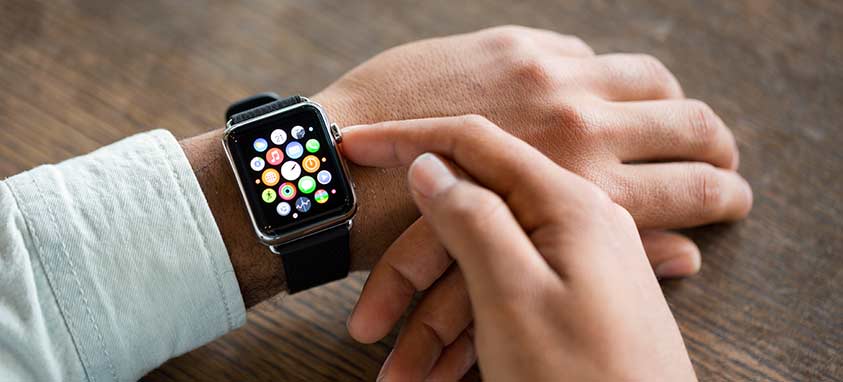
Before the newest software update, fewer apps could run natively. With WatchOS 2.0, event apps will require less customization and can tap into built-in watch technology. Without tethering through third-party devices, apps will have increased performance and speed. TechCrunch anticipates more subcategories of apps customized for the Apple Watch, and developer interest is also expected to increase.

Enhanced sensors will take event activities to the next level. Features such as Taptic Engine, Digital Crown and accelerometer can gather bio data and integrate with games and technology to engage attendees. Planners can track the attendee experience in a whole new way.

Professionals no longer need to dig through their bags to find mobile devices. Watch-wearers can now respond to emails or push notifications that flash across the screen with relevant replies available in list form. Prompts are especially useful on the event floor, such as to inform attendees when the next talk is happening.

For the meeting professional on-the-go, transit information comes to your wrist. Pull up directions, maps and the best routes from your current location through the transit app. You can even access train, subway and bus schedules from select cities.

Apple Pay has improved accessibility on the Apple Watch. This is especially useful during event check-in or when paying for products or services on the trade show floor. Now you can select from a number of credit cards and even add rewards points through the payment feature.

With WatchOS 2.0, Siri is your personal assistant and will help you plan meetings. Just use your voice to complete tasks such as reviewing your list of things to do, calculating tips or checking “Glances.” Better meetings will soon be on everyone’s watch.

lighting-technology-for-eventsLight has been around as long as the human race. First came fire, a primitive source that served a dual purpose of heating and illumination.  Roughly a hundred or so years ago, incandescent light was invented.  This light source remains in use today and is a relatively simple process, passing an electrical current through a resistor, which creates both light and heat.

In the last 60 or so years, newer technologies have appeared: fluorescent, low and high-pressure sodium, metal halide, compact florescent.  While these are significantly more efficient light sources than fire or incandescent (as measured by their ability to convert energy primarily into light), they pale in comparison to the last 18 months of development lighting technology, including solid-state light sources such as LED.

Solid-state lighting at its core is a basic machine; a power-transformer converts high voltage alternative current to low voltage direct current and a solid-state semiconductor, typically an LED, becomes excited and creates light. The speed of progression of lighting technology is rapid. The LED is now exceedingly more efficient, produces significantly higher quality light, and lasts, on average, five times longer than traditional light sources. This view of lighting today, while historically accurate, is myopic.

Lights being developed now need power conversion, electrical circuit boards and even some basic processing power. And lighting that we know today will pale in comparison to the technology now being developed. In the future, lighting technology will be an integral extension of a building’s management system, providing significantly more value beyond lighting.  Lights must be installed in every building, thus they are a natural information gathering point.

Integrating Lighting and Building Controls

The job of integrating building controls and sensory functions into a light fixture may appear complex. For the building owner and for the contractors doing purchasing and maintenance, numerous separate systems are a highly inefficient use of money and resources. The devices themselves must each have separate housing, power conversion and usually a communications network.  LED lighting, in contrast, can be a “one-stop shop” and the “Swiss army knife” of building electronics.

For example, in a hotel setting indoor light fixtures are often placed every 100 sq. ft. or even more densely. Decorative sconces illuminate every hallway, grand chandeliers are suspended in the lobby and ballrooms, and task and bedside lighting gives guests the comfort of home in their rooms. The number of lights in a hotel and the uses are infinite. Lighting’s deployment within buildings makes the possibility of highly granular information-gathering a reality. Collecting information from sensors in such a dense deployment can provide unimagined uses.

Imagine a lighting system in hotel meeting rooms that can read temperature, humidity, carbon dioxide and VOC (volatile organic compounds), then passing this information directly to the HVAC system to seamless optimize the space for the occupants.  Conference rooms that used to feel stuffy, now automatically detect occupancy and changes in the air quality to run the air handling system, bringing fresh air into the room and reinvigorating the discussion.

Lobby lights could also be used to detect preferred guests based on their use of a particular hotel’s smartphone app. As a guest sets foot inside the lobby door, the lights can identify the individual and automatically direct him/her to, and give access, to a hotel room. No need to see the front desk and get a key; authentication and access can all be provided through the power of cloud-connected devices.

Regulating temperature and lighting in rooms that are vacant or unoccupied at a given moment can result in cost-savings. Lights in hallways, guest rooms and other areas of the hotel can be directly connected to the utility, and automatically read price signals from the smart grid. When a hallway, or other space, is unoccupied and electricity prices are unusually high, the lights can set themselves very low – providing the hotel owner with significantly lower operating costs while placing virtually no impact to the occupants in the space.

These scenarios, and other iterations, while seemingly farfetched when looking backward, are now the reality of solid-state light systems of modern day.

Future is Bright

Like all rapidly developing, new technology, many questions and concerns arise in the unknown.  What about privacy?  How much information is too much?  What will happen if the system goes down or is hacked?  Are lights now the responsibility of IT and not maintenance?

These questions are real, and many don’t have answers yet. However, the benefits in energy savings, intelligence and infrastructure optimization can far outweigh these concerns.

In time, the majority of benefits to hotel owners will arise from capabilities such as more granular control of HVAC systems, better security for guests, and the ability to pass on cost savings to guests and businesses using hotel facilities as a strategic competitive advantage. How semiconductors will change the lighting industry within the buildings into which the lights are installed, and how the experience of hotel guests will change will perhaps be more obvious in retrospect.

While the change is occurring, it may seem slow – but relative to our technology transition over the last few thousand years, we are now moving at the speed of light.


mattew-salleeMatthew Sallee is a business technologist based in Denver with more than a decade in the B2B technology space. He has held various marketing and leadership roles in Fortune 500 companies and has spoken internationally on LED technology and energy efficiency. He now handles business development and strategic marketing for Terralux, which designs and manufactures LED lighting and building intelligence solutions. 
Virtual Reality Company Jaunt

Entertainment as we know is in for a virtual overhaul. The Walt Disney Company is among a prominent group of investors backing virtual reality company Jaunt with a $65 million round of funding. Jaunt announced the investment today, which marks an expanded venture into the realm of virtual media and entertainment consumption.

“This round further illustrates our commitment and dedication to advancing the scope of cinematic virtual reality,” said Jens Christensen, CEO and co-founder of Jaunt. “With the support of these world-class companies, we will explore new avenues, building on our leadership position to deliver amazing virtual reality experiences using best-in-class tools, technology, and creative teams.”

Based in Silicon Valley, Jaunt intends to make virtual reality the next mainstream content platform using live-action technology. The new stream of revenue will enable the virtual reality company to delve into the latest mobile devices and hardware. Advances in technology and mobile devices have enabled virtual technology possible and available for mass viewing across a number of platforms. Chief business officer David Anderman expects Jaunt to acquire millions of new users in the near future.

From concerts and movies to football and video games, Jaunt’s technology virtually transports viewers into the event itself. The experience reconstructs an audio and visual experience from a level as close to reality as possible. Jaunt recently announced a fifth generation patent-pending camera system called Jaunt One. It features custom optics, high quality design and 360-degree capture while simultaneously recording 3D video in all directions. The company currently works with brands, such as The North Face, Rebecca Minkoff, Conde Nast and ABC News.

Jaunt intends to expand its reach into the cinematic scope of virtual reality, working with filmmakers and storytellers from a new Los Angeles studio. The two-year-old company includes two members who previously worked for Lucasfilm on a number of creative projects and acquisitions.

amplivox-debuts-mobile-event-boothIn line with the continuing trend of replacing everything analog with digital versions at events and trade shows, AmpliVox recently introduced its new Mobile Event Booth, an all-in-one promotional center with state-of-the-art tech possibilities that can easily be carted in and out of event venues.
The mobile booth takes a step up from traditional information booths, replacing static signage with integrated graphic panels and an overhead computer monitor or flat-screen TV. The stand delivers a powerful impact at activity fairs, sporting events, conferences and other venues, in a unit that’s easy to move around and can be used indoors or outside.

A hollow base provides a convenient desk space for users, storage for materials, and room for customizable graphics in three spaces along the front and side panels. Overhead, users have three choices of how to display dynamic displays: A choice of mounting bars supports custom signage, a computer monitor or a flat-screen TV. The entire unit is manufactured of heavy gauge steel with a weather-resistant black powder coat finish, and rolls easily on heavy duty casters. An optional built in PA sound system provides convenient and effective audio support, with a choice of wireless handheld or lapel/headset microphones.

The Amplivox Mobile Event Booth serves a wide variety of functions, including:

1. Welcome station
2. Ticket booth
3. Program stand
4. Information station
5. Sales kiosk
6. Demonstration booth

“The Mobile Event Booth packs visual and auditory punch in a single package,” says AmpliVox CEO Don Roth. “Its media display options draw audiences in with eye-popping visuals, and its durable construction will keep it in service for the long term.”

Two of the unit’s wheel’s lock in place so you don’t have to worry about the booth rolling away or being moved without your knowledge while you’re engaged with attendees.

Pricing for the booth ranges from $2,300-$2,600, depending on which mount you choose (PA sound system in extra for all three models).

robotic-suitcasePhoto Courtesy of NUA Robotics

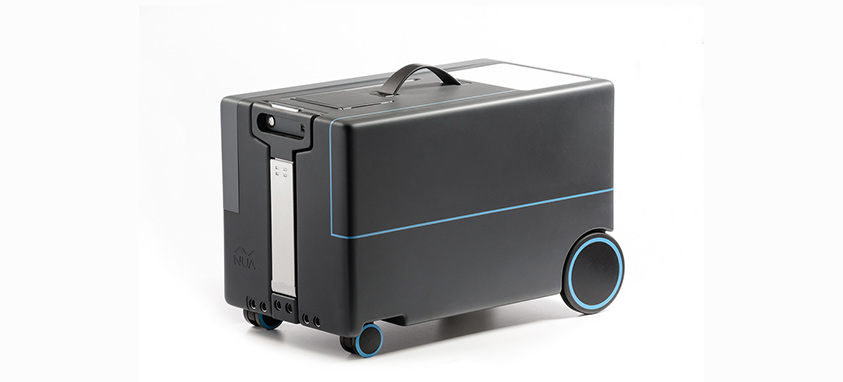
Carole King was probably not thinking about suitcases when she wrote the song, “Where You Lead, I Will Follow.” Yet a new robotic suitcase currently in development fulfills her lyrics… it will obediently follow you through a busy airport or subway terminal, leaving your hands free to hold a cup of coffee or a wiggly toddler.

The luggage, created by Israeli company NUA Robotics, operates when a sensor inside the suitcase pairs with the camera and Bluetooth connection on your smartphone. Everything is controlled via an app loaded onto the phone. Detection technology enables the suitcase to avoid obstacles as it deftly weaves through traffic, close to your heels. It appears to perform well on flat surfaces, but cannot navigate stairs.

The suitcase, still in the testing phase, boasts many interesting features. Its battery can power other devices such as smartphones, tablets or laptops; recharging itself as it is used. Like other sophisticated suitcases currently on the market, it gives travelers the ability to measure its weight and track its location in real time. An anti-theft alarm can keep someone else from walking off it.

Growing Market for Smart Suitcases

Until recently, the biggest novelty in suitcases was wheels. Today, companies are competing to create high-tech smart suitcases. In a crowdfunding campaign that closed Jan. 2015, Bluesmart raised more than $2 million  on Indiegogo. It has sold, and will soon ship, more than 10,000 of its carry-ons. They feature a digitally controlled lock, phone recharging option, and location and trip data tracking. Other firms have followed suit, but the innovative NUA Robotics model is clearly taking it a step further.

Alex Libman, co-founder and CEO of Nua Robotics, hopes his robotic suitcase will be available to consumers within a year. He points out that the technology may have other applications that could be especially helpful for the elderly and disabled. For example: a shopping cart could be configured to follow individuals that might have difficulty pushing it around in a supermarket.

To see a video of the robotic suitcase in action, visit mashable.com.

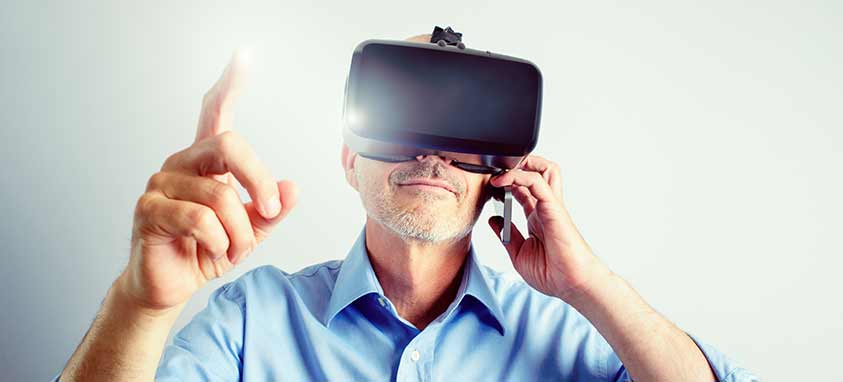
virtual-reality-tourismThough it’s not commonplace yet in the meetings industry, virtual reality tourism is here, and it’s been a topic of discussion for some time now—the subject of many tech experts’ bickering about its true value and place in the world of tourism. It seems that the trend that we continue to be told to watch out for is finally taking off in a real way.
At the February MPI Northern California Conference and Expo in San Francisco, technology trainer and Smart Meetings contributor Jim Spellos started his tech education session with Google Cardboard pressed to his face, swiveling around the stage as he was transported far outside of the conference room. This, he argued to the crowd, was the future of tourism.

Facebook CEO and tech mogul Mark Zuckerberg echoed this sentiment at the Mobile World Congress wireless show in Barcelona, Spain on Feb. 22.

“Imagine holding a group meeting or event anywhere in the world,” Zuckerberg said, after making a surprise appearance at Samsung Electronics Co.’s unveiling of a new 360-degree VR camera. “Right now, virtual reality is mostly used for games and entertainment, but that’s quickly evolving. One day you’ll be able to put on a headset that’ll change the way you live, work and communicate.”

Facebook recently announced on a blog that it has hopped on the virtual reality bandwagon, going as far as creating a team to explore the future of video chatting and conferencing.

Virtual Reality Tourism Takes Off

Spain’s Catalonia region tourism booth now features a VR chair, encouraging conference-goers to buckle-up in a moving leather chair, strap on a headset and explore footage of Catalonian experiences filmed with GoPro Inc. cameras, including a tour of FC Barcelona’s 99,000-capacity Camp Nou soccer stadium.

“Instead of handing them leaflets, we give them the real experiences,” said Ferran Macia of the Catalan Tourist Board. “We have proof that if travel agencies use VR, sales actually increase.”

In Janurary, Tourism Australia announced its newest campaign would use 17 virtually reality experiences and 360-degree videos to give potentially visitors a genuine feel for what a vacation down under would be like.

“Virtual Reality and 360 videos are important because rather than just showing how beautiful Australia is, it will get to the ultimate customer benefit which is how you feel when you come to Australia,” CMO Lisa Ronson said.  “Our purpose is all about inviting the world to live the Australian way of life and we wanted to show that in a really immersive way.”

The VR footage, produced in collaboration with Clemenger BBDO, production agency Finch and VR specialist Vrse.works, can be viewed by using Google Cardboard and Samsung Gear VR apps. Ronson admitted relatively few consumers currently have VR technology but said the low-cost Google Cardboard will accelerate take-up over the next 12 months.

Ronson says the technology will be used at tradeshows and headsets will be distributed to travel agents to show their clients.

See an example of 360-degree footage below. Click the arrow icons in the upper left corner of the video screen to maneuver your view.

kickstarter travel products

Crowdfunding platform Kickstarter is known for being the birthplace of groundbreaking products. From virtual reality headsets to smartwatches and mobile gaming consoles, Kickstarter gives inventors the opportunity to bring their ideas to life. For meeting planners and other business travelers, there are many Kickstarter campaigns with unique products designed to simplify every aspect of traveling. Whether you’re looking for a way to iron out wrinkles on-the-go or an amazing travel jacket that can carry just about anything you can imagine, it seems there’s a Kickstarter product for everything.

Here are five amazing products you’ll want to take on your next trip:

BauBax Travel Jacket

baubax

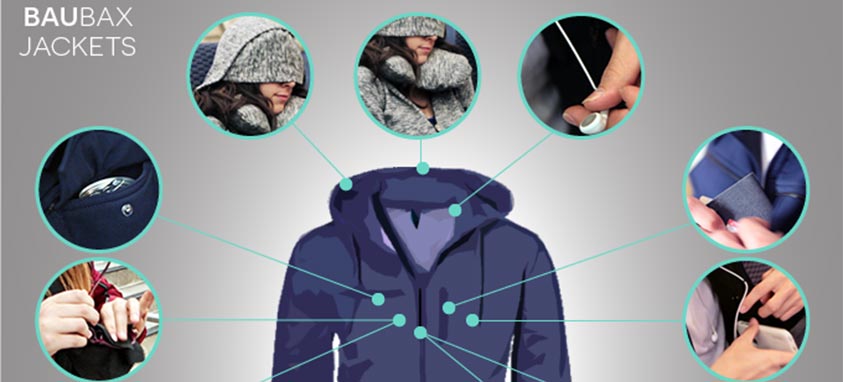
This truly amazing travel jacket has earned the distinction of being one of the most funded projects in the history of Kickstarter. The BauBax jacket has compartments for just about everything a traveler could need, including a zipper that turns into a pen, and a neck pillow and eye mask hidden in the hood. There are countless pockets to hold your passport, sunglasses, iPad and even a drink. The jacket comes in several colors and styles, including a blazer that is perfect for business travelers.

Floatti

floatti

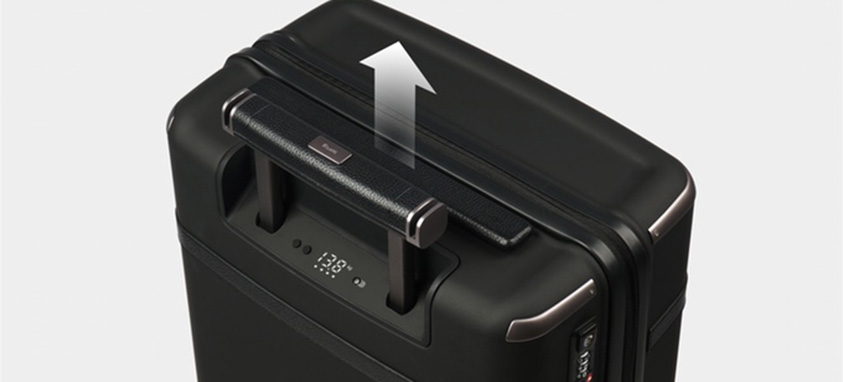
Smart suitcases are all the rage these days, and Floatti is one of the standouts. Floatti offers several fantastic features, including a built-in digital scale, detachable mobile charger, trackers that send alerts if you’ve left your suitcase or other belongings behind, and wheels with a stabilizing suspension system. This suitcase is not only high-tech; it’s also very stylish, with several color options available.

Collar Perfect

collar-perfect
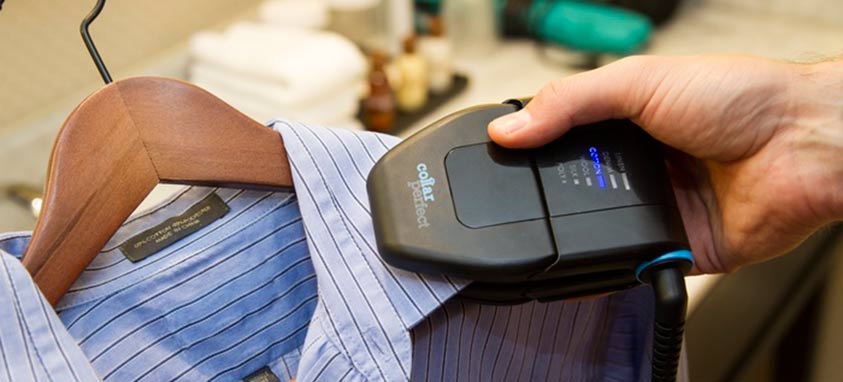
Wrinkled shirts have long been an issue for business travelers. Collar Perfect aims to provide an easy and quick solution for travelers who are constantly on the move. The gadget is an ultraportable travel iron about the size of your hand. Because of its size, Collar Perfect is great for doing touch-ups on collars and hems, but the device can also fold out to become a traditional iron.

Dash Minimalist Travel Wallet

dash-wallet

Keeping track of your boarding pass, wallet and passport is a common problem for travelers everywhere. With Dash’s travel wallet, you won’t ever hold up the security line as you scramble to find your passport. Dash has created a minimalist travel wallet with multiple compartments that allow you to keep your credit cards, cash, passport and boarding passes organized and easy-to-access. The leather wallet is incredibly thin, designed to fit in your pocket and even has built-in RFID protection to keep your cards and passport secure from identity theft.

FlipSlips

flipslips1
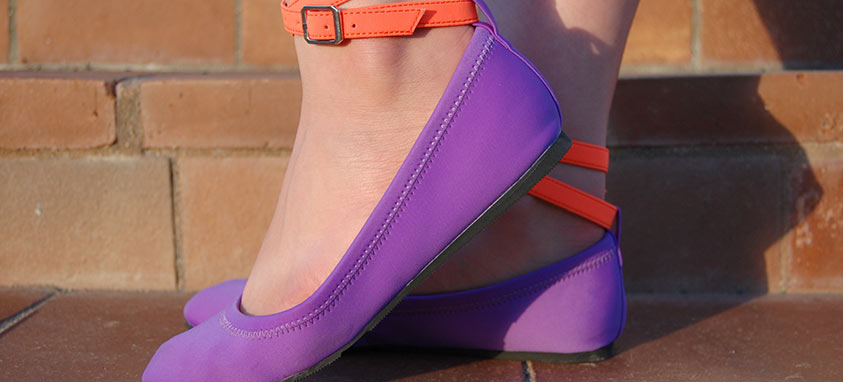
For women who are constantly on-the-go, packing the right footwear is an absolute necessity. After a long day wearing heels, many women would love to switch into more comfortable footwear. The problem they face is how to fit those shoes into their purses. FlipSlips solves that issue with foldable yet stylish shoes that can take you from work to casual in a just few seconds. FlipSlips come in several colors and have interchangeable straps that allow you to change up your style with just one pair of shoes.

drones-for-meetings

Groundbreaking, new technology is constantly making headlines for its game-changing possibilities. With the 2016 Rio Olympics leading the way, virtual reality is transforming the way we experience faraway places and events. Pokemon Go is bringing augmented reality to a mainstream audience and impacting the way people explore the world.

What does all of this innovation mean for virtual meetings? Are new advances making videoconferencing easier, more intuitive and more reliable? Well, Google is hoping to make videoconferencing a lot cooler by adding drones.

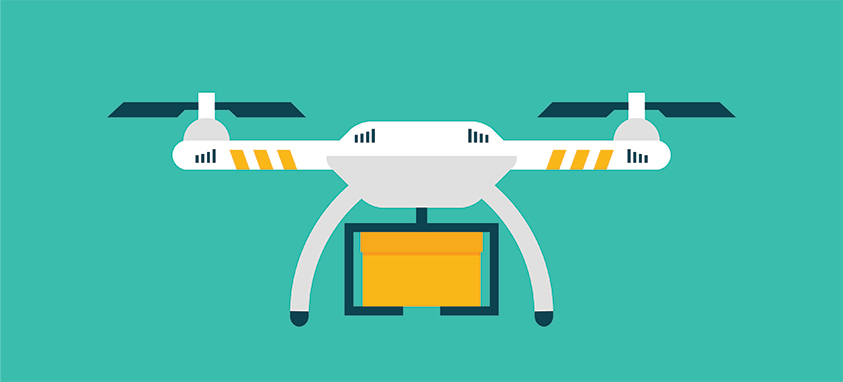
As first reported by Quartz, Google was recently awarded a patent for a quadcopter drone, equipped with a screen and video camera. According to the patent, the mobile telepresence system would project an image from the drone’s camera onto the attached screen. Another proposed version of the drone would have the ability to project an image below the device, as if it were a hologram.

It’s possible that this technology would make videoconferencing more engaging and interactive. Rather than staring at an unmoving laptop or projector screen, meeting attendees could interact with remote participants from flying drones that move freely around a conference room.

At first glance, the idea certainly sounds cool. But dig a little bit deeper, and you might begin to question the need for these futuristic features, especially considering the current limitations of drone technology. Drones still suffer from short battery life, noisy propellers and the risk of someone’s hand getting a bit too close to the spinning blades. Drone setup and operation could also present an obstacle for corporate meeting planners. Would companies need to hire a drone operator just to run their meetings?

Currently, videoconferencing drones appear to be a fun yet impractical idea; hopefully, it will inspire even greater innovations in meetings technology.

digital tools for event planning

As meeting planners increasingly rely on technology to coordinate conferences and events, new solutions and tools are essential to optimizing every step of the planning process. Here are five digital problem solvers that can assist with speaker sessions, audiovisual needs, event management and more.

Event Planning Problem Solvers

1. Behind-the-scenes or on the trade show floor, it’s imperative that tablets can easily charge and sync at any time. Dock Minimal is a colorful tablet dock and stand from Onanoff that provides more than 20 different viewing angles with an adjustable kickstand, while simultaneously syncing to another device.

Event Planning Problem Solvers

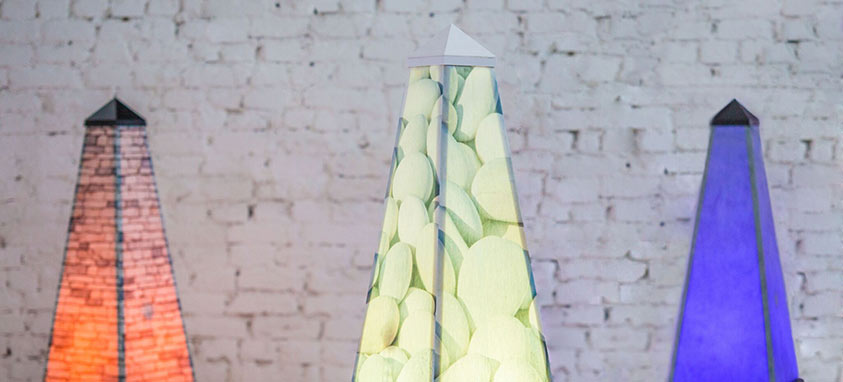
2. This crowdfunded sound system from Xounts Up is an innovative way to integrate with lighting. The conical design can synchronize light, color and sound according to a specific theme or brand. Compatible with Bluetooth, USB and Apple TV, the portable system can hold charge for up to nine hours.

Event Planning Problem Solvers

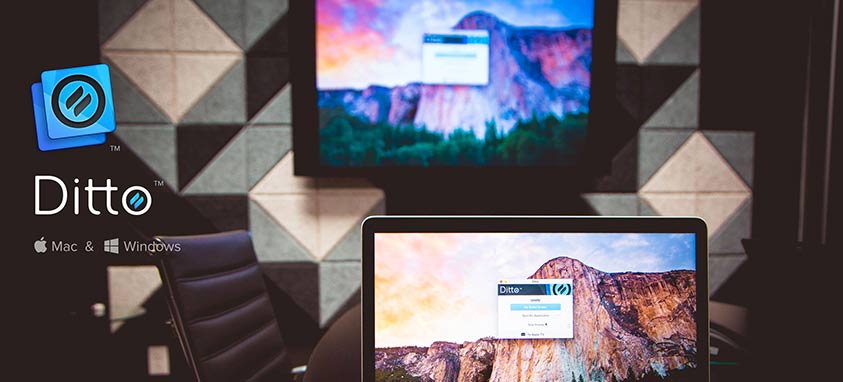
3. Ditto is a new screen-sharing service that instantly connects computers to high-tech conference room televisions and projectors without wires or end-user configuration. Ditto assigns a unique code to a conference room with Apple TV or Chromecast so that anyone can share PowerPoints or notes through the cloud-based service. The application includes audio support and will soon be available for computer installation.

Event Planning Problem Solvers

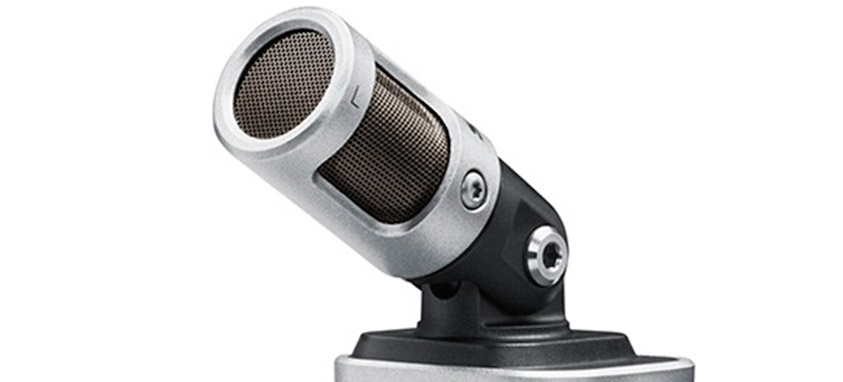
4. Turn your smartphone into a microphone with MV88 iOS Digital Stereo Condenser, a portable digital recording device from Shure. MV88 can capture high-quality audio for video, interviews and keynote speeches. The mic can be set at a 90 degree angle for capturing studio-quality sound. No cables are required.

Event Planning Problem Solvers

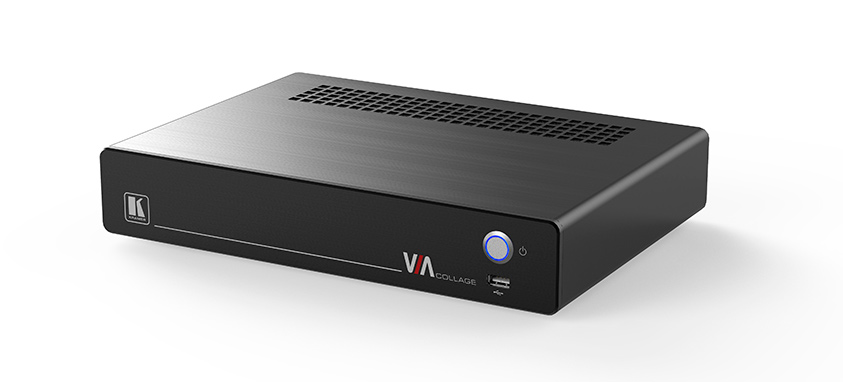
5. Kramer Electronic makes meetings more collaborative with VIA Collage, a “Bring Your Own Device” solution, which allows for secure file sharing and use of third-party apps. Every participant in a meeting can share their own screens, and view, edit and comment on documents in real time. Up to six screens can be displayed simultaneously.

Samsung Galaxy Note7

Amid a firestorm of reports about overheated and exploding devices, the Samsung Galaxy Note7 has been prohibited from being brought onboard all domestic-bound aircraft. As of Oct. 15, the U.S. Department of Transportation (DOT), with the Federal Aviation Administration (FAA) and the Pipeline and Hazardous Materials Safety Administration (PHMSA), announced an emergency order to ban the smartphone device. Passengers may not transport the Galaxy Note7 on their person, on carry-on or checked baggage on flights to, from or within the U.S. The phones can also not be shipped as air cargo.

“We recognize that banning these phones from airlines will inconvenience some passengers, but the safety of all those aboard an aircraft must take priority,” said Transportation Secretary Anthony Foxx. “We are taking this additional step because even one fire incident inflight poses a high risk of severe personal injury and puts many lives at risk.”

Last week, Samsung also ceased production of recalled and replacement models amid reports of the smartphone overheating and catching fire, deeming it a serious threat on airplanes. Samsung and the U.S. Consumer Product Safety Commission acknowledged the safety hazard with two company recalls on Sept. 15 and Oct. 13.

“We appreciate the patience of our consumers, carrier and retail partners for carrying the burden during these challenging times,” says Tim Baxter, president and chief operating officer, Samsung Electronics America. “We are committed to doing everything we can to make this right.”

According to the DOT, Travelers Should Know:

If passengers attempt to travel by air with their Samsung Galaxy Note7 devices, they will be denied boarding.

Passengers who attempt to evade the ban by packing their phone in checked luggage are increasing the risk of a catastrophic incident.  Anyone violating the ban may be subject to criminal prosecution in addition to fines.

Passengers currently traveling with Samsung Galaxy Note7 phones should contact Samsung or their wireless carrier immediately to obtain information about how to return their phones and arrange for a refund or a replacement phone. Samsung has provided guidance for customers about refund and replacement options, as well as how to contact wireless carriers.

If an airline representative observes that a passenger is in possession of a Samsung Note7 device prior to boarding an aircraft, the air carrier must deny boarding to the passenger unless and until the passenger divests themselves and their carry-on and checked baggage of the Samsung Galaxy Note7 device. Passengers absolutely should not pack the phones in their checked luggage.

If a flight crew member identifies that a passenger is in possession of a Samsung Galaxy Note7 device while the aircraft is in flight, the crew member must instruct the passenger to power off the device, not use or charge the device while aboard the aircraft, protect the device from accidental activation, including disabling any features that may turn on the device, such as alarm clocks, and keep the device on their person and not in the overhead compartment, seat back pocket, nor in any carry-on baggage, for the duration of the flight.

The Samsung Galaxy Note7 device is considered a forbidden hazardous material under the Federal Hazardous Material Regulations, which forbids airline passengers or crew from traveling with lithium cells or batteries or portable electronic devices that are likely to generate a dangerous evolution of heat. PHMSA has issued a special permit to Samsung to facilitate commercial shipment of the recalled devices by ground transportation.