Tech TrendsTechnology and its impact on meetings and events is ever changing, which is why results from a recent survey conducted by the International Association of Conference Centres (ICCA) are so valuable for meeting professionals.  Based on input from 355 ICCA members, the rise of millenials in the workplace, creative designs and enhanced networking are among the 2015 tech trends revealed by those surveyed.

“Meeting Planners are seeing their role influenced more and more by technology, not just for the meeting itself, but in researching and booking venues, how planners interact onsite and how they communicate following the meeting,” says Mark Cooper, IACC CEO. “The balance between technology and in-person relationships is an interesting one, with a need to attain a balance of the two in order to plan and deliver successful meeting outcomes.”

Look out, here comes the millennials

More fluent in technology, this new generation is addicted to social media, is even more environmentally conscious than Gen Xers and has high expectations of connectivity, interactivity, and the ability to influence and engage in dialogue. They know how to seek out free Wi-Fi, and as they enter the workplace and start attending meetings, they expect Wi-Fi to always be free and fast!

Socializing more important than networking

Socializing at work used to be frowned upon, taking on somewhat negative connotations. But increasingly, socializing is seen as relationship-building, and for meetings, conference venues encourage relaxed socializing by providing multi-use spaces for attendees to gather together. It turns out that attendees actually do talk business in these welcoming environments.

Switch up the mood

Meeting rooms have seen radical makeovers in terms of design, color and creative seating options of late. New developments in technology have allowed venues and organizers to instantly change the look and feel of a meeting room with user controllable LED mood lighting, high-tech furniture groupings and more.

GPS notifications 

Important advances in GPS-based app technology enable planners and venues to now personalize an attendee’s welcome and offer other location-based alert notifications upon arrival. For example, a badge is printed when attendees enter the geofence (think venue), with notification sent via the app to the badge printing location. Providing useful location information and navigation assistance, the geofence can notify attendees where they are on a map and give guidance on where they wish to go.

Conference networking and information exchange

Developments in app-based two-way communication means that with user permission, one’s smartphone can easily transmit contact information, social media profiles, specific meeting room access information, meal tracking, food preferences and much more. Communication between attendees can be enhanced with notifications, pictures and other information about who is nearby. Consider the value of automated demonstrations (videos, etc.) for exhibitor products that meeting groups can offer their sponsors as a marketing enhancement. Instant and targeted contact is king today; new technologies and applications that help foster participant engagement and social interaction will grow in popularity and usage.

Drones are tip of the iceberg

We have seen a dramatic rise in the use of drones in extreme sports, and now conference organizers are using this affordable technology to capture creative event photos and map out the venue for GPS integrated conferences. What will “tomorrow’s” technology bring to outpace the functionality of drones?

Wi-Fi making cables obsolete

Just when venues think their under-counter box of chargers is current and complete, technology moves on and we get closer to a single standard for wireless charging technology, after years of competing standards. Currently pushing for a single standard, QI Consortium boasts wireless charging points in 3,000 hotels. With large scale furniture makers such as IKEA installing standardized wireless charging into tables and desks they sell, the writing is on the wall for meeting venues to incorporate wireless charging points into bar tops, meeting room tables and guestrooms. They better do so this year, as 2015 is sizing up to be the year the hospitality industry finally took standardizing wireless charging technology and its availability seriously.

Meet your virtual colleague

There are times when its just not possible to get everybody in the same place at the same time. Conference venues understand this and are making the virtual attendee experience much better. Venues are developing meeting rooms with multiple ceiling-mounted microphones, high-bandwidth connectivity and advanced software solutions to provide seamless integration into the meeting for virtual attendees and guest speakers. Additionally, there is an increase in clients wanting to capture video to send to another physical location, where a second group of participants is gathered.

Technology helps with site inspection

The trend toward part-time meeting planners who have other duties including being an executive assistant, marketing coordinator, human resource professional or department head, is on the increase. Today’s meeting planners, therefore, often require more from their venue partners, in terms of evaluating venues’ capabilities to support their meeting or event. When a planner cannot conduct an in-person venue inspection, technology is fast evolving using the Google Street View concept to provide valuable virtual venue tours, multiple room images showing different meeting layouts and even property video footage.

Buying Your Meeting Online

More and more clients are using the web as their primary tool for making purchasing decisions. One IACC venue recently reported 70 percent of all new business comes via online search activities and they expect that number to grow.  The venues that will be the most successful in capturing this business will have websites that serve not only as marketing brochures but as the primary tool for their clients to plan, book, purchase, and engage with them for their next meeting.
Uber TricksUse Uber to get to the airport a few times a week? Did you know you can schedule the same Uber driver to pick you up?

Uber’s continued worldwide growth has adapted to travelers’ needs and made ride-sharing convenient. Huffington Post mentioned useful Uber tricks to get the most out of the service. The highlights:

Get Free Uber Credit Towards Your Next Ride

I first heard of Uber from a friend who told me I could get a free ride if I input his referral link to my account. Within days I was sharing my personal referral link with all my friends and colleagues, and getting free rides across the city.

Earn Starwood Points by Using Uber

Starwood Preferred Guests can link their Uber accounts and earn 1 Starpoint for every U.S. dollar spent on Uber.

Spotify Your Uber Ride

Some rides are longer than others, and what better way to enjoy lengthy Uber trips than with your personal playlist streaming from Spotify.  Connect your Spotify account to the Uber app and play your favorite jams on the way to your next destination.

Use Uber’s Trip History to Fill In Expense Reports

Uber’s slick new Trip History feature gives you a detailed look at every Uber ride. Cost, distance, date and location of your Uber trip is right at your fingertips, making it easy to do expense reports.

Issues with Your Trip?

Had an unsatisfactory Uber ride? Contact Uber support directly from the app. If you have a valid grievance, your ride can be credited within 24 hours.

Avoid Bad Drivers Without a Cancellation Fee

There’s nothing worse than an unpleasant Uber ride. From driving too fast to taking the long way home, there is plenty that can go wrong. View Uber driver ratings directly from the app and make sure you are matched with a highly rated driver. Still having doubts about your driver? You can cancel within 5 minutes to avoid a bad rating and a cancellation fee.

Remember Uber Drivers Don’t Accept Cash

Always remember that Uber fees are billed directly to your personal account, no matter the circumstance.  You will never exchange cash with an Uber driver unless you are giving a tip.

lanyon-mobileThis week during IBTM America at Chicago’s McCormick Place, buyers and exhibitors used the mobile event app by GenieConnect of Lanyon to view appointments in addition to accessing the show schedule and social media, and receiving special alerts in real-time.
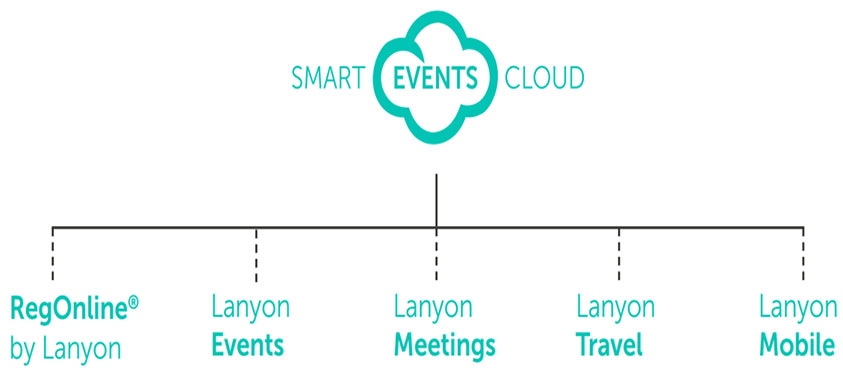
GenieConnect was acquired by Lanyon in December, marking a key addition to the company’s meeting-related portfolio. Lanyon Smart Events Cloud features a comprehensive suite of meeting technology to help simplify event planning.

“GenieConnect has things we didn’t have,” says Anthony Miller, chief marketing officer for Lanyon. “It was driven by the power of mobile and its impact on attendee experience. Mobile is extremely prolific.”

The app features a full directory of exhibitors and their booth numbers, and a listing of speakers and presenters. The transportation schedule and descriptions of networking events are also helpful.

In addition to Lanyon’s mobile app product, here are other offerings that are part of Lanyon Smart Events Cloud:

-Lanyon RegOnline automates every detail of planning events so planners can focus on attendees.

-Lanyon Events, formerly known as Lanyon Conference, fully automates the conference planning process to engage attendees, exhibitors and sponsors.

-Lanyon Meetings, formerly known as Lanyon StarCite, helps with your strategic meetings management and compliance.

-Lanyon Travel, formerly known as Lanyon Total Hospitality Suite, helps with new transient business and saves time by simplifying transient RFP management.

“We think we can remove some of the stress through software,” Miller says. “Our goal is to help the industry evolve and make smart decisions through software and data.”

Miller discussed ROI as an important reason to consider using the Lanyon suite. He says customers experience cost savings, time savings and business growth through engaging attendees.

Lanyon products were also used at Professional Convention Management Association’s Convening Leaders event earlier this year in Chicago. PCMA reports that 88 percent of attendees took advantage of remote check-in and picked up their badges at hotels. More than 200 attendees also used the technology to make suggestions for new sessions.

“With RegOnline technology tracking behavior at our conferences and chapter levels, we know which sessions have been successful at past events,” says Jason Paganessi, PCMA vice president of business innovation. “Through this valuable insight, we are able to plan and tailor future products and programs to attendees.”

how-to-use-meeting-technology
The rate of change in meeting technology accelerates at an unprecedented pace these days. Thousands of ideas, apps and innovations are now available at every turn to help meeting planners do their jobs better.

The expert sales and event teams of Marriott’s Convention & Resort Network (CRN) have come together to share tips to maximize meeting technology. CRN is a network of more than 60 JW Marriott, Autograph Collection Hotels, Renaissance Hotels, Marriott Hotels and Gaylord Hotels that provides the ultimate meeting experience for meeting planners.

While CRN is a great resource for sourcing meeting space, it’s also a reservoir of ideas from F&B to meeting technology.

Here are six tips to maximize meeting technology:

Video Mapping

Video mapping technology allows for an unlimited amount of unique and creative video content to be projected on almost any surface. Planners can transform stages, walls, rooms, entire buildings and any other regular or irregular-shaped surface into an environment that will greatly enhance attendees’ meeting experience. Video mapping allows versatility in staging design options. Transform a general session set to an awards banquet for the same attendees without physically altering the staging equipment. This means no adding or removing of set pieces.

−Robert Parrish, director of sales, PSAV, Baltimore Marriott Waterfront

Custom Wi-Fi Branding

Make the Wi-Fi network for your group recognizable. Most networks in a hotel or convention center can have custom branding. For instance, when a guest connects to the Wi-Fi here at Fort Lauderdale Marriott Harbor Beach Resort and Spa ,they see “Marriott_conference, Marriott_guest or Marriott_lobby” but with a custom SSID or splash page, planners can have attendees connect to the Wi-Fi by connecting to “XYZCompany_Wi-Fi”.

−Tim Downing, director of event technology, Fort Lauderdale Marriott Harbor Beach Resort and Spa

SocialWalls

A SocialWall is a live and real time feed of Twitter and Instagram. Participants post using the event hashtag and those posts are displayed on the SocialWall feed. You can use multiple hashtags for any event, control content by excluding explicit content and retweet. Groups can also create custom posts to be added to the feed to be displayed on a rotation basis. SocialWall is customizable and banded to the needs of the client/event.

−Alex Brahms, team leader, PSAV, Boston Marriott Copley Place, and Hope Wiggins, PSAV, sales director

FaceTime or Skype

Consider the everyday functions of smartphones. FaceTime or Skype tours come in handy when meeting planners have a quick space question or can’t remember what something looks like. Oftentimes, pictures do not do the space justice, so utilizing smartphone technology is a quick solution.

−Carolina Viazcan, director of group sales, Renaissance Indian Wells Resort & Spa

Deliver a Lasting Message

Meeting technology should be seen as an important tool in delivering a lasting message. A screen and projector serves no purpose without considering how this “canvas” will present content to attendees. Planners should consider the following: Will there be audio and video elements? Is there a new logo this year? Are you presenting yearly earnings and want to be sure your attendees can see every number? When you go beyond asking for “just a screen and projector” and you instead explore “why do I need a screen and projector and how can I accomplish my goals” it’s no longer “audiovisual.” It’s meeting technology.

−Jose Laboy, sales and production manager, Vinoy Renaissance Resort and Golf Club

Engage with Meeting Technology Teams Early On

Many times when planners plan conferences or galas, they have specific visions of how their event should look and feel based on prior experiences. Great content is the base, but lighting, video, decor and sound make the difference in creating a truly intriguing event. Planners should lean on the meeting technology teams early on to discuss prior experiences, options, and budgets. The individuals on these teams have found ways to build environmental interest at every budget level and appropriate to a multitude of agendas. Whether planners need complex decor to completely transform a space or to simply energize a coffee break with music, these teams will make the vision a reality.

−Pat Sullivan, director of audio/visual, Denver Marriott City Center

new-york-jfk-airportA new system is tracking wait times at New York’s JFK Airport. As mashable.com reports, the innovative system is tracking travelers as they pass through checkpoints by picking up Wi-Fi and Bluetooth signals emitted from their smartphones.

Since an Expedia survey conducted last year found 94% of leisure travelers bring a mobile device with them when they travel, tracking passenger traffic by examining and measuring cell phone signal patterns is actually an ingenious and accurate method for gauging passenger traffic.

How the Tracking System Works

Beacons set up throughout JFK capture the smartphone signals and relays them to a central office, where the data is then crunched to calculate the average wait time at various locations in the airport, such as security checkpoints, customs areas and taxi stations. Travelers do not need to log onto a particular app or put their phone into a specific mode in order to “counted.”

After calculating the numbers, the airport then relays the information back to passengers  on monitors located throughout the terminal, which post the accurate average waits in real time. For those who are worried about potential invasion of privacy, officials emphasize that while the system tracks locations, it does not store personal data about passengers.

The system launched this week in JFK’s Terminal 4, the largest terminal in the busy airport hub. JFK is currently the only airport in the nation to use this system to predict wait times, but the practice will probably spread to other facilities because the information can also be used to identify congested areas and manage passenger traffic.

Experts predict that data collected from travelers’ phones could also ultimately impact airport design and improve overall travel.

Like this content? Click here to get it Delivered FREE to your Inbox or your  Mailbox

united airlines mobile app

That moment when it’s nearly time to board your airplane and you suddenly have to run to the restroom. Or when a storm hits and you want to hunker down in the nearest airport restaurant or bar to wait out the flight delay.

With the revamped United Airlines mobile app, lugging your carry-ons while wandering around and hoping there’s a restroom or restaurant near your gate is a thing of the past. With the app’s easy-to-use hub maps, you can find whatever type of facility you need and find the fastest walking route to get there.

“Travelers are accustomed to using maps and navigation apps throughout their daily lives – and that shouldn’t end when they walk into the airport,” said Scott Wilson, United’s vice president of eCommerce and Merchandising. “These new features of our app will make travel easier and more personal for our customers.”

United teamed with San Francisco tech company LocusLabs, which specializes in information-rich indoor maps to create and scale-out the custom indoor experience for the app. Maps available in the United Airlines mobile app include major airports in Chicago, Denver, Houston, Los Angeles, New York, San Francisco and Washington, D.C.

The app uses the gate your flight is scheduled for as the starting point, but it will soon be able to pinpoint your exact location in the airport. An indoor location feature, which uses low-power Bluetooth beacons placed around United hubs that communicate with the app, is currently being tested in New Jersey’s Newark Liberty International Airport. United plans to expand the feature to other airports based on customer feedback.

United is also expanding the self-service functions available to customers in the event of a flight delay, cancellation or missed connection. Through a few clicks in the United Airlines mobile app, passengers can choose from a variety of flight options—including alternate airports. If a confirmed seat isn’t available on your preferred alternate flight, you can also use the app to add yourself to a standby list.

Like this content? Click here to get it Delivered FREE to your Inbox or your  Mailbox

full-Lanyon-Smart-Events-Cloud

Meetings Mean Business and Lanyon are teaming up to help companies leverage software to save money and time, as well as demonstrate growth from their meetings, events and travel programs.

Lanyon, the makers of a leading cloud-based software for managing corporate meetings, events and travel programs, is the first software company from the industry to join the Meetings Mean Business board of directors.

“Meetings Mean Business understands the critical role that software plays in the analysis of meetings, events, and travel,” says Michael Dominguez, MMB co-chair and chief sales officer at MGM International.  “Working with more than 80 percent of the Fortune 100, Lanyon is positioned to provide a unique perspective. This intelligence will assist Meetings Mean Business in its mission to define the value of meetings and events.”

Besides saving money and time, software solutions help companies show value of meetings and events. Lanyon joins 32 other Meetings Mean Business board members, including major hotel brands, professional associations and destination marketing organizations.

“We think there is tremendous opportunity for software to drive increased efficiencies and business intelligence,” says David Bonnette, CEO of Lanyon. “Meetings, events and travel are being consolidated in order to make planners’ lives easier and provide transparency of spend and opportunities to save across an organization. We are thrilled to partner with other industry leaders to effect positive change and advocate for the meetings industry.”

Lanyon’s cloud-based software helps manage data from one-to-one sales meetings, employee trainings and conferences in order to better engage customer, reduce costs and grow revenues.

“The addition of Lanyon to our board of directors comes at just the right time,” Dominguez says. “As pressure remains to show value in meetings, events and face to face engagement, the need for software and the data it can provide to demonstrate the measurable returns becomes all the more important.”


smartphone usage

Millennials. Gen-Xers. Boomers. All of them use cell phones—92 percent of American adults, in fact, according to a recent survey conducted by Pew Research Center, and 90 percent of the 3,217 people surveyed said they frequently have their phones with them. Is smart phone usage providing a common ground between disparate generations?

Maybe so when it comes to owning devices, but smartphone usage is still at odds between different generations in many cases.

The study showed a clear gap between age groups, delineating the differences in social standards and decorum as far as when it’s deemed acceptable to be tapping and swiping away on your smartphone and when it should stay in your pocket so you can engage with (gasp!) the people and world around you.

The biggest gap in the survey results came from public transportation. Among 18-29-year-olds, 90 percent responded that smartphone usage is generally okay while on the bus, subway or other mass transit system. That number dropped sharply, to 54 percent among those 65 and older. People ages 30-49 came in at 79 percent approval, and those 50-64 were at 71 percent.

Dining out provided another interesting result, with 50 percent of the youngest age group (18-29) feeling fine about being on their phones, compared to 26 percent from the oldest age group (65+). It would be interesting to know how many people from these age groups interpret “being on the phone” as talking to someone on it, as opposed to silent activities like checking email.

Talk of smartphone usage in social situations provided more common ground—of a sort. Of all adults polled, 82 percent said they feel it hurts social interactions when someone pulls out their phone. Despite that, 89 percent said they used their phone at their most recent social gatherings. If that doesn’t sound contradictory enough, 78 percent said that they used it for purposes related to the gathering—to post photos on social media, look up information related to conversations happening and to connect with other people known to the groups.

If the generations can’t quite agree on appropriate times for smartphone usage, at least it seems that individuals are using them more to increase engagement with those physically around them rather than to separate themselves from social settings.

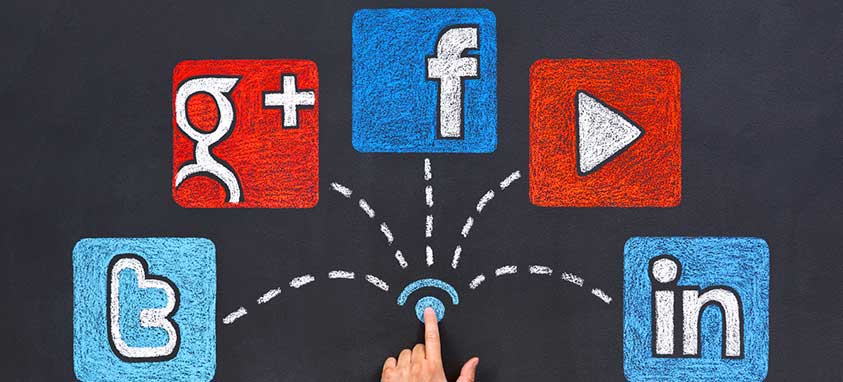
social-media-habitsThere’s no denying that social media has redefined the way people connect with each other and the world around them. According to a report by Pew Research Center (PRC), the e-social landscape is shifting among major outlets that PRC tracks, especially how varying age groups engage with them.
Overall, the survey behind the report found that 85 percent of American adults are internet users—all figures that follow relate to those respondents who identified as such.

Facebook is still on top, with 72 percent of online adults saying they use Mark Zuckerberg’s goliath social media service. While that number is impressive, it’s also fairly stagnant, as surveys in 2013 and 2014 showed a similar figure of 71 percent.

Breaking it down by age group, 82 percent of those aged 18-29 use the service, as do 79 percent of 30-49-year-olds. Numbers drop a bit from there, with 64 percent of respondents aged 50-64 and just 48 percent of those 65 and older use Facebook. Among all of them, 70 percent check Facebook every day.

Pinterest has seen a jump in users since 2013, with 31 percent saying they’re on it compared to just 21 percent two years ago. However, only 27 percent of users say they log in every day, with 44 percent checking out pins less than once a week.

Instagram stayed fairly steady, with 28 percent of online adults saying they use the photo-centric service, up 2 percent from 2014. More people are logging in daily, though, with 59 percent on every day—and 35 percent who visit several times a day.

Instagram shows the biggest divide among age groups. Among 18-29-year-olds, 55 percent are onboard. That drops to 28 percent of those aged 30-49, 11 percent of 50-64-year-olds and just 4 percent aged 65 and older.

Among those polled who identifies as internet users, only 23 percent are on Twitter, with 38 percent of those looking at or sending tweets every day. Twitter shows another large divide, with only 11 percent of respondents aged 50 using the 140-character social media platform.

Facebook-Dislike-ButtonMark Zuckerberg is giving Facebook users what they’ve wanted since the social media service went mainstream in the mid-2000s: the “dislike” button.

The CEO and co-founder of Facebook announced yesterday that his team is working on the feature. The long-awaited revelation came during a Q&A session at a town-hall meeting at the company’s Menlo Park, CA headquarters.

“People have asked about the ‘dislike’ button for many years, and probably hundreds of people have asked about this, and today is a special day because today is the day that I actually get to say we are working on it,” Zuckerberg said. “We have an idea that we’re going to be ready to test soon, and depending on how that does, we’ll roll it out more broadly.”

Does this have the potential to change the social media landscape? Before you get excited about laying down the hate on your uncle’s hardcore political posts, on every photo your friends post of their babies and/or puppies (and/or kittens), or a company or brand that you feel wronged you, keep in mind that the button likely won’t be able to be used that way.

Facebook has avoided the dislike button in the past over concerns that people would use it for hatemongering—and worse, that the potential for hate from other users would cause people to share less (and Zuckerberg certainly doesn’t want that).

Instead, any possible dislike button (or whatever they end up naming it) will be meant for more somber situations, to express sympathy or empathy. “Not every moment is a good moment, and if you are sharing something that is sad, whether it’s something in current events, like the refugees crisis that touches you or if a family member passed away, then it may not feel comfortable to like that post. ” Zuckerberg said. “It’s important to give people more options than just like.”