coworking spaces

Did you know you can rent out a meeting room at many of the world’s coworking spaces? These gathering places are a growing alternative for offsite sessions and offer many benefits to event organizers and participants.

Coworking spaces are shared workspaces where you can rent a desk to work from on a daily, weekly or monthly basis. They are highly flexible, which means you can just drop in and book a meeting room without much notice, even if you haven’t used a space before.

You’ll get access to a range of amenities (from free coffee to printers) and most spaces are kitted out with cutting edge technology so you can plug and meet without a lot of set up. Also, high-speed Wi-Fi is the lifeblood of many coworking spaces, so you shouldn’t have to worry about connectivity issues.

Coworking spaces are diverse in their nature and layouts. Some offer more professional environments, others have a more relaxed vibe. Some target specific industries, others open their doors to anyone with a laptop. There are plenty to choose from. If you haven’t used one before, here are some answers to questions many people have about the trend.

1. Do you need to be a member to use a space?

Most spaces let non-members book a meeting room on an ad hoc basis, but make sure you double check. Also, members can usually use meeting rooms for free so, if you are intending to use the facilities on a regular basis, it may make sense to sign up as a member.

2. What do you get in the room?

Larger coworking spaces will have a range of meeting rooms for you to choose from. Some will be crammed full of the latest gear, others may be tech-free havens where all you get is a whiteboard and a limitless supply of coffee. Call in advance to make sure the space is ready for your particular flavor of meeting.

3. What facilities do you need/want outside of the meeting room?

Do you want access to the space’s kitchen? Or its photocopier? Make sure you check exactly what’s included when you book a meeting room. Also, ask if there are any restrictions on how you can use the wider space if you are a non-member.

You could also ask to work from the space for the day. Most spaces will offer you a complimentary day pass. This will help you find your bearings and set up your meeting space with plenty of time to spare.

4. What happens if your meeting runs over?

Most coworking spaces will give you a small amount of grace if you do run over. Also, ask if a space has breakout areas that you can access and where you can carry on talking after your slot has finished, if required.

5. Who uses the space?

A coworking space isn’t just a great venue for a meeting, it’s a networking goldmine. Some spaces have permanent residents (including growing startups and established small businesses) and may also target a specific demographic.

The Farm’s Coworking Space in NYC, for example, specializes in the healthcare and technology sectors. Its founder, Lucas Seyhun, said: “If an event organizer would like to connect with a specific member then we can help facilitate this. We also work with and know a lot of tech and healthcare businesses in the NYC region, so it’s always a good idea to ask our community manager if you have something, or someone, specific in mind.”

6. Can I speak to the community manager?

If you’re interested in using a space for a meeting, then call its community manager to get the inside scoop on what the venue is really like and how you can use it to your advantage.

Coworking spaces are inherently flexible and collaborative in their nature. As such, they are well practiced at working with professionals to help them build their business and connections within their communities. Make sure you capitalize on this point to really make your meeting stand out from the crowd.


Gemma Church is “the freelance writer who gets tech”, a specialist journalist, copywriter and blogger for the science and technology sectors. Her USP is that she’s worked in the industries she writes about, bringing a unique level of insight and experience that most writers cannot offer.
Steps to Enhance B2B Networking

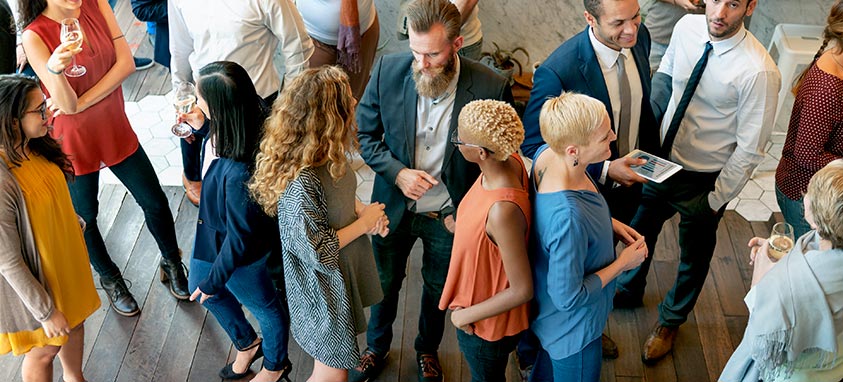
There is a clear difference between traditional networking sessions—the ones you just add to the event program, usually during the coffee breaks—and B2B matchmaking dynamics.

When attending events, your guests may feel uncomfortable talking to strangers. They also aren’t always able to find relevant connections. Silly ice-breaking games, rivers of alcohol and exquisite catering won’t help. If you want to provide truly gratifying and meaningful networking experiences, you need a different approach. Considering this, B2B matchmaking is your chance to make networking relevant and efficient. Here’s how.

Step 1. Achieve a higher degree of compatibility between the offer and demand. By using the right B2B matchmaking tools, you can ask your guests (when registering to attend the event) to specify their networking preferences and interests. By enabling the “I’m offering” and “I’m looking for” modes, you’ll help them correctly articulate their networking goals.

Having this information, you can create different attendee profiles, segmenting your audience into groups. Subsequently, you can decide which group profiles are compatible, thereby letting people from one group request meetings with people from other groups.

Step 2. Attract valuable attendees. Good networking means good planning and high-end attendees. How can you expect to organize a meaningful networking session if the people who attend have nothing good to offer? The good thing about B2B matchmaking sessions is they offer the possibility of running attendee quality control. The participants have to meet a series of requirements that confirm their qualification to attend the event.

Step 3. Control the networking time blocks and the meeting duration. When running a B2B matchmaking dynamic, you can always decide the exact time frameworks when guests can book the meetings. You can also determine the duration of the one-on-one meetings by setting up the amount of time you consider necessary for the attendees to interact with each other.

Step 4. Allow your guests to create their networking agenda. A B2B matchmaking system enables the attendees to schedule short meetings during the event with people who are important for their businesses or careers. Your guests have absolute control over the networking dynamic. Not only can they scroll through the list of guests, but they can also decide with whom they want to connect.

Step 5. Reduce the uncertainty factor. When engaging in a traditional networking session, your attendees have almost no information about the people they’ll meet. That is why they can’t prepare themselves accordingly. During a B2B matchmaking dynamic instead, your guests won’t stroll around aimlessly, trying to hunt down someone with whom they could exchange a few words. They will have a personalized meeting schedule, will know exactly what is on their itinerary and will be able to taking full advantage of their time.

B2B matchmaking empowers your attendees with absolute control over their networking experiences. Your guests will feel much more comfortable when interacting with strangers and be able to generate truly meaningful connections.


Esteban Ochoa and Mauricio Palacio are co-founders of Eventtia, an event management software designed to empower event professionals to gain full control over planning logistics and event marketing, and provide their attendees with awesome experiences.

Salvaging a situation that involves entities outside a hotel property can be especially difficult. But Ann Renneker, director of event management at Sheraton Dallas Hotel, was recently able to accomplish that for a 900-person group—and on just one hour’s notice.

The event was a “walk of remembrance”—part of a three-day educational and support conference for burn survivors and their families. The group would walk from the hotel to a public park six blocks away, with police, public safety and fire department personnel and vehicles set along the route to keep streets clear and show support for attendees. The park was fully set with a stage, PA system, banners and seating.

But with the temperature at 95 and a rainstorm possible, the planner decided to alter the plan: Attendees would now walk from the hotel entrance across the street to the Sheraton’s 230,000-square-foot convention space, and gather in a large prefunction area for the ceremony. “The planner underestimated the complexity of the event,” Renneker says. “But her mind was made up, and she figured they’d just make the best of it.”

Renneker’s first calls were to the fire marshal and police commander, who hustled their personnel to close down the hotel’s street; they were even able to get the largest fire trucks there, with ladders crossed high in the air so that attendees could walk under them.

The next call was to her banquet manager, with instructions to gather as many employees as possible to assemble a stage and 900 chairs in the prefunction space. “Then I called our AV team to literally run into our warehouse and get microphones and speakers set up on stage,” Renneker says. By the time attendees gathered in the lobby and porte cochere 55 minutes later, the event redesign was complete. “Everyone walked, the speakers went on as scheduled, and the dedication went perfectly. Even the planner was surprised at the result. We felt like heroes that day.”

Disaster averted.

Wildfires  in Northern California Wine Country had residents  continuing to flee for safety Tuesday as homes, businesses, vineyards and farmland burned. As of late Tuesday morning, 13 deaths from the fires were reported, and 150 people were missing.

  • More than 1,500 structures have been destroyed in 14 fires, covering more than 73,000 acres in nine counties.
  • There is no or extremely limited containment on any of the fires as of Tuesday morning.
  • California Gov. Brown declared a state of emergency for three Northern California counties (Napa, Sonoma and Yuba) due to the continuing spread of multiple fires.
  • Cellphone Service is down in some areas of Napa, Sonoma, Mendocino and Humboldt counties. AT&T and Verizon confirmed that their customers may be currently experiencing outages.
  • Hilton Sonoma Wine Country Hotel,  and the luxury Fountaingrove Inn are among many businesses that have been destroyed in Santa Rosa. In Sonoma’s Kenwood, Chateau St. Jean in Kenwood reported its main building, a Spanish Colonial-style villa built in 1920, was extensively damaged. Signorello Estates winery in Napa has also been ravaged by flames.
  • Luther Burbank Center for the Arts, also in Santa Rosa, reported that its main building had suffered “minimal damage, but that classrooms and the center’s east end are destroyed.” The center presents 230 performances a year and includes the 1,633-seat Ruth Finley Person Theater.
  • At Jack London Historic State Park in Glen Ellen, a small Sonoma community with many homes burned, park rangers were removing priceless artifacts from the collection of memorabilia and historical records of writer Jack London, whose former home and farm is the centerpiece of the park.


We live in an interruption-loaded society, meeting planners, perhaps doubly so. The ability to sneak off, to find quiet or to rest is challenging in the age of mobile devices. What’s more, the noise level of society in general has been increasing steadily for decades.

Try to read a magazine on your front porch on a Sunday morning, and invariably one or more of your neighbors will be toting an ear shattering leaf blower, rounding up every leaf in sight. At work, our bosses, peers and associates have no qualms about dropping by, calling, paging, emailing, text messaging or instant messaging all day long.

While each of us craves the ability to work uninterrupted on occasion, especially on highly critical, challenging or first-time types of tasks, we forget, that we interrupt others with the same abandon that they interrupt us. Worse, even when we have the ability to control our exposure to the next voicemail, email or text message, we crave to know who has gotten in touch with us lately and too often succumb to clicking and tapping away to see who our latest correspondent may be.

The Rising Tide

The research regarding interruptions in the workplace today paints a grim picture. Unmistakably, interruptions are on the rise. Basex, a U.S. technology research firm, completed a survey years back that reveals interruptions account for 28 percemt of the typical career professionals’ workday.

Worse, on average, employees typically get only 11 minutes to focus on any task before encountering another interruption. Thereafter, another 25 minutes on average are consumed before returning to the original task or project, if it happens at all on that day. Other studies show that interruptions typically occur between every three and eight minutes and, that once a worker is interrupted, there is an almost 25 percent chance that resuming on the original task won’t occur until the following day.

It’s time to declare your independence. No one controls your schedule exactly like you do, not even an authoritarian boss. Most of the interruptions that plague you in the course of a day are in part, your own doing.

Allow or Do Not Allow

At some level, you allow most interruptions to happen–either because you think you have to be available 24/7, or you fear missing the one phone call or email message that will make or break your quarter or career. You fall into the trap of being too available, of checking messages too frequently. In the process, you sacrifice the ability to accomplish great things when you’re able to focus intently on the task at hand.

Here then are some suggestions for taking charge of your personal environment, so that you can be your most productive self in those situations where concentration, intensity and focus are essential:

  • Surround yourself with everything you need to fully engage in the process, which also might involve assembling resources, people and space, as well as ensuring that you have a quiet environment free of distractions.
  • Give yourself the hours or days you need to read, study and absorb what’s occurring, and to make decisions about how you’ll apply new ways of doing things and new technology to your career, business or organization.
  • Go “cold turkey.” This is not recommended for most people! But sometimes you just have to suspend whatever else is going on to incorporate a new way of doing things. Bringing in outside experts if you need help with this one.


Jeff Davidson is “The Work-Life Balance Expert®” and the premier thought leader on work-life balance issues. He works with organizations that want to enhance their productivity by improving the work-life balance of their people. Jeff is the author of 65 books, including Breathing Space, Dial it Down, Live it Up, Simpler Living, 60 Second Innovator and 60 Second Organizer.

Meeting planners might not always think of Walt Disney World as a venue for clients with serious business in mind, but the “House the Mouse Built” is continually evolving to offer new options for incentive trips, conferences and other corporate gatherings.

“We do incentives for anywhere from 10 people up to hundreds of families,” says Leigh Keating, sales director for Walt Disney World Resort, which comprises five major convention hotels (out of 26 resort hotels total) in addition to four world-class theme parks, all within a short drive of the Orlando International Airport (MCO).

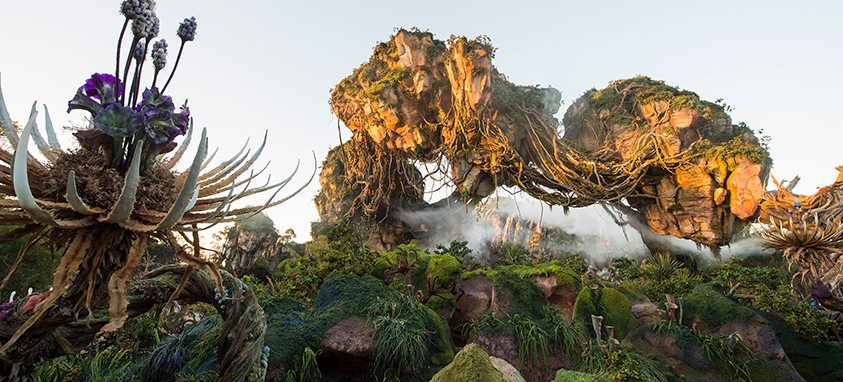
Pandora – The World of Avatar
Floating mountains grace the skyline while exotic plants fill the colorful landscape inside Pandora – The World of Avatar at Disney’s Animal Kingdom at Walt Disney World Resort in Lake Buena Vista, Fla. (Kent Phillips, photographer)

The past year saw the opening of the stunning Pandora—World of Avatar at Animal Kingdom, not to mention a new fireworks show and the addition of animatronic Donald Trump to the Hall of Presidents. This summer is set to see the opening of Toy Story Land, and 2019 will bring Star Wars: Galaxy’s Edge at Disney’s Hollywood Studios (with an adjacent themed hotel to come).

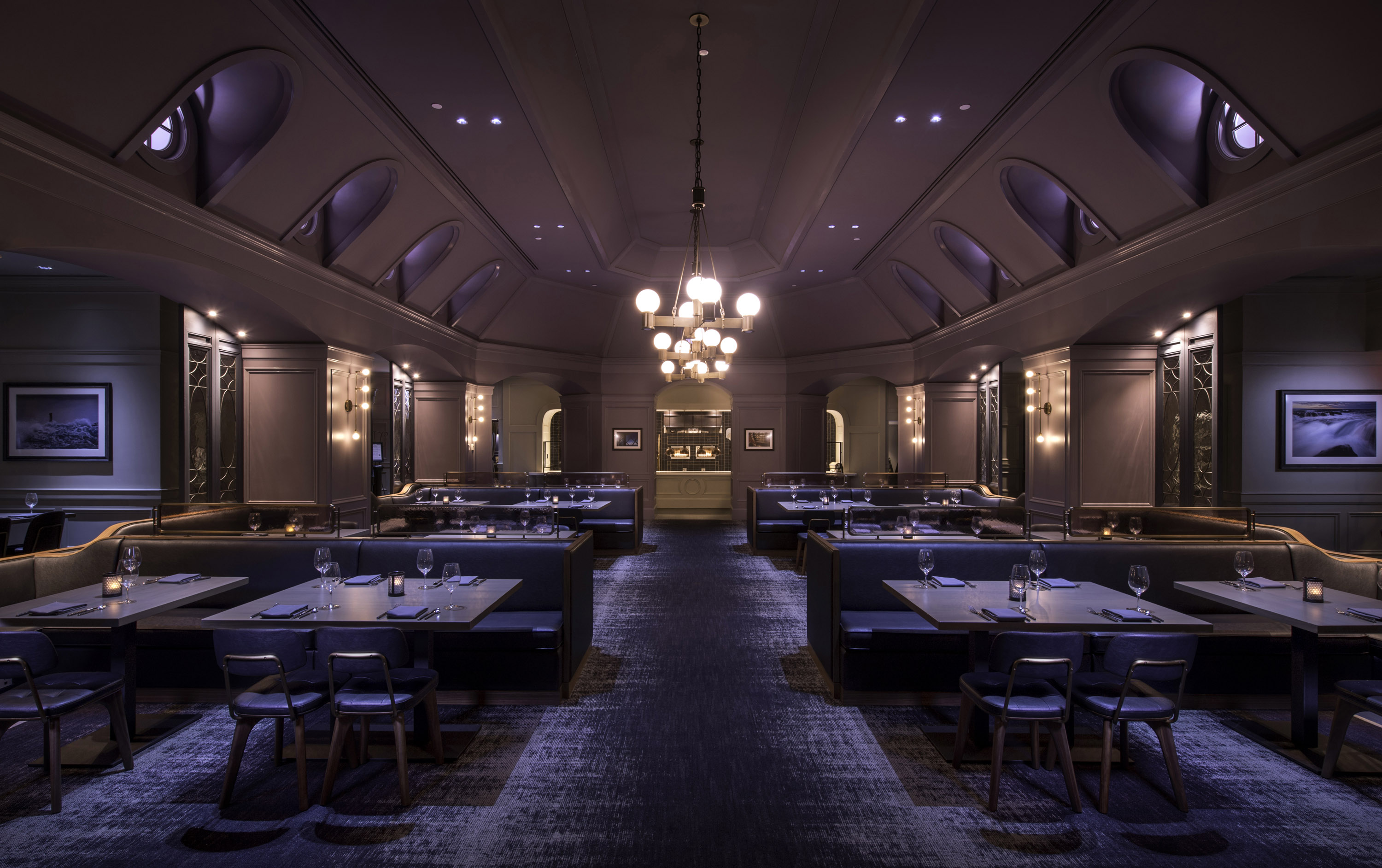
Ale & Compass (restaurant and lounge)
Photo courtesy Disney

Meanwhile, many of Walt Disney World Resort’s hotels and meeting spaces are getting upgrades and expansions. Disney’s Yacht Club Resort, for example, has a stylish new lounge for after-hours business, an elegant new restaurant (Ale & Compass) and 28,000 sq. ft. of new meeting space—including a 16,000-square-foot ballroom—bringing the total to more than 100,000 sq. ft. With 1,190 guest rooms, Yacht and Beach Club Resorts has an upscale Cape Cod vibe well-suited for business; were it not for all the people in mouse ears, you would never guess you’re a short walk or boat ride from Epcot Theme Park and Disney’s Hollywood Studios.

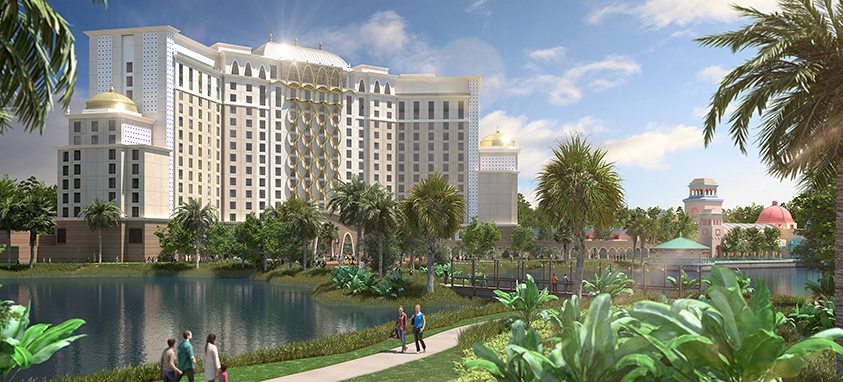
Disney’s Coronado Springs Resort
New Tower exterior – Artist Concept only

Other new developments include Disney’s Coronado Springs Resort, which when completed in 2019, will have a new 15-story tower, 545 new guest rooms and a new rooftop restaurant and lounge, not to mention a new boardroom, an event lawn and two multipurpose meeting rooms, adding to 220,000 sq. ft. of existing space.

As a one-stop option for a dine-around or another fun group outing, Disney Springs is a dining, retail and entertainment area that, in keeping with Disney’s knack for storytelling, has a rich, albeit fictional, history as a Florida waterfront town. In 2018, eight new dining concepts will be debuting at Disney Springs, nearly all with private dining options. Maria & Enzo’s is an Italian trattoria designed to resemble an air terminal from the 1930s. The property has 50-foot ceilings and views of Lake Buena Vista, and is directly above Enzo’s Hideaway, a speakeasy bar located in an underground tunnel that, according to legend, was used for rum running during the Prohibition.

The Edison, photo credit: Disney

Lest you think Disney is just for kids, the start of this year saw the opening of The Edison, a stylish new “industrial gothic” bar and nightclub modeled after a popular Los Angeles venue. Other venues at Disney Springs include Morimoto Asia, a dazzling two-story Pan-Asian restaurant with a capacity of 600, and House of Blues Restaurant & Bar, a 57,000-square-foot venue with indoor and outdoor space. For the budding Jedis in your group, Disney Springs has a new Star Wars-themed virtual reality experience that small groups can use for team building.

One word of advice: No matter how much business you have, make sure to give your group at least a taste of the magic of the parks themselves. Discounted tickets—and special late-afternoon passes—are available for meetings groups, and there are countless in-park venues that can be used to hold memorable private events.


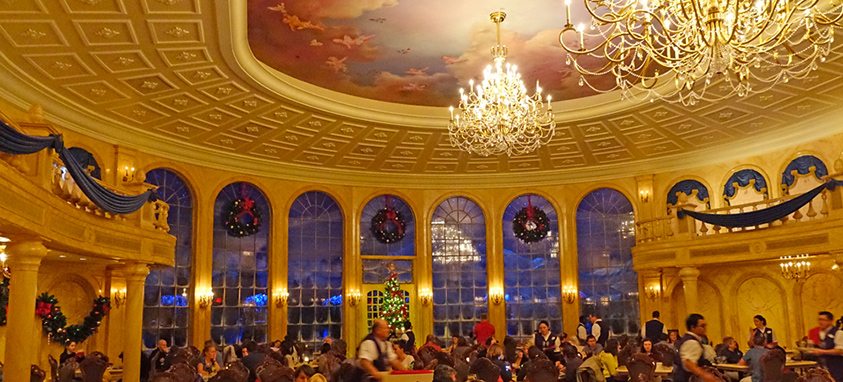
Grand Ballroom at Be Our Guest Dining Room, photo credit: Disney

Of course, for those nights when you need to stay close to the hotel, Disney’s event planners have their own stash of pixie dust, and can transform any ballroom with a theme, such as Pirates of the Caribbean or Frozen.

“Groups often have to dedicate a pretty significant portion of their budgets to creating a special environment,” Keating says. “Here, the environment is amazing—and it’s right there. We have fireworks at least once per night, sometimes more. All you really need to do is provide access to that, along with a little food and beverage, and maybe a little other entertainment. It’s an unforgettable experience.”

All planners want to know how they can improve the attendee experience, but getting honest answers to the question of “what is working?” can be challenging. Luckily, both event apps and smart badge technology has evolved to the point that when combined with advanced analytics, they can track attendee movement throughout an event. This gives planners the ability to gather more useful feedback.

Think about it. What if you could ask questions with gentle prodding from the speaker about the exact session an attendee is in before they ever leave the room? That will get a much more detailed result than a general question send two days after the person returns to a full inbox in their office. The key to getting meaningful insights is that surveys be timely and contextual.

This technology also allows attendees to know if an attendee leaves a session early. The badge can alert the event app to send a survey just a minute or two later asking, “Did the session deliver what you wanted, or did you not get what you expected?” You may find out that they left the session to pop into another one or to jump on a phone call, not because they didn’t get the content they sought. It will eliminate guessing and jumping to conclusions.


Whitepaper Download – Event Technology Trends: The Significant Seven


In the near future, groups using smart badges will be able to not only identify attendee-behavior patterns but also send daily surveys tailored to the sum of each attendee’s demonstrated interests based on what sessions they attended and exhibitor booths they visited. Planners will be able to template surveys for that specific interest profile and ask attendees more focused questions as they are leaving the event each day. This type of real-time segmenting will generate the most granular data for the host organization.

In the future, this behavior-based surveying can be combined with social-media listening and sentiment analysis using tools such as Google Analytics or IBM Watson Analytics to draw actionable conclusions from massive amounts of data. Using word clouds, planners can see at a glance, what worked and what didn’t. Now that is meaningful surveying.


Shane Edmonds is Chief Technology Officer at etouches.

Smart Meetings partnered with etouches to write Event Technology Trends: The Significant Seven, a tool for navigating the innovations that are transforming meetings in 2018. You can download the whitepaper here.

The entertainment industry has advanced the development of hologram technology such that it is nearing practical use in the realm of business events. Already, live concerts include three-dimensional performances that are difficult to tell from the actual thing on stage.

While the cost is currently prohibitive for the majority of business events, hologram technology is quickly advancing to the point where you won’t need expensive mirrors now used to focus the light. In the next couple of years, then, many more companies and associations will be able to use hologram technology to present otherwise unattainable speakers or entertainers to their audiences in a way that delivers maximum impact.

Another technology that is gaining traction at business events is augmented reality (AR). With only a smartphone, AR gives an event host the ability to demonstrate a product that is not physically there in three dimensions. In the retail world, companies like Disney and Ikea use AR to have products appear through the screen of a smartphone when it’s held over a QR code or other sensor.


Whitepaper Download – Event Technology Trends: The Significant Seven


Similarly, if an event speaker is describing a product, each attendee can hold their phone over a brochure in their hand and the product will appear in three dimensions above the brochure. In fact, etouches is presently experimenting with AR in its own marketing presentations for the LOOPD Smart Badge, so that planners can see through their phone cameras its exact size and shape via a rotating 360-degree rendering. If a presenter is on stage alongside a physical product, attendees can look at the stage through their phone camera and see an overlay of facts and statistics related to the product.

Interestingly, AR also has a useful application outside the meeting room: wayfinding. Rather than looking at a top-down map while you are making your way through an event venue, attendees can simply look through their phone cameras at the show floor and the AR app will know where they are and guide them to where they want to go. It also shows you where relevant exhibitors or other points of interest are located as they move through the venue. While this feature is available only through dedicated AR apps now, etouches is actively working to create this functionality within its event app.


Brian Friedman is Vice President of Digital Innovation at etouches.

Smart Meetings partnered with etouches to write Event Technology Trends: The Significant Seven, a tool for navigating the innovations that are transforming meetings in 2018. You can download the whitepaper here

Yes, Event Professionals are Salespeople

Editor’s Note: Buried in many job descriptions for event planners is a requirement for sales skills. While the word “sales” may not be used, the duties are often the same—recruiting attendees and sponsors, negotiating with venues and representing the company. The more compellingly you can tell the company story and convince people to work with you, the more successful you will be.

Attendees are the reason planners work long hours sourcing the perfect venue, crafting agendas and testing AV setups—but sponsors keep the lights on.

Cvent Sponsorship Manager Noel McWilliams and Fazefwd founder Meg Fasy have mastered the art of attracting partners who will support all or part of your agenda. Following are eight of their suggestions that could increase your bottom line—and decrease your blood pressure.

1. Develop a Wholistic Sponsorship Strategy

A personalized attendee journey begins with understanding attendees’ motivations and behaviors so you can create a targeted experience. Ask, “What companies do your attendees want to know more about?” Those are the potential sponsors you want to approach to create a win-win relationship.

2. Get Closer

Keeping a current customer is cheaper than getting a new one. Brainstorm ways you can help them interact more meaningfully with your attendees for a true partnership relationship. Putting a logo on a PowerPoint presentation is no longer the end-all. Could the company provide experts for workshops or discounts for consulting? Enhanced opportunities for sharing content increase the value of the sponsorship for all parties.

3. Refer a Friend

Leveraging existing relationships helps to bring new sponsors to the table. Happy customer-partners could be your biggest advocates. Ask them to record testimonials and introduce you to like-minded companies who would appeal to your attendees.

4. Create a Compelling Offer

Only 5 percent of your sponsors will buy straight from the prospectus, but a stellar one-sheeter with attendee demographics, titles and behaviors is an important reference piece. Bonus points if you can paint a complete picture of your attendees. Where do they vacation? What are their job titles? Do they participate in wellness programs?

5. Keep It Informal

Your sponsors want to spend quality time with your attendees. Experiential, immersive activities are one way to provide this networking benefit. The more sponsors can be face to face with attendees, the more valuable they will see your offer. Food and drink activations are a simple way to achieve experiential interactions at your event. Your venue could help you provide culinary “wow” on a budget if you know how to ask the right questions.

6. Price It Right

Three important factors of pricing are profit margin, sponsor propensity and competitive analysis. The ideal profit margin for an event is unique to each company, but the rule of thumb is to aim for around 25 to 30 percent. Sponsor propensity relates to what the market is willing to pay. Lastly, look at similar conferences that have the same number of attendees, industry segments and attendee titles, and do a cost analysis around those factors.

7. Mine Post-Event Metrics

Report back to sponsors using data to prove return on investment (ROI) or return on equity (ROE). Include information such as session attendance, post-event surveys and attendee feedback.

8. Give Back

Incorporating CSR in an agenda is a great way to give back to the host community and involve sponsors in a positive way. Fun walks and runs, silent auctions and backpack stuffing help everyone feel better about the event—and themselves. Win-win.