Idaho

Boise Centre

New $47.5 million expansion project was just unveiled; project nearly doubles the size of the center to 80,000 sq. ft.; new spaces include outdoor patio, new ballroom and breakout areas, and additional 14,000 sq. ft. of meeting space.

Coeur d’Alene Resort

Renowned resort overlooks Lake Coeur d’Alene and the village of Coeur d’Alene; world’s only floating golf green; Beverly’s Restaurant; 338 guest rooms; 32,000 sq. ft. of meeting space.

Grove Hotel

Boise hotel recently completed $4.5 million renovation on interior; attached to 5,400-seat CenturyLink Arena, next door to Boise Centre; 250 guest rooms; 14,000 sq. ft. of meeting space.

Hyatt Place Boise/Downtown

Convenient to attractions, sports events and airport; 24/7 business center; free Wi-Fi; outdoor pool; free hot buffet breakfast; 150 guest rooms; 2,751 sq. ft. of meeting space.

Red Lion Hotel Boise Downtowner

Convenient to Boise Airport and Boise State University; 182 guest rooms; 8,425 sq. ft. of meeting space; fitness center; pool; two restaurants; complimentary airport shuttle.
big sky venues

Schweitzer Mountain Resort

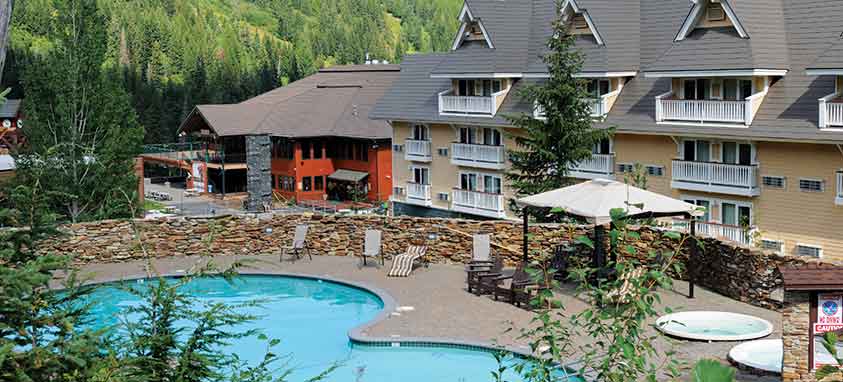
Located in Sandpoint; one of the largest ski resorts in United States; spectacular views of Lake Pend Oreille, three states and Canada; rustic ski village; 116 guest rooms; 8,000 sq. ft. of meeting space.

Sun Valley Resort

Has been welcoming both royalty and outdoors lovers since the 1930s; world-class spa; 19 restaurants, featuring wide variety of cuisines; 480 guest rooms; 28,500 sq. ft. of meeting space.

The Wallace Inn

Sits at the foot of historic village of Wallace, featuring mining ghost town, Bitterroot Mountains, great outdoor recreation; 63 guest rooms; four indoor meeting spaces and one outdoor, accommodating 20 to 100.

Western Pleasure Guest Ranch

Located in Panhandle town of Sandpoint; 40 beds in main lodge and cabins; some 3,500 sq. ft. of meeting space in Great Room; outdoor meeting spaces; new horseback riding options for team building.

Montana

Big Sky Resort

In the town of Big Sky; 18 miles from Yellowstone National Park; conference center; surrounded by chic shops and restaurants; 720 guest rooms; 55,000 sq. ft. of meeting space.

Gateway Center

Helena convention facility; 15,000 sq. ft. of banquet and meeting space; 550-seat auditorium; reception space for 150.

Helena Civic Center

One of the state’s largest gathering places; 15,000–square-foot ballroom; 1,925-seat auditorium; originally built as a Shrine temple in 1920.

Hilton Garden Inn Missoula

Close to the entrance to Glacier National Park; indoor pool; business center; sundries store; lounge; fitness room; 146 guest rooms; 22,000 sq. ft. for meetings.

Holiday Inn Downtown Helena

In the heart of Helena; convenient to shopping, dining and attractions; 71 guest rooms; 5,200 sq. ft. of meeting space; completing guest room and infrastructure improvements in October.

Lewis & Clark County Fairgrounds

Located in Helena; three excellent meeting facilities—new, 36,000-square-foot Exhibit Hall, 5,000-square-foot Entry Hall and 24,000-square-foot multipurpose building.

Northern Hotel

Billings landmark reborn in 2013; great dining in Bernie’s and Ten; free airport shuttle; work desks in rooms; 160 guest rooms; 12,000 sq. ft. of meeting space.

Yellowstone Conference Center at Big Sky Resort

Beautiful alpine village close to national park entrance; 800 sleeping rooms; variety of shops; nearly 50 restaurants; 720 guest rooms; 55,000 sq. ft. of meeting space.

Wyoming

AmericInn Lodge & Suites Cody–Yellowstone

67 guest rooms; 1,000 sq. ft. of meeting space; woodsy, comfortable lodge-type building; free hot breakfast; easy access to shopping, dining, outdoor recreation.

Best Western Sheridan Center

Close to historic sites, attractions in Sheridan; indoor swimming pool; spa; free airport shuttle 24/7; The Blackstone Grill serves American cuisine; 139 guest rooms; 4,000 sq. ft. of meeting space.

Buffalo Bill’s Irma Hotel

Buffalo Bill built this hotel in 1902; named for his daughter; near Yellowstone, Cody; Irma Grill; 39 guest rooms; 1,000 sq. ft. of meeting space.

big sky venues

Four Seasons Jackson Hole

The lap of luxury in the Grand Teton Range; free Wi-Fi; fitness center; three restaurants; lounge; outdoor pool; 158 guest rooms; 9,700 sq. ft. of meeting space.

Holiday Inn Cody–at Buffalo Bill Village

Close to Yellowstone National Park; 189 guest rooms; 16,573 sq. ft. of meeting space; QT’s Restaurant; Cowboy Music Revue at Cody Theater in summer.

Holiday Inn Sheridan–Convention Center

Near museums, theater and brewery; indoor pool; 24-hour fitness center; two restaurants; free Wi-Fi; free airport shuttle; 212 guest rooms; 12,454 sq. ft. of meeting space.

Sheridan Inn

Founded by Buffalo Bill Cody; opened in 1893; completing $1 million renovation—14,000 sq. ft. of meeting space already re-opened and 22 guest rooms are opening this month.

Spring Creek Ranch

Sits on 1,000 acres in Jackson Hole; great geocaching program for team building; award-winning Granary Restaurant; spa; 125 guest rooms; 3,200 sq. ft. of meeting space.
Further Reading:

Thrilling Adventures in Big Sky Country

Meeting planners are always looking for new ways to create an environment that fosters lasting impressions. I’ve noticed an uptick of meeting professionals bringing their groups outdoors to enjoy nature, and have seen how this can help the overall success of an event. By encouraging attendees to get out of the traditional boardroom, meeting planners can find easy and fun ways to engage their group and create a setting that builds lasting connections.

I recommend that meeting planners consider the following when planning an outdoor event.

1. Start with Goals

Outline the goals of the event. For example, if planners would like their group to network, a casual and relaxing outdoor setting may help attendees to be more comfortable and encourage meaningful conversations.

Also, don’t hesitate to change it up a bit and consider moving traditional elements of the meeting agenda outdoors. For example, instead of a projected slideshow presentation, I’ve seen planners host creative and fun flip chart sessions outside in which the attendees have been fully engaged and more interactive than in a traditional boardroom setting. We’ve even held trade shows outdoors to add a new element to exhibits. Sometimes a small change in setting is all it takes to make a big difference.

2. Integrate Nature in Programming

Getting attendees outdoors can help them tap into a different part of their brains and decompress. Even if you have a content-heavy program, incorporate outdoor breaks that allow guests to enjoy the fresh air, give their minds a moment to process all of the information they’ve learned, and allow them to reset before their next set of sessions.

For example, at Hyatt Regency Lost Pines Resort & Spa, we are rolling out “Leave Your Phone Breaks” for groups. The program encourages attendees to leave their phone behind or turn it off. We provide a 15-minute walk map that takes them through the resort’s trails to explore the natural beauty of the area.

3. Plan for Comfort

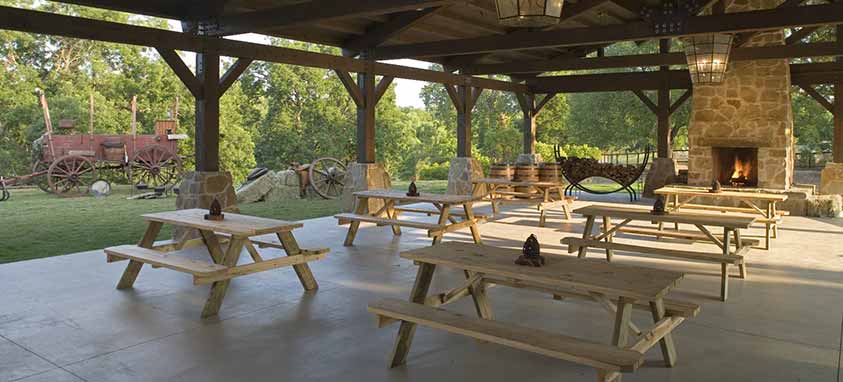
Consider the climate. A pavilion set-up provides overhead shade or extended covering that protects from the sun and is adaptable based on weather changes. When you are touring properties, evaluate opportunities for outdoor spaces as carefully as you would indoor ballrooms and breakout rooms.

I also suggest a casual dress code—there is no need to be in a suit for an outdoor function. Although several types of meeting sessions can be hosted outdoors, I’ve noticed that round table discussions encourage creative thinking better than closed, content-driven sessions. Then let the magic happen.


Ryan Galvin is the director of sales and marketing at Hyatt Regency Lost Pines Resort and Spa. He has worked in the hospitality industry for more than 16 years, and has more than 13 years of experience planning meeting experiences for groups. Hyatt Regency Lost Pines Resort & Spa is located on more than 400 acres of Texas Wilderness where meeting attendees can find hiking trails, quite spaces, the music of nature, the banks of the Colorado River, and even the resort’s Longhorns “T-Bone and Ribeye,” all of which can be utilized by groups.

in-flight wi-fi important

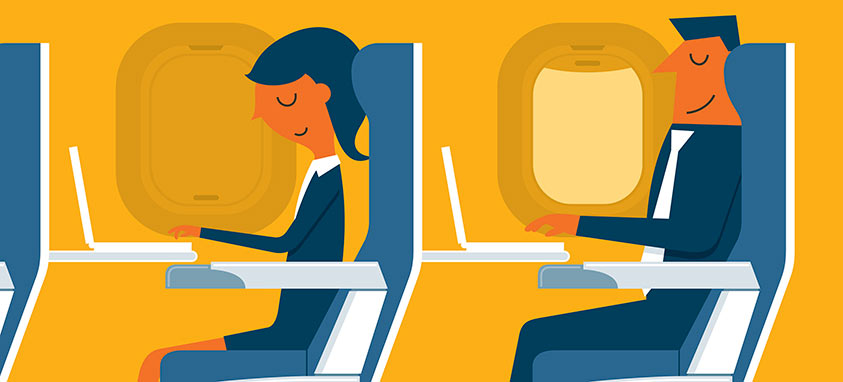
“Always on” is no longer a luxury. A new study shows that for most people, being connected is a requirement, even when flying 30,000 feet above the ground. And for parents towing a child, it is a life-saver.

Inmarsat’s annual Inflight Connectivity Survey, released July 26, found that 60 percent of global passengers view in-flight connectivity as a necessity. Inmarsat’s survey included 9,000 airline passengers from 18 countries across Europe, the Middle East, Asia Pacific, North America and Latin America.

Findings show that after experiencing in-flight Wi-Fi, 30 percent rank connectivity in the top three requirements (ranking below only price and schedule) when selecting an airline. Sixty percent of passengers even consider in-flight connectivity to be more important than in-flight entertainment.

The responses of U.K. passengers show that 74 percent would pay for in-flight Wi-Fi on short flights; 80 percent would pay for connection on medium-length flights; and 82 percent would do the same on long flights.

The race for high-quality, in-flight connectivity is very competitive. The survey shows that 44 percent of passengers will begin to change their preferred airline if they cannot browse and stream without interruptions. “High-quality, in-flight Wi-Fi is changing the way people think about flying and how they spend their time in the air,” says Inmarsat Aviation President Leo Mondale. “Whether using the time to work, connect with friends and family, or for shopping or viewing entertainment, the availability of in-flight broadband has become a major factor when choosing an airline.”

Free Wi-Fi Airlines:

  • China Air
  • China Eastern
  • Aer Lingus
  • Norwegian Air Shuttle
  • Jet Blue Airways
  • Philippine Airlines
  • Vueling Airlines
  • Nok Air
  • Turkish Airlines

mental health campaign

Meetings Industry Association (mia) announced a mental health campaign July 26 to raise awareness of mental health, encouraging meeting and event professionals to get on board. The partnership with Roffey Park, a charitable leadership development organization, which will focus on the impacts mental health and compassion have on recruitment, staff retention, engagement and—ultimately—the bottom line.

Mia is encouraging industry leaders to participate in a series of focus groups to determine what the sector already does well to create compassionate workplaces, and what can be done better to improve mental wellbeing. Attendees will have the opportunity to hear what other organizations are doing while contributing to new research and development for the future.

The topic is timely. Helen Moon, founder of Eventprofs Who Lunch, brought awareness to mental health in the industry with her blog post about living with bipolar. She has also partnered with International Live Events Association to launch a similar campaign called EventWell.

Mental health is detrimental to an individual’s physical wellbeing and the productivity of the workplace as a whole. According to the National Alliance on Mental Illness nearly 1 in 25 adults in America live with a serious mental illness and 1 in 5 adults experience mental illness in a given year. Participating in mental health awareness campaigns can create positive change for the economy. In the U.S., serious mental illness costs $193.2 billion in lost earning every year.

“Creating more compassionate workplaces should be part of the business strategy of any organization,” says Michael Jenkins, CEO of Roffey Park. “The direct and indirect benefits of improving human relationships cannot be understated. Making work a better place to be is good for wellbeing, good for mental health in particular and fantastic for your overall employer brand.”

Ideas to create a compassionate work environment

Lunch discussion: Get your colleagues together for lunch and open a discussion about mental health. Go over signs of thriving and signs of surviving. Refer to the Mental Health Foundation for more information.

Wellbeing breakfast: Have a pot luck style breakfast on Monday morning to get the week starting off on a positive note. Catch up with colleagues and talk about goals for the upcoming week.

Hump-day stress reduction: On Wednesday take a short break from your work and conduct an impromptu stress reduction class. Stretch and meditate together to feel relaxed yet ready to be productive the remainder of the week.

Affirmation Friday: Boost morale and encourage employees to be supportive of one another by creating a space in the office for colleagues to write notes of affirmation. Have employees acknowledge the great work others are doing by writing a short note throughout the week. On Friday, get together and pass them out.

Customer Service Lessons from Top Rated Airlines

The golden rule really does go beyond elementary school lessons–treat others how you want to be treated and they will continue to come back. According to the Watermark Customer Experience ROI Study, U.S. airlines that put their customers first are the most financially successful.

JetBlue, Southwest and Alaska Airlines all provided a superior customer service experience and outperformed the average industry stock earnings over a six-year period–as measured by Dow Jones and Moody’s in the study. “As its turns out, airlines get quite a lift from a great customer experience,” says Jon Picoult, founder and principal of Watermark Consulting.

Airlines that focus on customer experience perform better in profitability and market competitiveness. In our world of new media, the power has shifted to the customer through social media. Bad customer service will severely damage a brand. Who doesn’t remember when a passenger posted a video online of an airline physically dragging an individual off the plane earlier this year?

High-quality customer service infuses humanity into an industry that is notably devoid of it, the study notes. “It builds shareholder value by growing revenues and controlling expenses.”

Watermark’s Customer Experience ROI Study noted five approaches that leaders in airline customer experience practice and could also be gold standards for those who put on the events people are flying in to attend.

1. Aim higher than customer satisfaction. Plan to exceed the minimum and put in place the elements that will delight and amaze. While many are quick to take to social media when even slight inconveniences arise, it often takes the over the top elements to elicit praise from those same channels.

2. Become experts on the fundamentals and then deliver pleasant surprises. It doesn’t help to add bells and whistles if the basics are not running smoothly. Experience and a detailed checklist are the foundations that a memorable meeting is built on.

3. Understand that great experiences are intentional and emotional. Aha moments don’t happen by accident or logic alone. They are designed to appeal to the whole person and are based on the needs and expectations of attendees.

4. Use cognitive science to shape customer impressions. The subconscious often dictates how an event is perceived. Consider how the space will impact all the senses when preparing for attendees.

5. Recognize the connection between the customer and employee experience. Every interaction delivers a brand message. Is it the right one?


Instagram Stories Celebrate One Year

Instagram Stories may only be celebrating its first year in existence, but the effect it has on the app—especially for businesses and brands—is significant.

Stories is a feature of Instagram that allows users to create a photo, or a series of photos, that only lasts for 24 hours, after which it will be lost to the ether forever—unless you save it, of course. Stories are located at the top of an Instagram feed, with profile picture circles indicating whether a user has a story available to view.

Stories has also contributed to how long people are using the app. On average, users under the age of 25 spend more than 32 minutes a day, while those over 25 spend more than 24 minutes on Instagram.

According to Instagram, over 50 percent of businesses on the app produced a story in the last month, and one in five of those received a direct message.

The top location tags for Instagram Stories may be unsurprising if you spend any time discovering new feeds on the app:

  1. Jakarta, Indonesia
  2. São Paulo
  3. New York City
  4. London
  5. Madrid

 
The top hashtags for stories show you how people are really utilizing the feature:

  1. #goodmorning
  2. #work
  3. #goodnight
  4. #mood
  5. #happybirthday
  6. #TBT
  7. #love
  8. #home
  9. #bomdia — meaning “hello” or “good day” in Portuguese
  10. #relax

 
Instagram has received criticism for implementing the feature as Snapchat, another popular photo app that relies on the idea of impermanence, first came out with its stories feature in 2013. Alongside this criticism is more centering around Instagram’s mimicking of face filters that made Snapchat so popular in the first place—in particular, animal face filters.

The most popular face filters that users prefer to use in Instagram Stories are:

  1. Puppy ears
  2. Sleep mask
  3. Bunny ears
  4. Love with heart-shaped darts
  5. Koala ears

 
It appears taking cues from Snapchat has paid off for Instagram, particularly when it comes to engaging active users. Snapchat’s 166 million daily users is still less than Instagram’s 250 million users per day, which is big news for brands deciding which apps to employ.

Take It Outside: Four Reasons to Forego Happy Hour

In competitive markets, showing employees they are appreciated and giving them time to connect away from the meeting room can be critical to retention and company success. That said, too often these moments are afterthoughts and the default becomes taking everyone around the corner for a drink.

There is an alternative to the happy hour. Take the meeting outside. Here are four reasons to take a deep breath of fresh air together.

1. Happy Hours are Overrated

It’s the default of every office manager or boss to set up an after-work drink session. Let’s face it, the happy hour is cliché; everyone does it and too often they feel like obligations rather than a relaxing reward for a hard-working team. I was just hearing from a friend who is an associate at a law firm about how tired he is of this obligation. “Can’t you get them to take us rafting?” he asked.

2. Green is Good

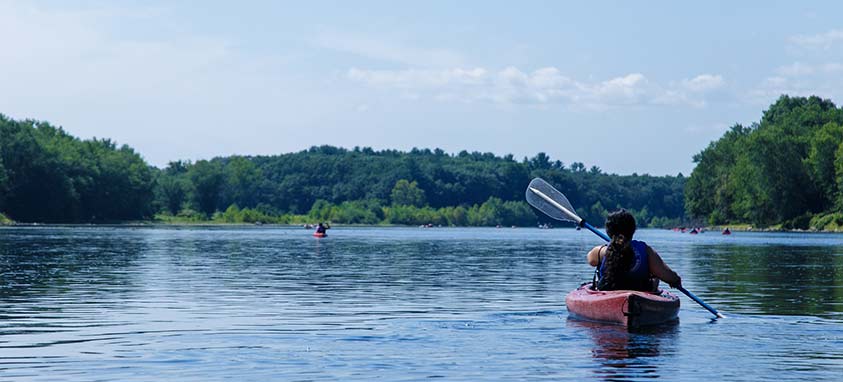
It has been scientifically proven again and again that getting outside and a proximity to greenery promote mental health and general wellbeing. Whether it is actively kayaking down a river as a group or passively enjoying the vistas from a team picnic at a brewery, just escaping the office for some greenery and fresh air has benefits for employees.

3. It’s a Mobile World, Take Advantage 

At Sourced Adventures, we use Wi-Fi equipped vehicles to make sure our clients can get work done on the way. With mobile hotspots, you can even take work onto the water. Just last week we even had a brave finance exec who took a laptop with him into the kayak and was doing emails while floating down the Delaware River!

4. Employee Retention

In today’s competitive hiring market, companies are doing whatever they can to create an appealing work environment for prospective employees. We have corporate clients who take their teams out on a rewarding incentive trip once per quarter. That could be skiing and snow tubing in the winter or kayak and wine and rafting in the summer. Taking it outside the local bar really sets these companies apart, something that employees notice and appreciate.

Matthew Kingsbury is Director of Sales & Operations at Sourced Adventures.

Smart Meetings is reporting on all the excitement at the IMEX America 2017 trade show, taking place Oct. 10–12. The first day of the seventh annual show was filled with incredible booth displays, great networking and business opportunities—not to mention lots of fun.

IMEX America, held in Las Vegas at Sands Expo and Convention Center, is the meetings and events industry’s premier trade show. If you missed it, check out our footage of Day One highlights, and stay tuned! There’s still much more to come. And if you’re at IMEX America, come say hello at booth #A3213—we’ll make you a Smart Meetings cover star!

Smart Meetings is continuing to report on all the excitement at the seventh annual IMEX America trade show. Our report from Day Two features every bit of industry buzz at Sands Expo and Convention Center in Las Vegas. Marin and the team navigate through innovative technology that’s taking booths by storm and exhibits which have really kicked things up a notch. Networking continues to form and develop bonds. There’s only one day left, but we’ll keep you updated with the inside scoop. And if you’re here, swing by booth #A3213—we can’t wait to see you!

What Google and WWE can Teach Event Planners About Effective CSR

In 2015, Google launched its Building a Better Bay Area campaign by investing more than $5 million into non-profit organizations in the area, with a unique twist.

Rather than allocating the money themselves, the company installed large, interactive posters in public places, allowing the general public to decide where to send the money. This allowed people to take the time out of their day to learn about some local causes and feel as though they were making a difference without spending a dime—although the familiarity and warm feelings often led to individual contributions as well.

Similarly, major sports and entertainment giants like the National Football League and WWE have embraced the breast cancer charity, Susan G. Komen for the Cure, during Breast Cancer Awareness Month.

Within the NFL, gestures have included pink ribbons on the ball, pink cleats, wristbands, gloves and towels, as well as the sale of pink merchandise, with the proceeds going to the charity. In WWE, the company turns one of its wrestling ring ropes pink for the month and sells pink versions of company merchandise.

What can we learn from these massive marketing successes about incorporating corporate philanthropy into the experiences we design at live events?

1. Make it Visual

Fundraising doesn’t have to be pink (or even a color). Pink is just one example of how philanthropy can be compellingly and tastefully woven into an event. Visuals are a fun way to emphasize the theme.

2. Make it Fun

A theme can also be communicated through other modes of entertainment such as speakers, videos, activities and more. A consistent message delivered in a way that delights will stick with the audience.

3. Make it Interactive

The crowdsourcing in Google’s campaign and the call to support the cause by buying pink water bottles helps an audience feel invested in the cause. The purpose behind any experiential marketing campaign is to bring customers closer to a brand, allowing them to immerse themselves in a memorable event or experience. This consequently builds a positive association for the customer, who will link the brand to a positive memory engineered by you for a greater good.

Experiential Philanthropy Doesn’t Have to be Hard

Meeting and event planners are compelled to be wizards at lots of things. But in a world where every event has the latest gizmos, crafting experiences that stand out can be challenging. One solution is to work with an exhibition design company that specializes in creating this type of interactive experiential marketing to generate positive interactions, while allowing your organization to fulfill its social responsibilities.

“Increasingly, consumers are looking for solutions to their anxieties about making the globalized world a better place,” Philip Kotler, Hermawan Kartajaya and Iwan Setiawan write in their bookMarketing 3.0: From Products to Customers to the Human Spirit. “In a world full of confusion, they search for companies that address their deepest needs for social, environmental and economic justice.”

Incorporating a philanthropic cause into your meeting or event is a win-win-win situation. It endows attendees with a better sense of purpose, immediately makes your event more desirable (therefore successful) and, most importantly, helps your cause get the attention and resources it needs.


Reno Macri is a founder and director of Enigma Visual Solutions, a leading exhibition and event company, specializing in retail designs, interiors, graphic productions, signage systems, office refurbishment, event branding, modular exhibition stands and much more. He specializes in experiential marketing and event productions. He enjoys sharing his thoughts on upcoming marketing ideas and design trends. Feel free to follow him on Twitter.