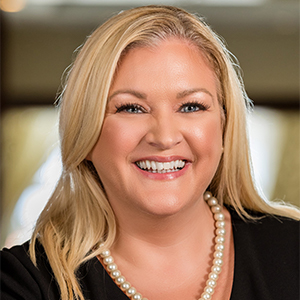
Clodagh Larkin

The Ritz-Carlton, Half Moon Bay in California appointed Larkin to director of meetings and events. She comes from a role as director of meetings and special events at The Ritz-Carlton, Aruba, where she was given the Global Event Management award. Shal also worked at The Ritz-Carlton, Fort Lauderdale; The Ritz-Carlton, Lake Tahoe; and The Ritz-Carlton, Powerscourt in Dublin.

Emmie Brown

Brown has been promoted to president of Southwestern Speakers, a division of Southwestern Consulting. She is also a senior partner with Southwestern Consulting. Brown has worked with Southwestern Family for 19 years.

Leiya Cohen

Cohen is general manager at Dream Midtown in New York City. Cohen recently served as hotel manager for The Time New York. She has held numerous managerial roles at Millennium Premier New York Times Square, Conrad New York Midtown; as well as restaurants, including Gordon Ramsay at The London at MEGU New York.

Edean Kam

Radisson Blu Mall of America in Bloomington, Minnesota, promoted Kam to general manager. For the last seven years, Kam worked as hotel manager. Prior to Radisson Blu Mall, she worked with Loews Hotels in Philadelphia as hotel manager. Before moving to the United States in 2007, Kam worked in a multitude of positions for Four Seasons Resorts & Hotels in Hawaii.

Karin Gillard

Credit: Sarah Peterson

CSI DMC welcomed Gillard to the team as senior account executive, where she will focus on the West Coast. Before CSI DMC, Gillard was director of catering and sales at Waldorf Astoria Las Vegas. Prior to that, she was an account executive for Kuoni Destination Management USA. She also has experience working in private event venues and other hotel properties. Gillard is based in Las Vegas.

Jon Davidson

Davidson is general manager for Chateau on the Lake Resort, Spa & Convention Center in Branson, Missouri. Before this, Davidson worked as vice president and chief operating officer for Shangri-La Golf Club, Resort & Marina in Monkey Island, Oklahoma. In his experience, Davidson has worked in various locations in the Midwest, including Cherokee Casino Resort/Hard Rock Hotel & Casino in Tulsa, Oklahoma and Regency Hotel Management in Sioux Falls, South Dakota.

Russel Storey

Storey is general manager for Cabrits Resort & Spa Kempinski Dominica. Before he joined the team in Dominica, Storey was general manager for Royal Maxim Palace, Cairo. He’s worked at other properties around the globe, including Kempinski Hotel Soma Bay in Egypt; Jordan Valley Marriott Resort & Spa in Dead Sea, Jordan; and Sheraton Park Tower Knightsbridge London, where he started his career.


The King and Prince Beach & Golf Resort on St. Simons Island, Georgia, has been recognized with prestigious awards from a variety of meeting industry publications.  Guest and meeting planner reviews have earned the resort Trip Advisor’s Certificate of Excellence for nine consecutive years.  St. Simons Island has been praised as one of the best beach towns in the country, as by Conde Nast Traveler, Southern Living Magazine, USA Today and Travel + Leisure.

The oceanfront icon has a rich history, spanning 85 years.  It opened in 1935 as a private club, served as a Naval radar school during World War II, and has evolved through the decades into a meetings-minded destination.  From events for hundreds to retreats for a dozen, the resort’s conference services team plans and executes flawlessly. The property’s diverse ocean-side function spaces accommodate groups of up to 270 for a banquet, 300 people theatre style, and 220 in a classroom set. When business brings an appetite, the culinary team excels with innovative menus.

The Resort boasts an array of accommodations, with 78% offering views of the Atlantic Ocean.  Hotel rooms are king or double queen-bedded, and are located in the Main Historic Building, poolside Oceanfront Building, and the Oleander Building.  Our 47 two and three-bedroom villas include full kitchens and living/dining rooms.  Resort residences range from one to five bedrooms, and many have spacious indoor or outdoor entertaining spaces, making them ideal for hospitality suites.

ECHO, the resort’s restaurant and bar, offers innovative southern coastal cuisine, cocktails, craft brews, and an extensive wine list.  Guests enjoy all-day indoor/outdoor oceanfront seating, as well as weekend entertainment.  The ambiance is casual and friendly – perfect for gathering after a day of meetings.

The award-winning King and Prince Golf Course lies among stately live oaks and vast salt marshes on the north end of St Simons Island.  The course’s 4 signature holes are stunning islands within the marsh.  The exceptional Golf Course staff can assist with organizing tournaments for Resort groups.

Other Resort amenities include 5 oceanfront pools, massage therapies, tennis, a business center, and an exercise facility.

St. Simons Island offers many experiences, which attendees may enjoy on their own or as a group.  Team building activities include water sports, fishing and shrimping expeditions, beachfront yoga, and more.  Quaint, narrated trolley tours highlight St. Simons Island history and landmarks.  Visitors and locals alike enjoy searching the island’s many shops, for souvenirs, apparel, original artwork, and more.  Your conference services manager will help you construct an itinerary that pleases your attendees, and features the best of St. Simons Island.

St. Simons Island is accessible by car or air. Island exits from I-95 are just 15 minutes away. The Jacksonville International Airport and the Savannah/Hilton Head International Airport are both approximately an hour away. Brunswick Golden Isles Airport is a quick 20-minute drive, with three incoming Delta Connection flights daily.

Destinations International, one of the largest sources of official destination organizations, convention and visitors bureaus, and tourism boards, announced that Gail Mutnik will join the company as the director of meetings. The company announced this in a press release.

Mutnik’s placement will begin on March 19. This is a newly created position for Destinations International. Mutnik has worked in the meetings industry for more than three decades.

“We are thrilled to welcome Gail to the Destinations International team,” said Don Welsh, president and CEO of Destinations International. “She brings more than 30 years of association experience and we look forward to her expertise and leadership on our team.”

At Mutnik’s consulting company, Gail Mutnik Solutions, she worked with association volunteer committees on the development and content of large annual meetings. Prior to consulting, Mutnik worked for American Association for Clinical Chemistry as well as American College of Obstetricians and Gynecologists.

“I am honored and thrilled to be joining such a prestigious organization,” Mutnik said. “I look forward to contributing to the growth of the meetings and events department and for Destinations International members worldwide.”

Mutnik has served on several PCMA committees and panel discussions. She also chaired the Medical Meetings Advisory Group.

Juggling the demands of meeting and event planning is difficult, but new business technologies can make even the most hectic schedule easier to manage. Let’s go beyond the essential event planning tools to find organizational apps that you might not have considered.

Here are six apps to make your day easier.

1. Doodle (Free)

Great for: Scheduling

Finding a time for more than two people to meet can be a challenge. We all know the pain of the 20+ email threads trying to schedule a group meeting (or meal!). Doodle allows you to create a poll with dates, times and descriptions for people to vote on what suits them best. You can even sync doodle with your calendar.

2. SoapBox (Free)

Great for: Meeting agendas

Whether it’s an internal or external meeting, you’ll need an agenda and notes that don’t get lost in your inbox or notebook. The SoapBox app allows you to build a shared agenda, take notes and summarize next steps for your meetings. Hold teams, clients, vendors and yourself accountable by ensuring you have documentation for your most important conversations. Bonus! SoapBox integrates with Slack, so you can add agenda items as soon as they pop in your head by chatting with the SoapBox bot.

3. Flow (Free Trial)

Great for: Project management

There are a zillion project management tools out there, but Flow offers a fuss-free and intuitive interface that can accommodate a one-woman/man show, or an entire team. Using their kanban boards, you can separate each meeting or event into its own project, assign tasks and visually manage your timelines. Bonus! Flow also integrates with Slack, so you can create tasks by using the flow task command.

4. Google Keep (Free)

Great for: Lists

If you’re using G Suite, Google Keep needs to be in your meeting planning toolkit. Create and categorize lists for free, and access them seamlessly from Gmail. Coupled with a project management tool for the bigger tasks, this app is perfect for the minute details that go into managing day-to-day to-dos. Categorize lists by meeting or event, and share them with any G Suite users.

5. Hubspot CRM (Free)

Great for: Managing your contacts

Customer relationship management tools aren’t just for sales teams. As a meeting planner, you’re constantly interacting with different people throughout the day—think vendors, team members, coordinators… Hubspot’s CRM is a great relationship management tool for all of your contacts. It’s easily customizable for large teams or smaller scale operations and it becomes even more powerful if you’re pairing it with HubSpot’s marketing automation and content platforms.

6. Slack (Free)

Great for: Chatting

Slack offers a quick, easy-to-use way to communicate with your team and clients. Create channels and groups, or just use the bare basics for getting in touch with people fast. Use their free video calling functionality for impromptu chats. Bonus! Slack integrates with all of the above tools.

Whether you are part of a large team or flying solo, meeting planners would be lost without honed organizational skills. Luckily, there are plenty of apps for that. What are your go-to tools for keeping on top of your day-to-day?

Shannon Maloney is SoapBox’s Digital Marketing Manager. She loves yoga, reading and showing people how to have amazing meetings.

Marriott International is growing by all measures—revenue, number of rooms and franchise fees—just not as quickly as last year, all things considered, and 2020 earnings could be affected by slow-downs from coronavirus.

See alsoPlanners Proactively Address Coronavirus Outbreak

Fourth quarter results released this week showed that the hotel brand continued to increase in revenue per room (RevPAR) and added 78,000 guest rooms, with another 3,050 hotels and 515,000 rooms in the pipeline. RevPAR rose 1.1 percent, with more growth outside North America (1.5 percent) than inside Mexico, the United States and Canada (1.1 percent).

During the last three months, the company reported net income of $279 million, a 12 percent decrease from the previous year, but when adjusted for depreciation, amortization and other expenses, that number went up to $517, a 4 percent increase. The adjustment included $7 million of insurance recoveries related to the Starwood data security breach disclosed in November 2018.

Arne M. Sorenson, Marriott International president and CEO, pointed to rooms growth of nearly 5 percent, higher guest satisfaction scores and RevPAR index gains in a low RevPAR growth environment as proof that the business model is working. “Our fee-driven, asset-light business model and successful asset recycling continued to generate significant excess cash, allowing us to return a total of $2.9 billion to shareholders during the year,” he said.

Focus on Loyalty

Sorenson singled out the company’s new, unified loyalty and experience program as part of the reason for the growth. “Marriott Bonvoy is driving market share at our hotels by leveraging our industry-leading distribution and powerful brand portfolio,” he said. Loyalty members accounted for 52 percent of occupied rooms in 2019, a 250-basis point increase year over year.

A Cautionary Note

Sorenson warned that impacts on Asia-Pacific properties from coronavirus restrictions could lead to flat to 2 percent RevPAR growth for the year. “I am particularly proud of our Asia Pacific team as they assist affected customers and fellow associates,” he said.

He speculated that low occupancy rates there could reduce the projected $4 billion estimate (a 5 percent increase) for total 2020 franchise fee revenues by $25 million.

For the meetings industry, the ripple effect of the ongoing health crisis known as COVID-19, or new coronavirus, keeps expanding—and where it stops, nobody knows. Increasingly, experts say it may be a rocky ride for the industry.

Headline developments have focused on the outright cancellations of high-profile events, such as Mobile World Congress, which was to have convened in Barcelona, Spain, with 100,000 attendees this month; Cisco Live in Melbourne, Australia, with 8,500 attendees in March; and Facebook’s Global Marketing Summit in San Francisco, with 4,000 attendees, also in March.

Another San Francisco event, 2020 RSA Conference, saw its Platinum sponsor, IBM, pull out this week over coronavirus concerns. The cybersecurity show says seven other exhibitors have cancelled, six of them from China. Some 40,000 attendees are registered.

Yet the impact of the virus is quickly spreading far beyond these highly publicized gatherings.

More: How to Protect Your Attendees from Coronavirus

Hospitality Jumps into Action

Wuhan International Convention and Exhibition Center, at ground zero of the virus outbreak, is now a makeshift hospital. At events with international attendees, new protocols and safeguards are being created and instituted. Hotel chains, such as Marriott International, are waiving cancellation fees at their properties in mainland China, Hong Kong, Macau and Taiwan.

“Organizationally, we are experiencing challenges just because of flight pass-through—for an event in Bali that transfers through China,” says Beau Ballin, vice president for business development of CWT.

Valerie Bihet, founder of Vibe Agency, an event design and destination management company based in Miami, notes that, even while U.S. companies may not be traveling to China, or have locations there, the downturn in the Chinese economy as a result of the outbreak is already hitting their bottom lines. This has led to revisions in marketing budgets in the past few weeks, which in turn has led to the pause or cancellation of scheduled annual events and meetings, both internal and external.

Sectors such as food and beverage, luxury goods and technology are particularly impacted, she says.

“In times of crisis, the events industry is always one of the first to be affected,” Bihet says. “I have five or six conventions completely on hold. My team was wondering why, since we have no events in Asia and no Asians coming to our events.” Blame worry over continuing economic fallout, she says.

After a strong first quarter, the next two “will be tough,” Bihet predicts. “Maybe by the last quarter of the year, it will be better. We’ll see.

“Meeting planners need to think, OK, what is my plan? How do I reorganize myself? How do I redo my year?”

Far-Reaching Implications

More: Planners Scramble in Reaction to Coronavirus

Nothing seems to be immune from the virus’ icy hand. Apple made news this week for cutting its sales forecast because the iPhone maker is highly dependent on Chinese factories, but what about swag bag staples and promotional giveaways such as apparel? They are overwhelmingly made in China, too, and quarantines throughout that country are wreaking havoc on supply chains. According to news reports, electronic products—thumb drives, earbuds, portable power rechargers and like—could be delayed in production and delivery for months.

PCMA has posted a COVID-19 information page. It shares information by a lawyer (“Is Your Event Covered?”), offers a crisis management and recovery plan, and has FAQs to guide meeting professionals in taking precautions and planning to cope with the virus’ effect on their events.

A Vital Part of Recovery

“It is becoming increasingly apparent that the business events industry is directly feeling the effects of this outbreak,” wrote Sherrif Karamat, CAE, PCMA’s president and CEO. “PCMA will help convey the message that business events are not only safe, but a vital component to widespread economic recovery. We have been in ongoing discussions with business events leaders in China to collaborate around the development of a plan. This will be based, in part, on learnings that came out of SARS and H1N1 recovery plans. We will also share crisis response research form the PCMA Foundation and engage PCMA’s global network of partners to support this effort.”


Seventy-two percent of respondents in a recent poll say that real-time texting would further improve their customer support experience, suggesting that it would be beneficial for meetings industry professionals to enhance their use of the communications tool.

The survey was completed by 500 consumers from ages 18 to 64 across the United States by UJET Inc., a provider of customer support communications and solutions. Questions focused on e-commerce, transportation and on-demand food delivery. The results were released in a new report, Optimizing Channels for Customer Support.

Customers Prefer Text-Based Interaction

Although millennials and Gen Zers are leading the way toward more text-based communication with live agents, customers across all ages believe texting customer support with inquiries would best improve their customer service experience in the future. Considering 90 percent of adults over 50 are using smartphones, it makes sense that a more convenient form of customer service communication will be adopted, no matter the age group.

Almost three-quarters (72 percent) of respondents said they would prefer to text with an agent in real time, as compared to 42 percent who would prefer to talk to agents via live video.

Email support, and use of in-app messaging and chat, both came in second (70 percent) as the method of communication respondents thought would be most helpful in the future; while email support is not quite as immediate as text messaging, it is almost as convenient.

Being able to visually show an agent what you’re seeing can be incredibly helpful. Two-thirds of respondents favored the idea of uploading and sharing a photo so the rep can visually understand the problem.

Nothing Beats the Human Touch

There are a handful of ways for customers to interact with customer service reps, but those methods of communication mean nothing if the customer doesn’t have a satisfactory experience. When asked what element of customer support has the greatest influence on the overall support experience, “helpfulness of agent” was at the top of the list, voted up by 19 percent of respondents.

Talking on the Phone Remains No. 1

Although respondents believe text and in-app messaging will make their experience better, respondents are much quicker to pick up the phone (46 percent) or send an email (32 percent) when contacting customer support; a slightly higher percentage is likely to contact an e-commerce company, such as Amazon, by phone (53 percent) or email (36 percent).

These two have long been the main form of communication for some time, so it makes sense that they will remain the primary modes of communicating with customer service.

Increasing attendance remains a top priority among meetings professionals, but where the attendance is coming from may change in the coming year, according to a study by Omnipress “2020 State of the Conference Industry Report.”

The study, which consisted of both association and corporate professionals, found stagnation in association membership for the past two years, but respondents said conference attendance and membership grew 32 and 46 percent, respectively—making what gets presented there a critical part of an organization’s strategy.

More: IMEX Breaks Attendance Records in Ninth Year

What Does Conference Content Look Like?

Content, in its many mediums, is one of the largest components of any conference. After all, learning and education is the reason most people attend. Meetings professionals are increasingly turning to digital formats to deliver the information.

Seventy-four percent of respondents indicated they are using mobile event apps, while 86 percent reported using web-based digital material for their content. According to the survey, 42 percent of respondents saying they use two formats, which includes mobile apps, web-based content, printed materials and flash drives; the online/mobile app combo is the most popular way to provide session materials.

This is the first year since 2016 where there are fewer changes in how content is being distributed, as there has not been an increase in the average number of formats associations are providing at conferences. According to the study, this is due to two reasons: most meeting planners see little to no increase in their budget for content and attendee preferences are less dramatic than in previous years. In fact, 75 percent of respondents reported seeing less demand for printed materials.

More: New Videoconferencing Tool Stimulates Engagement

What Content Challenges Do Planners Face?

Handling last-minute content remains the most common challenge for meeting professionals as the task of keeping all those pages up-to-date has proved time-consuming. While this problem has been an ongoing one, a new problem facing planners is using content to maintain visibility and enhance further learning.

As millennials and Generation Z enter the workforce and baby boomers make their way out, another hurdle is recruiting younger members. A majority (53 percent) reported that their organizations are currently strategizing how to address the needs of the millennials, while 39 percent of those planners say are currently addressing the needs of Generation Z.

Time for a pop quiz down-under style. What is the first thing that comes to mind when you think of bringing a group to Australia? Is it the iconic Melbourne Convention and Exhibition Centre, picturesque Sydney harbor, outback tours and Barossa Valley’s award-winning Shiraz wines? Perhaps, after you put aside the image of baby kangaroos running away from out-of-control fire. But did you know that only three percent of the country (which by the way is the size of the United States) was affected by the fires at the end of 2019? And those bush areas are quickly recovering.

Chris Allison, head of commercial partnerships, The Americas, with Tourism Australia was bringing that message on a road trip of the United States to clear up any misconceptions that might be lingering after all the negative television coverage. “The reality is that we are open for business and we are the same great location and an incredible value right now,” he said to a full room of travel brokers at Hyatt Centric Fisherman’s Wharf San Francisco on Wednesday night.

“Most of the tourist areas were not affected and 150 miles of coast never saw any smoke,” he said. Very few groups cancelled as most operators were back in business within days, even if they had to adjust their itinerary based on the wind patterns.

Now the hard work of changing public perception begins. A big sale sticker might help. In addition to deals from airlines, hotels and tour operators hungry for business, the exchange rate is now a bargain at 67 cents on the dollar.

A New Challenge

The appeal to tourists is even more critical now as the country is getting hit again by the sudden cut-off of tourists from its largest source of visitors as China is not letting any groups depart due to COVID-19 (coronavirus).

Allison reported that many groups are looking for ways to help. Tourism Australia is putting together CSR and education activities to help visitors connect with the community. But the best way to help, he said with a grin, is to bring your group and come say g’day in person.

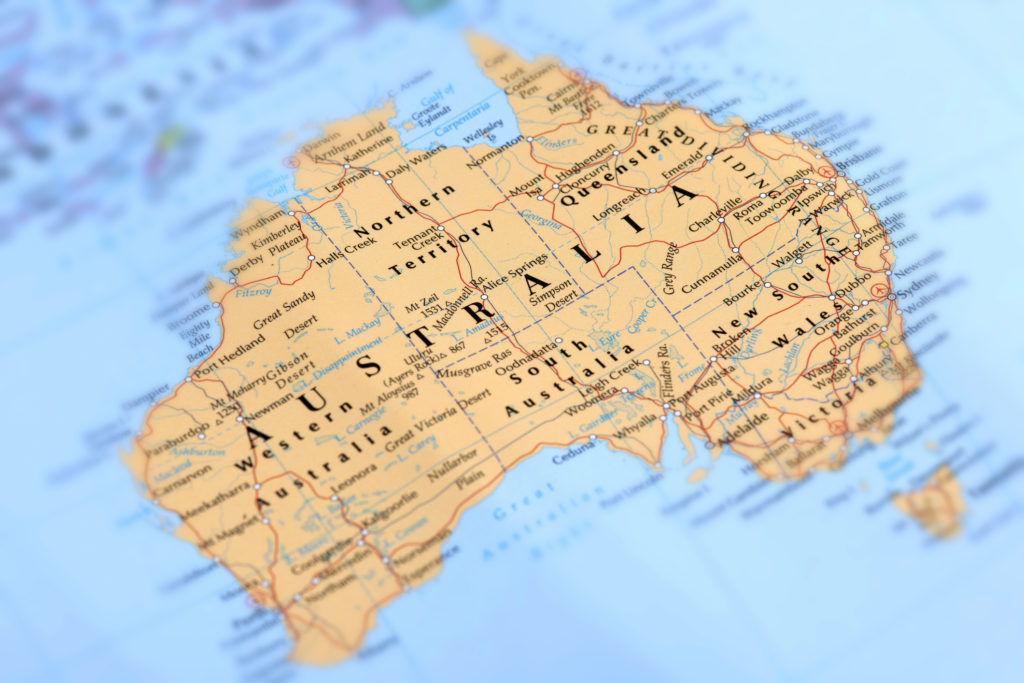
Map of Australia. Selective Focus.


Valuing experiences over material items has been a growing trend and shows no signs of slowing down, according to a recent Airbnb travel trend survey, What’s Next in Travel: Nature Treks, Trips to the Past and Conscious Dining, in which 57 percent of Americans said they prefer to spend on travel rather than things.

In the study, which consisted of 17,670 travelers across the globe, participants were surveyed on the types of trips they take and what they look for during those trips. Thirty-seven percent plan to increase their spending on experiences in 2020, with millennials (48 percent) and Generation Z (46 percent) leading the pack. American Gen Zers are the likeliest to spend the most money on vacations, whereas baby boomers are likely to spend the least.

Related: Airbnb to Ban Party Houses, Enhance Other Security Measures

Nature Travel on the Rise

One-quarter of Americans and nearly one-third of millennials (32 percent) plan to take outdoor trips in 2020. Year over year, Gen Zers and millennials are seeking out experiences in nature, Airbnb reports. Natural settings, such as igloos and campsites, have gained much popularity, and are up 83 and 171 percent, respectively.

As people become more aware of the toll too much technology can have on the body and mind, they are seeking experiences that give them an opportunity to disconnect and slow down. The survey showed that 40 percent of Americans like to spend most of their vacation time simply relaxing and not doing much, and one-quarter of them want to engage in activities that get them away from technology.

Travel Small

Minimalism has not only taken hold on the domestic front, but it has also made its way into travel. Shorter trips and smaller spaces are on an upward trend.

More than half of Americans would rather spend their money taking long weekend trips, and those trips are taking place in smaller abodes. Stays in shepherd’s huts and tiny homes have been trending upward from 2019 to 2020, growing by 112 and 85 percent, respectively.

Food as a Means of Connections

Veganism has taken much of the world by storm, as shown in the study. Experiences offering vegan options are up 579 percent, while those offering vegetarian options were up 570 percent in 2019, compared to the previous year. High-carb eating is also on the rise, with baking (up 155 percent) and pasta (up 88 percent) showing an increase in bookings in 2020.

Food always has been a great way for people to connect and is one of the many reasons people travel. In fact, according to Airbnb, food and drink experiences are the ones most booked by foreign travelers to new countries and 35 percent of Americans want to spend their vacation time enjoying new food experiences.