You are not alone. That’s the message venue partners are giving to meeting professionals during the coronavirus (COVID-19) crisis, as International Association of Venue Managers (IAVM) held its first Pandemic Outbreak Industry Advisory Group meeting this week.

Participants included Centers for Disease Control and Prevention, U.S. Travel, Department of Health and Human Services and American Red Cross. Included in the discussion were leaders from International Association of Exhibitions and Events, MPI, Events Industry Council and Smart Meetings.

MoreYour Coronavirus Resource Guide

“Much is unknown about how the virus that causes COVID-19 spreads. However, it is our responsibility as an industry to come together to not only ensure we provide safe and healthy environments within all public assemblies, but to also put the overall concern of this outbreak into perspective,” was the official description of the group’s goals.

As members chimed in with updates from their corner of the industry, it became clear that the best way to add value was to streamline and share communication. That clearinghouse was designated as IAMV’s Coronavirus Updates page.

Topics will include:

  • Cancellations and refunds
  • Business continuity and recovery
  • Ticketing
  • Cleaning (deep cleaning)
  • ADA
  • F&B and retail
  • Health (hand washing, sick workers, quarantine, etc.)
  • Work from home (WFH)
  • Supply chain subcontractors
  • Engineering operations
  • Security megashelter and coronavirus

Combatting a Pandemic of Fear

“There remains a pandemic of fear, and there is much mixed information, so in order to understand the extent of its impact, we must continue to prepare, plan, and make recommended precautions, utilizing all available resources,” said Mark Herrera, director of education and life safety with IAMV.

See alsoHumanity Rocks: Helping Each Other in the Time of Coronavirus

The goal is to identify best practices to prepare, plan, recover and message, not only for the current outbreak but for all communicable diseases.

“We have to start working on recovery efforts now,” he said. Participants attested that many convention centers and facilities are using the time to deep-clean their properties in order to open up like new again.

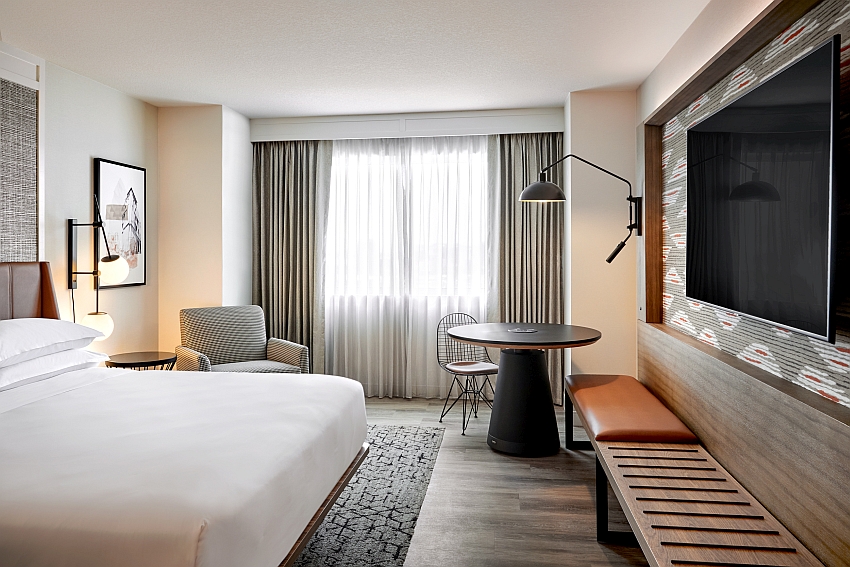
The embodiment of Sheraton’s new “Where the World Comes Together” tagline, Sheraton Phoenix Downtown is poised to become one of the Southwest’s top destinations to come together for meetings and events. Now in the midst of a massive transformation, this visionary hotel will place attendees at the epicenter of a blossoming arts and culture scene, just moments from the Light Rail and a short ride from Phoenix Sky Harbor International Airport.

As the newest, complete-room product in all of downtown Phoenix, the hotel will revolutionize style and comfort, both for work and relaxation, with 1,003 guest rooms welcoming abundant natural light. But with innovative new spaces, unmatched event expertise and personalized meeting programming, Sheraton Phoenix Downtown is becoming more than just a hotel—it is transforming into a place where guests connect, minds are expanded, and attendees can harness the power of the collective.

Optimize your time together
All meeting space is contained within two levels, with thoughtful design and logical flow that enables seamless event experiences. And with more than 110,000 square feet of total meeting space spanning 26 rooms, you and your attendees will enjoy unmatched flexibility, the latest meeting technology and the attentive Sheraton service you’ve known for more than 80 years. Catering menus created by a talented culinary team will transform the food and beverage experience, elevating everything from quick coffee breaks to grand events for up to 1,850 guests.

Feel welcome, and well-fed
A dynamic and versatile environment with functional décor, our reimagined lobby will welcome guests with new spaces to collaborate and connect, and Community Managers to help meet every need. Entertain the palate with a menu crafted from locally sourced ingredients at our signature restaurant. Or step into our elevated bar and coffee experience, where attendees can order fresh pastries and their favorite hot beverages in the morning, and small plates, creative cocktails and local craft beers at night.

Break for the collective
Guests and locals alike can reserve one of several tech-enabled studios. Each will provide a private, light-filled space that is thoughtfully designed for collaborating, meeting or brainstorming. And for longer sessions, mobile order will be available to keep you fueled and the ideas flowing.

Find some quiet time outside of the guest room to listen to music, connect with colleagues or jump on a video call. New lobby booths will offer an unexpected level of privacy. Or just relax in comfort at the Sheraton Club, located in the new lobby and designed to meet the needs of early arrivals and late departures, with business lockers included for your convenience.

Get extra perks for being first
Sheraton Phoenix Downtown is offering Marriott Bonvoy™ bonus points and additional incentives for events booked in 2020 and beyond. For more information contact Debbi See, Director of Sales, at 602-817-5350.

Sheraton Phoenix

Since the onset of this current health crisis, it’s been noted that Isaac Newton did some of his best work while “sheltering in place” at home during the Great Plague of London in the 1660s. Hopefully, meeting professionals everywhere are finding their own ways to remain productive.

But, as you may soon discover, being confined to home offices and virtual meetings can feel…limiting. Fortunately, times of crisis also tend to bring out the better instincts in people and even corporations (which are run by people). Cynics can attribute some of the following wholly to smart marketing—attempts to tempt the homebound with more attractive introductory offers—but a more hopeful interpretation is that we have begun the process of coming together again.

Read All About It!

Timely, accurate information is critical in this fast-moving pandemic. Many newspapers—whose journalists are braving the virus daily to continue reporting the news—have temporarily taken down their online paywalls so nonsubscribers have either full access or access to coronavirus stories.

Major media sources doing so include:

But there comes a time when your brain wants to wrap itself around something else—like a killer pie recipe. Many public libraries offer RBDigital to read hundreds of magazines online at no charge. We’re talking titles such as Cook’s Illustrated, Men’s Health and Wired. Go to your library’s website and look for it. While you’re at it, check for a path to check out free ebooks and audiobooks, too.

Parks are Open!

Even in areas of the country, such as Northern California, where sheltering-in-place has been put into effect, the great outdoors is open, and people are being urged to safely take advantage of it. To that end, National Park Service is waiving entry fees at most national parks, while still cordoning off areas or attractions, such as visitor centers, where masses of visitors tend to congregate.

Free Apps for Work and Health!

Does kid noise, the hammering of a Ms. Fix-it next door or another distraction keep you from being your best at home?

Dark Noise, an iOS app, is a repository of high-quality background noises that includes white noise, rain, campfires and more than 30 others. It usually costs $3.99 in the App Store, but the TestFlight beta is now free during the coronavirus crisis. “Maybe it’ll help people cope if they can simulate the sound of an office space or coffee shop while stuck in their homes,” developer Charlie Chapman said on Twitter. You can join for free here.

If your gym is shuttered, no problem. Join the virtual gym. Peloton is among those companies extending its free trial period—in this case, to a full 90 days. Its app works on iOS, Android and Amazon Fire TV, and provides a host of live and on-demand classes that include outdoor running, treadmill, strength training, HIIT, yoga and meditation. After the trial, a monthly sub will cost you $13 if you choose to continue.

Planet Fitness is another option. It’s offering free daily home workouts streamed live on Facebook at 4 p.m. PT/7 p.m. ET. The company’s app for iOS, which contains hundreds of workouts, is also free for download.

You can also find numerous mediation and yoga for free on YouTube.

Culture for Nothing!

You’ve probably taken virtual tours of hotels and convention centers, so why not a museum? Hundreds of the world’s museums are yours to browse on Google’s Arts & Culture collection. When else would you be able to check out Nagoya City Art Museum in Japan?

New York Metropolitan Opera is streaming a daily encore performance in HD at least through the end of March, unless this free service is extended. Watch the streams in a browser or download a Met Opera on Demand app for Apple TV, Amazon Fire TV and Roku devices.

Binge Watch for Free!

Several of the lesser-known streaming services are trying to get your attention by sweetening their introductory free periods. Acorn TV, which streams notable United Kingdom programming, is giving away a 30-day free trial to customers who use the code FREE30 when signing up. Otherwise, it’s $6 per month or $60 a year.

Sundance Now, an AMC Networks channel that features acclaimed dramas and documentaries has a similar deal. Instead of a week’s free trial, you get 30 days with the code SUNDANCENOW30; thereafter, it’s $7 a month or $60 for a year.

Over at PBS, make up for the postponement of the Major League Baseball season by watching Ken Burns’ Emmy-winning documentary series Baseball for free on its site and all other PBS digital platforms.

Just watch to giggle and grin? Monterey Bay Aquarium is closed due to coronavirus, but you can watch critters frolic on 10 live webcams. “Until we reopen,” said Julie Packard, the aquarium’s executive director, “you can check in on the sea otters, sway with the kelp, find tranquility with the jellies and look for wildlife out on Monterey Bay.”

As attendees started second-thinking travel and meeting plans due to fears about COVID-19 (novel coronavirus), meeting professionals across the country scrambled to switch to a hybrid or virtual format for their gatherings. Yet, delivering the value of a conference via a video stream is not as easy as pointing a video camera at the keynote. By starting with goals and objectives and exploring emerging technologies, you can deliver a surprising amount of meaning for your stakeholders.

Smart Meetings polled leading event technology companies for tips on what to consider if you are virtual curious.

A Partner Deal

“We know nothing beats the value of face-to-face meetings,” says Jim Sharpe, CEO of meeting management solution company Aventri. “During this time, however, you don’t need to cancel your event. You can benefit organizers, sponsors and attendees in a different way,” he said.

He announced on Thursday that the company has been working on a partnership with three digital event solution companies to make virtual events easier to plan. Account managers will walk planners of large and small gatherings through the discovery process to determine their true needs—online networking, chat capabilities, surveying, content capture and distribution, closed caption, creative services, monetization or any other items on a virtual laundry list—and then help them connect with the partner. Aventri has vetted virtual providers and is actively working with Digitell, Evia and Intrado Digital Media.

A Three-Legged Platform

Think about what each audience wants out of the event, advises Jordan Schwartz, president and CEO of Pathable, which partnered with Zoom to enable virtual events integrated with app navigation and “Birds of a Feather” group video meetings. He described the raw materials of a standard meeting as a stool supported by the three legs of education, networking and commerce.

The education component might seem straightforward. Companies have been sharing information through webinars for a long time. However, doing so effectively takes some thought, Schwartz said. Without the captive audience in the ballroom, ensuring audience attention can be a problem. He recommends that planners include interactive components such as question-and-answer periods, polling and audience response. Additionally, keynote speakers need to be trained on the technology and techniques for delivering the presentation in the new format.

Even if the planner thinks software training or selling widgets is the only objective, attendees probably think spending time with their peers is just as important. “We are humans, and we crave the ability to look other humans in the eye,” he said. Group video meetings are one way to bring the “serendipitous hallway” back into the equation.

For the revenue side of the balance sheet, Schwartz envisions exhibitors interacting through the app in virtual trade show booths. Instead of having their badges scanned, attendees click into pages, where they can request information. Creating “office hours” can enable attendees to join exhibitors in a Zoom room from the convenience of their “sterile bunker.”

A Strategic Approach

“Proper planning and an overarching strategy are paramount to moving to a hybrid or virtual event,” counsels Louis Layton, vice president of digital products with the brand experience company Freeman. The strategy should consider the overall attendee journey and ensure a feature-rich experience delivered on single platform, regardless of the underlying technology. For example, information about sessions, speakers and exhibitors should be on a single portal that combines matchmaking, meeting scheduling and other types of chat and social interaction without having to connect to disparate systems, websites or download additional software.

Organizers also have to consider how content is delivered. Presentation style, length and audience interaction will all require best practices that are more aligned to the needs and attention spans of a virtual community. “Content should be delivered in shorter chunks, layered with interactivity throughout to keep attendees engaged.” Gamification, chat, social feeds and matchmaking encourage networking.

He also suggested including a virtual tradeshow for exhibitors to show off their products and services using multi-media solutions, including digital product showcases and virtual and augmented reality. Exhibitor portals with advanced search functions can help attendees easily find relevant information for product and services.

New Normal?

Pathable’s Schwartz does not think purely virtual meetings will ever replace in-person meetings entirely. “If any of us had a choice, we would hold a full meeting,” he said. But they could be the answer for some planners at least temporarily (especially if they can get their deposits back). “The overhead is orders of magnitude lower than for a full destination conference, so the relative ROI could be higher,” he said.

Freeman Senior Vice President of Digital Experience Michael Schaiman agreed to a point. “While it won’t replace an in-person opportunity, it certainly can be worthwhile to invest in a great experience for those unable to attend the event,” he said. “Organizers should be taking a long-term approach to these platforms. The virtual event will become a constant in the lives of all attendees—both live and remote. “

Aventri’s Sharpe is bullish on how the industry will perform once cautions are lifted. “We expect that after this clears, there will be an enormous pent-up demand. Think about the amount of business development, partnerships, learning that takes place at these events; we expect a swift and strong rebound,” he said.

However, Sharpe also predicts that meeting planners will want to incorporate more virtual elements in their formats after experiencing it. That includes enhanced communication for real-time updates, better leveraging of data to understand how people interact and real-time recommendations about who to interact with in the ballroom. “That is the next frontier in better meetings,” he said.
As the meetings industry scrambled to manage cancellations, hotel closures and shelter in place mandates in an attempt to flatten the curve on coronavirus (COVID-19), a group of audiovisual experts launched a petition to bring some relief. In less than a week, COVID-19 Federal Aid Package for the Events Industry Change.org petition posted by a handful of employees at Florida-based Digerati Productions collected more than 200,000 signatures.

MoreYour Guide to Staying On Top of the Coronavirus Outbreak

“Covid-19 virus is nothing like anything we have faced in our modern economic times,” read the petition. “The purpose of this petition is to sound the alarm on a massive economic catastrophe that is transpiring in our nation,” explained Isaac Rothwell, Digerati national director of operations. His company had started feeling the implications on European events about a month ago, but wasn’t seeing anyone addressing the pain affecting the small companies that make up the events industry.

His team whipped up a quick petition that outlined the vast number of roles and jobs in the events industry—meeting planners, account executives, sales, warehouse managers, producers, project managers, drivers, operations managers, executives, administrative staff, technicians, stage hands, general labor and service workers along with many more that work behind scenes to bring people and businesses together every day of the year never ceasing 24/7, until now…

It explained that the impact ripples through the transportation and hospitality industry (hotels, conference centers, restaurants, etc.) that rely on meetings to keep housekeepers, servers and hostesses employed. It also referenced the estimated $326 billion in direct spending Events Industry Council reported in 2016 study as a way to put into perspective the impact a sudden halt in meetings will have on the larger economy.

“The time has come that our industry’s livelihood must be completely sacrificed to save lives. Limiting the spread of the virus is the only way to slow and mitigate its massive health and financial impact on our nation,” the writers stated.

“Many tears of fear, anger and dread have been shed today, and in the previous month, by all our families knowing the monumental cost of our sacrifice to help save our nation from the spread of the virus. These are financial losses that will never be recovered.”

The authors compared the possible economic impact to the 2008 recession and mortgage market collapse and concluded. It could potentially dwarf that the industry is almost 2.5 times larger than GM.

“If not addressed quickly and forcefully, the financial ramifications will spread to other sectors of our economy as tens of millions of consumers will focus on survival spending habits,” he said.

Beyond the hard numbers of the industry’s losses is a two-fold scenario of economic collapse that will create collateral losses across all businesses and entities in the United States. Over the last 50 years, the economy has relied heavily on professional collaboration, information exchange and communication. Every day, millions of business leaders, professionals and experts from every field meet to learn and collaborate. Without those meetings, the country is looking at monumental setbacks in professional collaboration and business development. The authors called the live events and business meetings industry “the invisible fabric that ties our U.S. business culture together.”

The petition was posted on Facebook and quickly gained traction from production companies large and small, along with independent planners.

Draft Aid Package

It called for immediate federal action to “protect the live events and business meetings industry from total collapse and save the rest of our economy from collateral damage. We need congress and the executive branch to take immediate action.”

The aid package suggested includes:

  • Emergency Medicaid health insurance to cover uninsured business owners, contractors and laid-off employees
  • An additional $200 billion in low interest federally backed business liquidity loans
  • $100 billion in employee retention grants
  • The ability to submit canceled contracts as loss of income on our 2020 taxes.

“We plead with our elected officials to hear our warnings and cries for help as we not only see our own plight, but also the plight of the entire economy we will bring down with us.”

The next step, according to Rothwell, is to start generating letters to send to elected officials. “We have to be proactive,” he said.

On Wednesday, the Meetings Mean Business Coalition (MMBC) postponed the annual Global Meetings Industry Day (GMID) celebration planned for April 14 due to limitations on gatherings in the face of the coronavirus pandemic. The international day of advocacy, awareness and celebration of the meetings and events industry will instead be staged as an attempt to break the world record for largest virtual event ever held.

In 2019, GMID brought together meetings industry advocates from across six continents and more than 50 countries for 275 events that took the form of rallies, press conferences, panel discussions, educational events and award presentations.

MoreBest Practices for Just in Time Virtual Meetings

“In 2020, we were on track to exceed those numbers and generate record participation online,” according to the official announcement, which continued, “We are living in a world of great uncertainty, and while we look forward to the moment when everyone who wants to participate in GMID can do so safely and confidently, we are not there yet.

“When the day comes to reunite as an industry, we are confident that the world will exhibit a renewed appreciation for human connectivity and the power face-to-face meetings bring to people, businesses and communities.”

A note directed to MMBC ambassadors concluded: “As a coalition, we are still here to help and are leading the industry’s effort to promote fact-based decision-making and awareness of the industry’s commitment to serving the public.”

A Virtual Alternative

The hashtag #GMIDGoesVirtual immediately appeared in the #EventProfs Twitter feed, calling for celebrating GMID 2020 by breaking the world record for largest online meeting.

See alsoYour Coronavirus Resource Guide

With it came a warning: “We are at risk of losing our annual opportunity to do what we do best—come together as a community.”

This was followed by a call to action: “This year, GMID needs to be about resiliency, survival, tenacity and perseverance.”

Wednesday, 3/18/20: Piece has been updated to include more counties that have issued “shelter-in-place” orders.

To combat the spread of the Coronavirus (COVID-19) that has proliferated rapidly to nations around the globe, six San Francisco-area counties will issue a “shelter-in-place” order beginning Tuesday, March 17. The counties are San Francisco, Marin, Contra Costa, Alameda, Santa Clara and San Mateo.

Monterey County and Sonoma County both issued “shelter-in-place” midnight on Wednesday, The order is to stay in place until April 7, unless authorities decide to shorten or lengthen it. Sacramento County, along with Yolo County community of Davis and San Joaquin County community of Manteca, are advising residents to stay; while this is not a legal order, it is a strong directive.

Under this order, businesses are to close their offices, and their employees are to stay home and work from there, if possible. Among companies affected is Smart Meetings, which is based in Marin County.

“While we have entered a time of uncharted waters, not only in the meetings industry, but in the world as a whole, I want to assure you Smart Meetings is sailing steady to keep your business thriving,” said CEO and founder Marin Bright in a statement to planners. “We’ve chosen to remain open and operational by working remotely to provide you the best content, resources, and events, so you can stay successful and on top of your game now and for the future. Our team is actively monitoring health advisories closely to keep you safe and healthy, which is our No. 1 priority. We encourage you to check our website regularly.”

MoreHotels Relax Cancellation Fees, Vegas Properties Closing Temporarily Due to Coronavirus

Under the order, “nonessential” establishments, such as restaurants, retail shops, bars and gyms, will temporarily close. Residents will still be able to frequent grocery stores, gas stations, laundromats, banks and pharmacies. Government services, including police, fire, health care and transit will remain open.

Bay Area residents will be allowed to venture outside on foot to walk, exercise or take their pets out, while maintaining six feet away from anyone not a member of their household.

Nonessential travel will be prohibited under the new order, which means people who leave for vacation between Tuesday and April 7 will be considered out of compliance with the order, said Dr. Grant Colfax, head of San Francisco Department of Public Health. Homeless people are not subject to the order, but they are encouraged to seek shelter.

“We are in unprecedented times,” an official statement announcing the order said. “We know that people are hurting, financially and otherwise. This short-term pain will help us avoid much more severe long-term consequences.”

As of Sunday, there have been 258 confirmed cases of the virus in the area. On Monday morning, the number of confirmed cases in San Francisco reached 40, but few have been tested for the virus. The first confirmed case hit the city March 5. With 138 confirmed cases—an increase of 24 overnight—Santa Clara County has been hit with the most cases in northern California.

Following the closing of all 13 MGM properties along The Strip as a way to slow the spread of coronavirus (COVID-19) in Las Vegas, Governor Steve Sisolak issued an order to shut down all “nonessential” Nevada businesses, including 440 licensed casinos all over the state.

Culinary Local 226 Secretary-Treasurer Geoconda Arguello-Kline said in a Tuesday statement they support Sisolak’s decision but “demands every Nevada employer pay all of their employees (including part-time workers) and extend healthcare benefits.”

See alsoYour Coronavirus Resource Guide

Before Gov. Sisolak’s order, Las Vegas Sands Corp. announced it would close The Venetian, Palazzo and the Sands Expo and Convention Center. The brand said they would not issue furloughs or layoffs and employees will be paid during the closure. Wynn Resorts, which operates two properties in Las Vegas, will continue to pay employees for the next 30 days.

Caesars Entertainment Corp.’s full-time, part-time and regularly scheduled employees affected by the 30-day closure will continue to be paid for two weeks.

Many other casinos and hotels along The Strip stated they will continue to pay employees through the 30-day closure, including Station Casinos, which operates 20 casinos in Southern Nevada; Penn National Gaming, which operates Tropicana Las Vegas, The M Resort and Cactus Petes; and The Cosmopolitan of Las Vegas, which will continue to offer pay and benefits to full-time and eligible employees through March 31.

A statement by Sahara Las Vegas said they will “absorb costs to maintain health benefits for all individuals affected by these changes during this difficult time.”

The order will also affect 1,977 gaming licenses for establishments with 15 slot machines or fewer at convenience stores, supermarkets, restaurants and taverns.

Even in health emergencies and natural disasters, there can be silver linings. After the general public was barred from watching a major sporting event in Columbus, Ohio, because of fears of coronavirus (COVID-19), a satisfying meal appeared for more than 2,000 first responders in tornado-stricken Tennessee.

MoreYour Guide to Staying On Top of the Coronavirus Outbreak

Worry over COVID-19 caused Ohio Department of Health to ban the expected 200,000 spectators to Arnold Sports Festival—an annual multi-sport event consisting of professional bodybuilding, strongman, fitness and other competitions that began in 1989 and is named after Arnold Schwarzenegger. More than 18,000 athletes from 80 nations were expected to compete Mar. 5-8.

That left Greater Columbus Convention Center (GCCC) with a whole bunch of food and nobody to eat it. So, knowing that many Columbus restaurants would be donating to Columbus-area charities, GCCC decided to look elsewhere.

A refrigerated truck filled with chicken- and egg-salad sandwiches, green salad, fresh fruit, yogurt, vegetables, brown rice, potato chips and bottled water—more than a ton of food in all—headed for Nissan Stadium, home of the NFL’s Tennessee Titans, where the hungry relief workers were waiting.

MoreDestinations Prepare for Financial Hit from Coronavirus; Look Forward to Rebound

Three chefs from Levy, GCCC’s food service provider, accompanied the truck to unload, prepare and serve the meal.

“We’re accustomed to accommodating ever-changing client needs at GCCC,” said John R. Page, general manager of the award-winning facility. “We were proud to be able to send excess food to assist Nashville residents impacted by true devastation.”

As many grapple with anxiety over a pandemic, remaining optimistic amid unpredictability is crucial. Location has shown to have a significant impact on a person’s well-being and, since March 20 is International Day of Happiness, Smart Meetings is shining a light on convention centers in WalletHub’s 2020’s Happiest Cities in America list.

Northeast: Yonkers, New York—42

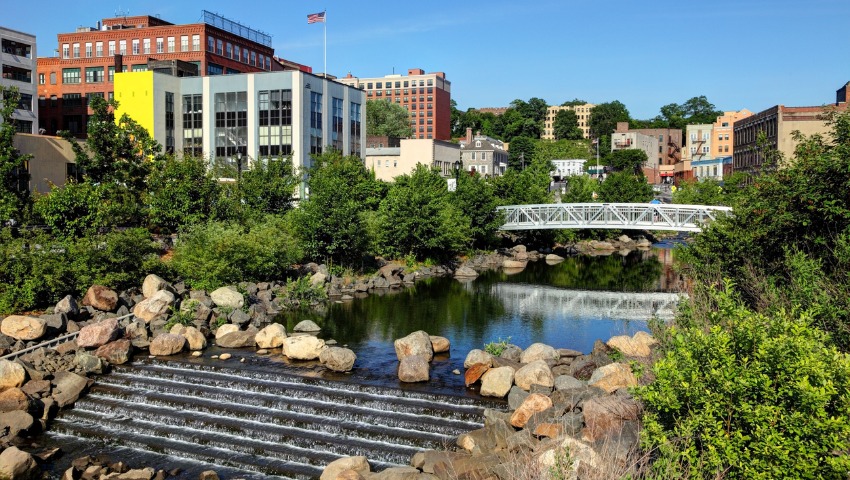
Yonkers, New York

When you think of New York, Yonkers isn’t typically the first thing to come to mind. However, the city was ranked #42 on the list and was named the second-safest city in America in 2019. Yonkers is a change from the fast-paced life of New York City, despite being so close to Manhattan. Many move to escape the hustle and bustle while others go to raise families in a less hectic environment.

Closest convention center: Jacob K. Javits Convention Center, commonly known as Javits Center, encompasses 1.8 million sq. ft. in Midtown Manhattan. It is easily accessible via a 30-minute train ride from Yonkers.

Southeast: Cape Coral, Florida—20

Cape Coral, Florida

With beautiful gulf coast beaches, flowing canals and family attractions, Cape Coral comes in at #20 on the list. Things may have an easy way of moving, but attendees will not run out of things to do. As one of the fastest growing cities in the world, happiness doesn’t fall far from the island.

Closest convention center: The Westin Cape Coral Resort at Marina Village is a waterfront resort next to Tarpon Point Marina. The Tarpon Point Ballroom welcomes with 12,500 sq. ft.

Midwest: Madison, Wisconsin—5

Madison, Wisconsin

Fun bars and breweries, magnificent fall foliage, and a sense of community are just a few of the things that make Madison the happiest city in the Midwest and #5 on the overall list. As Wisconsin’s capital city, it is overflowing with both cultural and historical attractions.

Closest convention center: Monona Terrace Community and Convention Center is in the heart of downtown Madison. It holds an enormous 250,000-square-foot, multi-level facility with sweeping lake views.

Southwest: Plano, Texas—2

Plano, Texas

A comfortable and reliable suburb just 19 miles north of Dallas, Plano scaled to #2 on the list. It has the lowest crime rate of any city in Texas and is in close proximity to big cities such as Dallas and Fort Worth.

Closest convention center: Plano Event Center hosts meetings from small to large in 86,500 sq. ft. It is conveniently located between two major airports and is just a short drive from an abundance of hotel options.

West: Fremont, California—1

Fremont, California

Coming in at #1 on not only the West Coast, but overall is Fremont, California. Full of diverse people and wonderful food, it is in the heart of bustling Silicon Valley. With many huge companies residing there, job prospects are high and the meeting industry is thriving.

Closest convention center: Santa Clara Convention Center’s 302,000 sq. ft. is one of the largest meeting and convention facilities in the South Bay.


You can find the complete list and more statistics here.

Top 20 Happiest Cities in America
1. Fremont, California 11. Bismarck, North Dakota
2. Plano, Texas 12. Fargo, North Dakota
3. San Jose, California 13. Lincoln, Nebraska
4. Irvine, California 14. San Francisco
5. Madison, Wisconsin 15. Overland Park, Kansas
6. Sioux Falls, South Dakota 16. Santa Clarita, California
7. Huntington Beach, California 17. Oceanside, California
8. Scottsdale, Arizona 18. Glendale, California
9. Santa Rosa, California 19. Anaheim, California
10. Pearl City, Hawaii 20. Cape Coral, Florida