Strategic entertainment doesn’t just fill a timeslot–it drives measurable outcomes for your attendees and your organization
Ask most event planners where they feel the most pressure to cut budget, and entertainment is often near the top of the list. It can feel like a luxury—the last thing in, the first thing out.
But after nearly five decades of producing live entertainment for corporate meetings and events across the country, we’d argue the opposite is true: strategic entertainment isn’t a line item to trim. It’s one of the highest-return investments a meeting planner can make. Here’s why—and how to make the case internally.
Entertainment is what people remember.
Attendees will forget the agenda. They’ll forget the breakout session titles. They’ll probably forget the food. But they will remember how the event made them feel, and entertainment is the single most powerful lever you have for creating that feeling.
Read More: Experiential Events: From Buzzword to Business Driver
No one talks about the appetizers on Monday morning. They talk about the moment the room came alive—the comedian who knew exactly what their industry felt like from the inside, the band that had the chief commercial officer dancing, the illusionist who left a table of skeptical executives speechless. These are the moments that create the narrative people carry back to the office, shaping how your entire event is remembered.
It shifts energy in ways nothing else can.
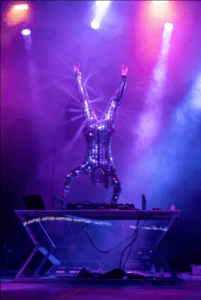
A full day of sessions—keynotes, panels, breakouts, workshops—is cognitively exhausting. Attendees arrive at the evening program depleted, and how quickly they re-engage depends almost entirely on what they encounter when they walk in the room.
Strategic entertainment can shift group energy almost immediately. A comedian can reset the room in twenty minutes. A high-energy band can move people from polite conversation to genuine connection in the span of a single song. An interactive performer can pull strangers into a shared experience before they’ve even introduced themselves. These aren’t small things—they’re the mechanisms through which networking happens, because people connect through shared experience, not scheduled mingling.
It creates the conditions for real networking.
Networking is one of the primary goals of nearly every corporate meeting and conference—and one of the hardest things to engineer. You can provide the time and space, but you can’t manufacture an organic moment of connection. Entertainment does.
Read More: Hilton ‘Why We Gather’ Report: Amp Up the Networking, Offer Choices
When attendees are laughing at the same thing, singing along to the same song, or watching the same unexpected performance, they have something to talk about with the person standing next to them. Interactive formats—live band karaoke, game show formats, audience participation elements—are particularly effective because they create shared moments of fun that accelerate the kind of bonding a cocktail hour alone rarely achieves. The best entertainment gives people a reason to turn to a stranger and say, “Can you believe that?”
It reinforces culture and organizational values.
Internal events are a direct reflection of how a company sees its people. When an organization invests in intentional entertainment experiences for its employees, it sends a clear message: you are worth this. Coming out of the pandemic era, this proved genuinely powerful—events built around shared celebration helped companies reinforce that employees were valued.
That emotional resonance doesn’t disappear when the event ends. Companies that consistently create experiences their employees look forward to attending see stronger engagement, higher retention, and a cultural identity people feel proud to belong to. Entertainment is often the most visible expression of that investment.
It doesn’t have to break the budget to create impact.
One of the most persistent myths about live entertainment is that impact correlates directly with spend. It doesn’t. A comedian, mentalist, or interactive illusionist typically requires minimal production and can deliver one of the highest-engagement moments of an entire conference. Specialty experience stations and interactive elements can create memorable moments at a fraction of the cost of a full production.
The key is working with a consultant who understands your goals, knows the full landscape of options, and can identify where the entertainment dollar creates the most return — rather than defaulting to the most expensive or most familiar choice.
The cost of getting it wrong.
There’s a real cost to underinvesting or making entertainment choices that miss the audience. An act that doesn’t land, a performance that feels out of place, or an evening that simply doesn’t generate energy can undercut an otherwise well-executed event.
The most effective way to mitigate that risk is working with professionals who have both the talent relationships and the production expertise to ensure what looks great on paper translates successfully to the stage—and who know your audience well enough to steer you toward the right choice.
The bottom line.
Live entertainment isn’t a luxury add-on. It’s the mechanism through which energy is generated, connections are made, culture is expressed, and memories are formed. In an industry increasingly focused on demonstrable attendee outcomes, strategic entertainment is one of the clearest paths to delivering on that promise.
The planners who understand this aren’t spending more. They’re spending smarter — and their attendees are feeling the difference.
—

Carrie Couch is a senior event producer and entertainment consultant with EastCoast Entertainment (ECE), based in the company’s Atlanta office. She trained in dance at the University of Georgia, where she earned a BS.Ed in Dance Education. Upon graduation, she followed her dreams to Los Angeles where she taught at the renowned International Dance Academy in Hollywood while performing both on stage and screen.
Living in an entertainment mecca awarded her the opportunity to venture into marketing and promotions for large corporate events while pursuing her artistry. This is where her love of event production blossomed.
 Carlie Moore Fircak is a Nashville native and a University of Tennessee graduate, Go Vols! In addition to her current role as an entertainment consultant with ECE, Carlie has been a part of the Nashville event industry since 2013. She has experience in lighting, production, planning and the execution of events, both corporate and social. She loves the “behind the scenes” of event production and the client interaction/customer service component as well.